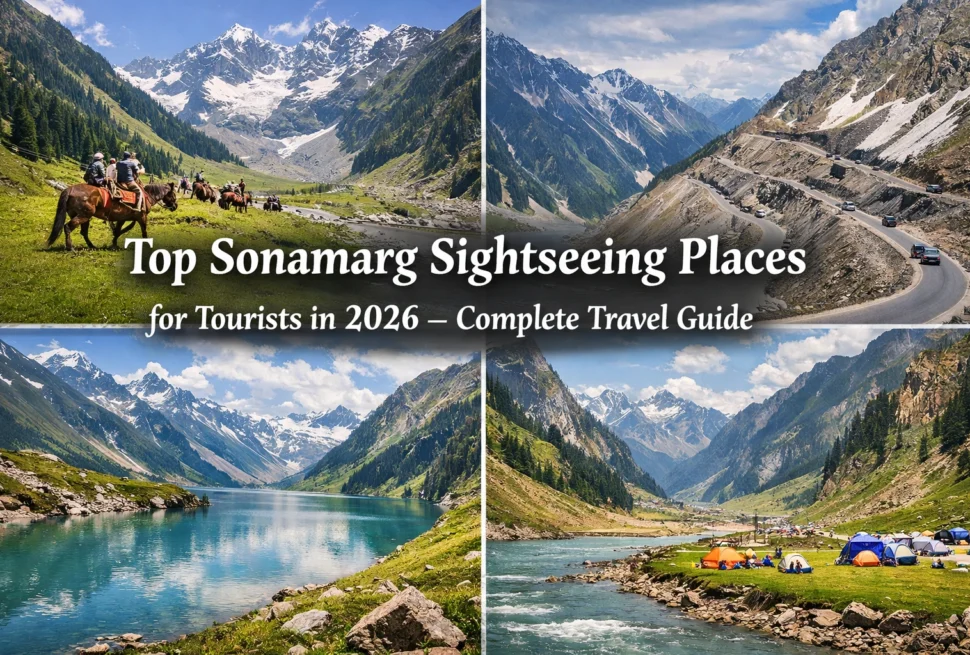
The best time to visit Sonamarg is May to June and September to early October. May and June bring melting snow, green meadows and average daytime highs of around 19–22°C, while September and early October offer cooler air, often clearer skies and thinner crowds than peak summer.
Other months suit different trips: April for lingering snow, late October and November for cold, quiet early-winter conditions, and December to February for a snow-focused winter trip. Since the Z-Morh (Sonamarg) Tunnel opened in January 2025, the town itself is generally reachable year-round, but Zoji La, Zero Point and the upper Thajiwas trail remain seasonal.
Sonamarg sits at about 2,730 metres in Ganderbal district, roughly 80 km from Srinagar on the road toward Ladakh. Because it is a high-altitude valley between the Sindh River and the approach to Zoji La, “best time” has several answers depending on whether you want snow, green meadows, autumn colour, fewer crowds or simply comfortable weather. Snowfall timing and road conditions vary from year to year, so always check current road and weather updates before finalising your dates.
Not sure which month suits your plans? Panda Tours and Travels, a Srinagar-based local operator, can help you plan timing and transport. Contact our team to plan your Sonamarg trip.
What Is the Best Time to Visit Sonamarg?
May–June and September–early October suit most travellers. The table below shows which months fit which goal.
Best Time to Visit Sonamarg by Travel Goal
| Travel goal | Best months | Why | Keep in mind |
|---|---|---|---|
| Overall trip | May–June, September–early October | Best balance of weather, access and scenery | June and September are popular, so book accommodation and transport early |
| Snow you can see up close | April–early June | Snow still sits on slopes and around Thajiwas | This is remaining snow, not guaranteed fresh snowfall, and melting snow can be unstable (see the snow section) |
| Heavy snowfall and winter scenery | December–February | Valley covered in snow | Treat it as a separate winter trip; upper areas are seasonal |
| Greenery | June (late May and early July can also work) | Meadows are fully green and conditions are usually settled | July–August are just as green but come with shower and road-delay risk |
| Pleasant weather | June, September | Mild days, cool nights | July–August can bring sudden showers |
| Photography | May; late September–October | Snow-and-meadow contrast in May; autumn colour and clear air later | Autumn colour here is subtler than Srinagar’s chinar colour; mornings usually give the cleanest light |
| Fewer crowds | Late August–September, November | Peak Amarnath Yatra and summer-holiday traffic has eased | November is quiet because it is cold, not because conditions are ideal |
| Families | May–June | Comfortable temperatures and an easier pace | Avoid deep winter with young children unless snow is the goal |
| Couples | September–October | Quieter and scenic, good for a slower trip | Evenings turn cold from mid-October |
| First-time visitors | May, June, September | Most forgiving weather and access | These are also the most-booked months, so arrange transport early |
| Trekking | July–September | Trails toward Vishansar, Krishansar, Gadsar and Gangabal lakes, and the Kashmir Great Lakes route, are typically open | Trail conditions vary; go with an experienced local guide |
Sonamarg Weather and Temperature by Month
These are average figures for Sonamarg town from climate-data.org. Real conditions change day to day, and higher viewpoints such as Thajiwas and Zero Point are colder. Spring (March–May) has the highest average precipitation, rain and snow combined, which is why weather swings are common then. October and November are the driest months on average, though they are also cold.
| Month | Average high / low (°C) | Average precipitation (mm) | Verdict |
|---|---|---|---|
| January | −7 / −13 | 95 | Winter snow trip |
| February | −3 / −13 | 98 | Winter snow trip |
| March | 3 / −6 | 137 | Snow, limited access |
| April | 11 / −2 | 139 | Early snow, changeable |
| May | 19 / 3 | 115 | Excellent |
| June | 22 / 9 | 50 | Excellent |
| July | 24 / 13 | 54 | Good, green, showers possible |
| August | 23 / 14 | 68 | Good, showers possible |
| September | 21 / 9 | 68 | Excellent |
| October | 13 / −1 | 42 | Good, best in the first half |
| November | 5 / −4 | 26 | Cold and quiet |
| December | −3 / −12 | 40 | Winter snow trip |
Month-by-Month Guide to Sonamarg
Sonamarg in December, January and February
This is deep winter. Daytime averages stay below freezing (around −7°C in January) and nights fall to about −13°C. Sonamarg becomes a snow destination rather than a standard sightseeing trip: expect snow-covered meadows, quiet streets and activities that depend on the day’s conditions. Access details are in the winter section further down.
Sonamarg in March
March is still winter. Highs average around 3°C and nights drop to about −6°C. It is also one of the wetter months, so snowfall and cold are likely. Snow cover usually remains, which suits travellers who want a snow trip and do not need to reach higher areas. Zoji La and Zero Point normally reopen only after clearance work later in spring, and the timing varies each year.
Sonamarg in April
April is the handoff between winter and the main season. Highs average around 11°C with freezing nights, and it is among the wettest months, so expect a mix of sun, rain and snow. Snow still sits on the lower slopes and around Thajiwas, the Sindh River runs high with meltwater, and the meadows have not greened yet. It works if you want close-up snow without deep-winter conditions and can accept some unpredictability on the roads.
Sonamarg in May
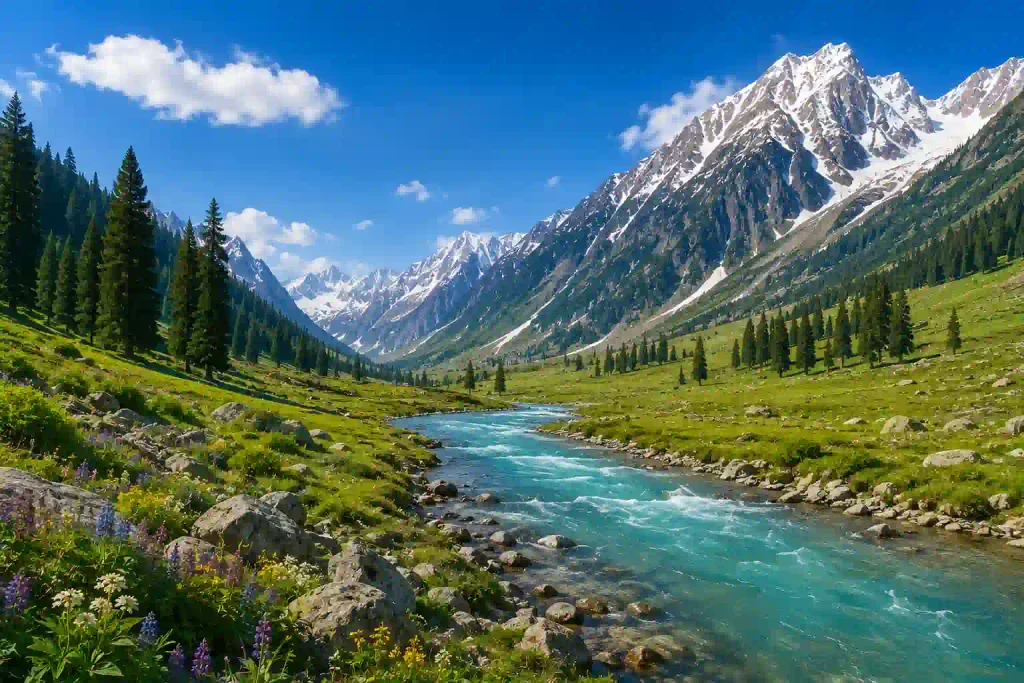
May is where most people’s picture of Sonamarg comes together: white peaks above, meadows turning green below and a river full of snowmelt. Highs average around 19°C with cool nights near 3°C. It is the best month for snow-meets-green photographs. Crowds are moderate, and some higher stretches may still have limited access early in the month.
Sonamarg in June
By June the meadows are at their greenest. Highs average around 22°C, and rainfall is relatively low compared with spring (about 50 mm on average). Roads are at their most dependable and most of the visible snow has retreated to higher ground. It is also one of the busiest months, so book rooms and transport early.
Sonamarg in July
July is the warmest month, with highs averaging around 24°C. The valley is lush, and afternoon showers can build quickly in the mountains. The Amarnath Yatra, which usually runs for several weeks in July and August (dates vary each year), adds traffic on the Srinagar–Sonamarg–Baltal highway and pushes up demand for rooms. Landslide-related delays on mountain roads can happen, so keep a spare day in your plan.
Sonamarg in August
August carries on from July: warm, green and occasionally wet (about 68 mm on average). Yatra traffic is heavier early in the month and usually eases toward the end, which makes late August a good window for summer greenery with fewer crowds.
Sonamarg in September
Sonmarg in September is typically cool and green, with highs near 21°C and nights around 9°C. Showers are still possible, with rainfall similar to August, so carry a rain layer.
- Early September: still green and warm by day, with crowds easing after the summer peak.
- Mid-September: usually settled, and a good stretch for sightseeing and photography.
- Late September: nights are noticeably colder, the willows and poplars begin to turn gold, and the highest peaks can get a first dusting of snow.
Sonamarg in October
Sonmarg in October is autumn at its best early in the month and clearly colder as it goes on. The average high is around 13°C, but the average night low is about −1°C, so freezing nights are common. October is also one of the drier months (about 42 mm on average).
- First week: usually the mildest and clearest part of the month, with the best autumn colour.
- Second half: colder, with early snowfall on higher slopes increasingly possible and some upper areas starting to restrict access.
Sonamarg in November
Sonmarg in November is cold and quiet. Highs average around 5°C and nights fall to about −4°C. The autumn colour has gone, and at some point in the month snow becomes likely. It suits travellers who want solitude, with a chance of early snow, and are prepared for real cold. The first week is usually easier than the last. Check road and weather updates daily before you travel.
Snow in Sonamarg: When It Falls and When You Can See It
When does it snow? The snow season runs from roughly November to March, with the heaviest snowfall usually between December and February. The highest slopes can get their first snow in late October in some years, and March can still bring fresh snowfall. Exact timing changes every year.
When can you see snow without winter conditions? From April to early June, snow still lingers on the slopes and around Thajiwas, while the roads and weather are easier than in deep winter.
Visible snow is not fresh snowfall. Snow on the peaks during your trip does not mean it will snow while you are there, and how much remains depends on how heavy the winter was. No guide can promise snowfall on specific dates.
Safety near the glacier. Late-spring snow near Thajiwas melts and can collapse, and there were fatal glacier-collapse incidents in the area in 2024. Do not walk on snow overhangs or over snow cavities, and follow local guides and official advisories.
Is Sonamarg Open in Winter?
Mostly, yes. The Z-Morh (Sonamarg) Tunnel, a 6.5 km tunnel between Gagangir and Sonamarg that opened in January 2025, was built for all-weather access, so the town is generally reachable even in winter. That does not make every part of the trip available:
- Short disruptions are still possible. Heavy snowfall, avalanche risk or landslides on the approach road can delay or stop traffic for a day or more.
- Zoji La is still seasonal. The Zojila Tunnel is still under construction, so the pass closes in winter and reopens on a schedule that changes yearly.
- Higher areas are conditional. Zero Point, the upper Thajiwas trail and trekking routes depend on snow, temperature and clearance work.
Winter is best treated as a snow trip, while May–June and September–early October remain the best times for full sightseeing. For a detailed breakdown of what is open and how to plan safely, read our guide: Is Sonamarg Open in Winter.
Quick Comparisons: Which Month Should You Choose?
May or June? Choose May for visible snow against emerging greenery and slightly cooler evenings. Choose June for fully green meadows, warmer days and the most dependable weather. Book ahead for either.
June or July? Choose June for lower weather and road-delay risk. Choose July only if lush post-rain greenery matters more than predictability and you can handle Yatra-season traffic.
August or September? Choose September for similar temperatures with clearer skies, thinner crowds and the start of autumn colour. August’s edge is only slightly lower room demand in its first half.
September or October? Choose September for the mildest conditions and the lowest risk of early snow or cold-related disruption. Choose October if autumn colour is the priority and you are comfortable with freezing nights and a growing chance of early snow late in the month.
Best Time to Visit Sonamarg and Gulmarg Together
Sonamarg and Gulmarg lie on opposite sides of Srinagar (Sonamarg about 80 km northeast, Gulmarg roughly 50 km west), so most travellers plan them on separate days rather than as one long day trip.
May–June and September–October work well for both: green meadows and comfortable sightseeing in Sonamarg, and open, scenic conditions in Gulmarg. For a winter snow trip, Gulmarg is generally the better-known snow and ski destination, while winter in Sonamarg is quieter and its upper areas are restricted. Snow, Gondola and ski operations in Gulmarg all depend on weather and conditions, so check closer to your dates. For a day-by-day plan, see our Gulmarg guide.

Panda Tours and Travels is a registered, Srinagar-based local tour operator (Reg. No. JKEA00006046, GST No. 01BDCPA2043R1ZY) that plans Kashmir trips with practical, on-the-ground knowledge. Our local team helps with transportation, trip planning and customised travel arrangements for families, couples and groups, so you deal directly with people who know the Valley, its roads and its seasons. Travellers rate us 5/5 on Google from 500+ reviews, and you can read their experiences before you book.
Frequently Asked Questions About Visiting Sonamarg
How far is Sonamarg from Srinagar?
Sonamarg is about 80 km from Srinagar. The drive usually takes around 2.5 to 3 hours, and longer during Amarnath Yatra traffic, weekends, or after landslide or snow clearance.
How many days are enough for Sonamarg?
One full day from Srinagar covers the town, Thajiwas and the valley if you start early. Stay overnight if you want a slower pace, early-morning views or a cold-weather evening in the mountains. In winter, the choice depends on road and weather conditions.
What is the temperature in Sonamarg today?
It depends on the month and time of day, so use the monthly table above for typical ranges. For today’s reading, check the India Meteorological Department forecast or a live weather app before leaving Srinagar, because Sonamarg is usually noticeably cooler than Srinagar.
What should I wear in Sonamarg?
Dress in layers in every season. In May–June, carry a light jacket, a warm layer for evenings and comfortable walking shoes. In July–August, add a waterproof jacket. In September–October, bring a warm jacket, thermals for evenings, and gloves and a cap, especially later in October. From November to March, pack heavy winter wear, thermals, waterproof boots and gloves.
What is the best time to visit Thajiwas Glacier?
May to September is generally the most convenient period, when ponies and access are usually available. Go in May or early June for snow views, or June to September for greener surroundings. In winter and early spring, access to the upper trail depends on snow and conditions.
Do people get altitude sickness in Sonamarg?
At about 2,730 metres, most visitors adjust without trouble, but some may feel a headache or breathlessness, especially if they arrive quickly from the plains. Higher points beyond Sonamarg, such as Zoji La (around 3,500 metres), are more demanding. Go at an easy pace, drink water, and descend if symptoms get worse.
Is Sonamarg safe to visit?
Sonamarg is a well-visited destination. Most problems visitors face are weather, road and terrain related, such as landslides, snowfall and unstable glacier edges. Check current official travel advisories and road and weather updates before you go, and follow local guides near glaciers and steep slopes.
Sonmarg kab jana chahiye?
The best time to visit Sonamarg is May to June and the beginning of September to October. In May and June you get greenery and melting snow, while September brings clear weather and fewer crowds. December to February is better for snowfall, but in winter Zojila and the higher areas may be closed, so be sure to check road and weather information before you travel.
Plan Your Sonamarg Trip With a Local Srinagar Operator
Panda Tours and Travels is a Srinagar-based local tour operator helping travellers plan Kashmir trips with practical local assistance. We help with transportation, trip planning and customized Kashmir travel arrangements.