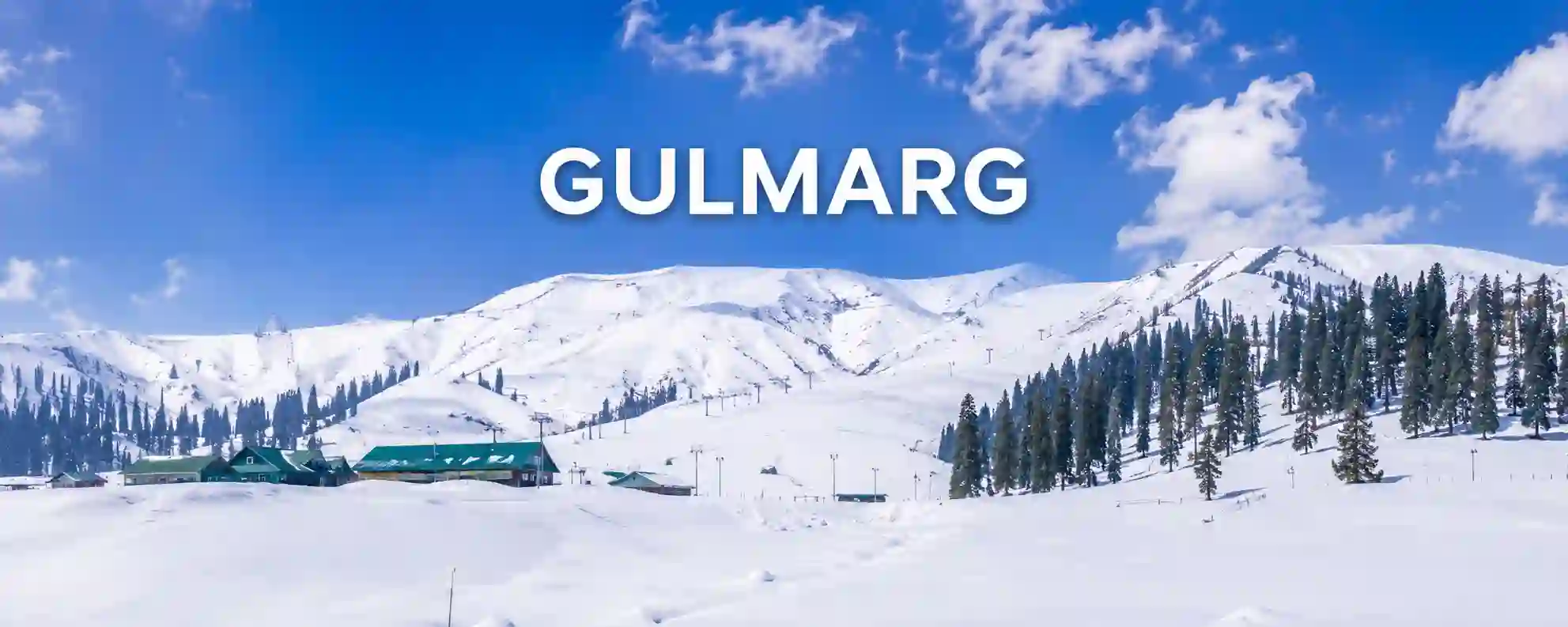
Gulmarg sightseeing is built around one central meadow and one mountain: the town meadow itself, and the Gulmarg Gondola that climbs above it. Inside or right around the meadow you have the Gulmarg Golf Course, St. Mary’s Church, Maharani Temple, Strawberry Valley, the Outer Circle Walk, the Gulmarg Biosphere Reserve, and the Kanchenjunga (Army) Museum. The Gulmarg Gondola then carries visitors up in two phases to Kongdoori and on to Apharwat Peak, from where Alpather Lake and Khilanmarg are reached by a further trek or pony ride.
A separate cluster Baba Reshi Shrine, Drung Waterfall, and Tangmarg sits on the approach road and is commonly bundled into “Gulmarg sightseeing,” even though these places are technically outside the Gulmarg meadow itself. Knowing which places sit inside Gulmarg, which need the Gondola, and which are really Tangmarg-side stops is the single biggest factor in planning a sightseeing day here.
Panda Tours and Travels is a Srinagar-based local tour operator helping travellers plan Kashmir sightseeing with local assistance. We arrange Gulmarg sightseeing routes, private transportation to and around Gulmarg, and customized sightseeing planning based on each traveller’s time and interests. Our team is based in Srinagar and provides local, on-ground support before and during the visit.
Registration No.: JKEA00006046
GST No.: 01BDCPA2043R1ZY
Best Gulmarg Sightseeing Places You Can Actually Visit
Gulmarg Gondola
The Gondola is a two-phase cable car and the anchor of any Gulmarg sightseeing plan. Phase 1 lifts visitors from the Gulmarg base (about 2,650–2,690 m) to Kongdoori station (around 3,050–3,100 m) in roughly 9–12 minutes. Phase 2 continues from Kongdoori to the Apharwat shoulder, close to 3,980–4,200 m. What you see changes with altitude: pine forest and meadow on Phase 1, then open snowfields and high Himalayan ridgelines on Phase 2. Tickets are sold in timed slots rather than as open boarding, and Phase 2 access depends entirely on weather it closes for wind, whiteout, or maintenance without much notice.
Reported 2026 fares run ₹800 for Phase 1 and 1,000 for Phase 2, with tatkal (last-minute) tickets priced higher; these change through the year, so confirm current rates on the official JKCCC counter or portal before travelling. Plan 3–4 hours if doing both phases, and try to board early queues build fast after mid-morning. Best for first-time visitors, photographers, and anyone who wants high-altitude views without trekking.
Kongdoori
Kongdoori is the Phase 1 terminus, sitting at the edge of the treeline. It’s less dramatic than Apharwat but far more reliable, since it rarely closes for weather. The station area has restaurants, snow-play zones in winter, ATV rides, sledging, and a separate chairlift toward Mary’s Shoulder for skiers. Many families who skip Phase 2 because of altitude, cost, or weather spend their time here instead, and it works well as a standalone half-day stop. Best for families, casual visitors, and anyone unsure about going higher.
Apharwat Peak
Apharwat is the high-altitude shoulder reached by Phase 2 of the Gondola, not the true summit the peak itself rises further above the upper station. Snow lingers here most of the year, making it Gulmarg’s main winter-sports zone for skiing and snowboarding, and a striking, stark landscape even in summer when patches of snow remain. The thin air at nearly 4,000 m affects some visitors, so a slow pace and warm layers matter here more than at any other Gulmarg sightseeing spot. Allow 1–2 hours at the top. Best for adventure travellers, skiers, and serious photographers; less suited to visitors with breathing or mobility concerns.
Alpather Lake
Alpather is a glacial lake near the base of Apharwat, roughly 13 km from Gulmarg town, sitting close to 4,500 m. It stays frozen from around November through June and only shows open water for a short summer window. Reaching it involves a trek or pony ride beyond where the Gondola drops you it is not a walk-up attraction. Because of the effort involved, it’s far less crowded than the Gondola stations. Pack warm layers regardless of season; sudden weather changes are common at this altitude. Best for trekkers and travellers with a full day to spare, not for a quick sightseeing stop.
Khilanmarg
Khilanmarg is a meadow about 6 km from Gulmarg and roughly a 600 m climb above it, reached by trek or pony ride rather than the Gondola. In spring and summer it’s carpeted with wildflowers with views toward Nanga Parbat on clear days; in winter it becomes one of Gulmarg’s main ski runs. It’s a genuinely different experience from the Gondola stations quieter, more of a walk-in-nature stop than an engineered viewpoint. Budget 3–4 hours round trip if walking, less by pony. Best for nature walkers, photographers, and travellers wanting mountain views without Gondola queues.
Gulmarg Golf Course
This is the highest 18-hole golf course in the world and the longest in India, sitting inside the Gulmarg meadow at around 2,650 m. It dates to the British colonial period, was formally re-inaugurated in 2011, and is playable roughly April to November before winter snow covers it. Even non-golfers walk its edges for the meadow-and-mountain backdrop, and clubs can usually be hired on site. Best for heritage interest, golf enthusiasts, and easy, flat walking. 30–45 minutes is enough for a casual look; longer if playing.
St. Mary’s Church
A small colonial-era Anglican church set among pine trees inside Gulmarg, built during the British period and still standing as one of the oldest structures in the meadow. Its plain wooden architecture and quiet setting make it a heritage stop rather than a headline attraction most visitors combine it with the Golf Course or Outer Circle Walk nearby. It looks particularly striking under snow. Best for heritage and architecture interest, and quick photography stops; 15–20 minutes is typical.
Maharani Temple
A Shiva temple on a hilltop within Gulmarg, associated with the former Dogra royal family of Jammu and Kashmir. It’s visible from much of the town and gives an open view over the meadow and surrounding ridgelines from its grounds. The religious and historical association gives it a different character from Gulmarg’s natural attractions. Best for travellers interested in heritage sites and valley views; 20–30 minutes.
Baba Reshi Shrine
The shrine of the 15th-century Sufi saint Baba Payam-ud-Din Reshi sits on the Tangmarg–Gulmarg road, commonly cited as somewhere between 5 and 8 km before Gulmarg (accounts vary depending on which junction is measured). Built in Mughal-Persian style with carved woodwork, it functions primarily as a pilgrimage site rather than a viewpoint, though the approach through pine forest gives good photography. It is not inside the Gulmarg meadow it’s a stop on the way in or out, and works best combined with Drung Waterfall or Tangmarg rather than as a separate trip. Respectful, modest dress is expected. Best for cultural and religious interest; 20–30 minutes.
Strawberry Valley
A quieter meadow set slightly off Gulmarg’s main circuit, known for wild strawberries in early summer and pine-forest walking trails. It doesn’t appear in every basic tour route, which is exactly why local guides tend to recommend it to travellers who’ve already covered the Gondola and Golf Course. Best for a slower, less crowded stop and casual photography; 30–45 minutes.
Outer Circle Walk
An 7–11 km loop trail (distance estimates vary by source) that circles the Gulmarg meadow, passing the Golf Course, St. Mary’s Church, the erstwhile Maharaja’s residence, and open viewpoints toward Nanga Parbat on clear days. It can be walked in full, walked in part, or covered on a horse. It’s less a single “sight” and more the connective route that ties together several of the places on this list. Best for walkers and families with time for a longer, unhurried loop rather than a single stop; allow 2–3 hours for the full circuit, less for a partial walk.
Gulmarg Biosphere Reserve
A protected forest and grassland zone adjoining the Gulmarg meadow, part of the wider Gulmarg Wildlife Sanctuary, spread across roughly 180 sq. km. It’s known for the endangered musk deer along with hangul, leopard, brown and black bear, and a strong population of resident and migratory birds sightings of larger mammals are uncommon on a short visit, so treat it as a scenic forest walk with a wildlife chance rather than a guaranteed sighting. Best for nature and birdwatching interest, and photography in the surrounding pine forest; best visited September–March for mammal activity and March–May for birds.
Ningle Nallah and Ferozepur Nallah
Two mountain streams roughly 5 km from Gulmarg, on routes usually approached from the Tangmarg side, flowing through pine forest and open pasture. Ferozepur Nallah is also known locally for trout. Both are picnic-style stops rather than headline attractions good for a short break with running water and greenery rather than a planned sightseeing block. Best for a short nature break; 30–45 minutes.
Drung Waterfall
Located in Tangmarg tehsil, closer to Tangmarg than to Gulmarg itself, Drung is a cascading waterfall that freezes into ice formations in winter and runs full with glacier-fed water in summer. It sits on the approach road and is usually visited on the way to or from Gulmarg rather than as part of the in-meadow itinerary treat it as a Tangmarg-side stop, not a Gulmarg sightseeing place in the strict sense. Best for winter ice photography and a short roadside stop; 20–30 minutes.
Tangmarg
Tangmarg is the gateway town on the Srinagar–Gulmarg road, about 13 km before Gulmarg and roughly 39 km from Srinagar. It isn’t a sightseeing destination itself, but it’s where snow-chain vehicles are arranged in heavy winter, where Baba Reshi and Drung Waterfall are accessed from, and where most travellers make a fuel or food stop. Understanding Tangmarg’s role helps make sense of why several “Gulmarg” attractions are actually clustered here rather than in the meadow.
Kanchenjunga Museum
Also known locally as the Army Museum, this small museum sits within the High Altitude Warfare School premises about 3 km from central Gulmarg. It displays mountaineering and cold-weather military equipment and commemorates the Indian Army’s 1997 Kanchenjunga expedition and its 2001 Everest expedition. It’s a niche stop, best suited to visitors specifically interested in military or mountaineering history rather than general sightseeing. 20–30 minutes.
Seven Springs
A viewpoint near Gulmarg named for its natural water outlets, offering a wide outlook toward both the Srinagar and Gulmarg valleys from its higher ground. It functions as a scenic stop along the way rather than a destination in its own right. Best combined with Ningle Nallah or Ferozepur Nallah on the same short excursion.
Other Verified Gulmarg Sightseeing Entities
Gulmarg’s Children’s Park sits inside the meadow, close to the Outer Circle route, and is a low-key stop mainly useful for families travelling with young children rather than a standalone attraction. A handful of smaller local viewpoints and picnic spots exist around the meadow and are usually pointed out by drivers on the day rather than pre-planned treat any unnamed “hidden viewpoint” claims with some caution until you’ve confirmed them locally.
Gulmarg Sightseeing Places by Location
Central Gulmarg
Gulmarg Golf Course, St. Mary’s Church, Maharani Temple, Strawberry Valley, Outer Circle Walk, Gulmarg Biosphere Reserve, Kanchenjunga Museum, Children’s Park. These sit within or immediately around the meadow and are reachable on foot, by pony, or by a short local taxi hop no Gondola ticket required.
Gondola-Accessed Places
Kongdoori (Phase 1), Apharwat Peak (Phase 2), and beyond the Gondola stations Khilanmarg and Alpather Lake, which need an additional trek or pony ride once you’re off the cable car. These are altitude-dependent and weather-dependent in a way the central meadow attractions are not.
Nearby Places Commonly Included in Gulmarg Sightseeing
Baba Reshi Shrine, Drung Waterfall, Tangmarg, and (loosely) Ningle Nallah/Ferozepur Nallah and Seven Springs. Geographically these sit on the Srinagar–Tangmarg–Gulmarg approach road or just off it, not inside the Gulmarg meadow itself. They’re grouped with Gulmarg sightseeing because most vehicles pass them on the way in or out, but they belong to a different, lower-altitude stretch of the route.
Which Gulmarg Sightseeing Places Are Actually the Best?
“Best” depends on what you are weighing:
- Highest scenic value: Apharwat Peak and Alpather Lake — the most dramatic high-altitude landscape, at the cost of effort and weather risk.
- Easiest access: Gulmarg Golf Course, St. Mary’s Church, and Maharani Temple — all reachable on foot within the meadow.
- Strongest mountain views without a trek: Kongdoori, via Phase 1 of the Gondola.
- Best heritage value: St. Mary’s Church and Maharani Temple, for architecture and royal-era history.
- Best nature experience: Gulmarg Biosphere Reserve and Strawberry Valley.
- Best snow experience: Apharwat Peak in winter, Khilanmarg for ski season.
- Best for photography: Apharwat Peak, Alpather Lake, and the Outer Circle Walk on a clear morning.
- Best for first-time visitors: Gulmarg Gondola (both phases if budget and weather allow) paired with the Golf Course and St. Mary’s Church.
No single place ranks first for every traveller a family with small children and a serious trekker will rank this list differently, which is the point of the categories below.
Gulmarg Sightseeing Places Comparison
| Sightseeing Place | Where It Is | Access | Best For | Approx. Time |
|---|---|---|---|---|
| Gulmarg Gondola (Phase 1+2) | Gulmarg to Apharwat | Cable car, timed tickets | First-time visitors, views | 3–4 hrs |
| Kongdoori | Phase 1 terminus | Gondola | Families, easy altitude | 1–1.5 hrs |
| Apharwat Peak | Phase 2 terminus | Gondola | Snow, adventure, photography | 1–2 hrs |
| Alpather Lake | ~13 km from Gulmarg | Trek/pony beyond Gondola | Trekkers | Full day |
| Khilanmarg | ~6 km from Gulmarg | Trek/pony | Nature walkers | 3–4 hrs |
| Gulmarg Golf Course | Central Gulmarg | Walk | Heritage, easy sightseeing | 30–45 min |
| St. Mary’s Church | Central Gulmarg | Walk | Heritage, photography | 15–20 min |
| Maharani Temple | Hilltop, central Gulmarg | Short walk | Heritage, valley views | 20–30 min |
| Strawberry Valley | Near Gulmarg | Walk/pony | Quiet nature stop | 30–45 min |
| Outer Circle Walk | Around Gulmarg meadow | Walk/horse | Walkers, families | 2–3 hrs |
| Gulmarg Biosphere Reserve | Adjoining Gulmarg | Walk/guided | Nature, birdwatching | 1–2 hrs |
| Kanchenjunga Museum | ~3 km from Gulmarg centre | Taxi/walk | Military/mountaineering history | 20–30 min |
| Seven Springs | Near Gulmarg | Taxi | Valley viewpoint | 20 min |
| Ningle & Ferozepur Nallah | ~5 km from Gulmarg | Taxi | Picnic, short break | 30–45 min |
| Baba Reshi Shrine | Tangmarg–Gulmarg road | Taxi (en route) | Cultural/religious stop | 20–30 min |
| Drung Waterfall | Tangmarg tehsil | Taxi (en route) | Winter ice photography | 20–30 min |
| Tangmarg | 13 km from Gulmarg | Taxi (gateway town) | Transit stop, snow-chain vehicles | N/A |
Prices, timings, and access conditions change through the year; verify current details before travelling.
What Can You See at the Main Gulmarg Sightseeing Places?
- Gulmarg Gondola → forested slopes rising into high-altitude snowfields
- Kongdoori → mid-mountain meadow and treeline views
- Apharwat Peak → stark, high-altitude Himalayan scenery
- Alpather Lake → an alpine lake, frozen for much of the year
- Khilanmarg → open flower meadow with distant peak views
- Gulmarg Golf Course → manicured meadow set against mountain backdrop
- St. Mary’s Church → colonial-era wooden church architecture
- Maharani Temple → hilltop Shiva shrine with valley outlook
- Strawberry Valley → quiet pine-forest meadow
- Outer Circle Walk → panoramic loop views of the whole Gulmarg bowl
- Gulmarg Biosphere Reserve → forest habitat, birdlife, occasional wildlife
- Kanchenjunga Museum → military and mountaineering exhibits
Which Gulmarg Sightseeing Places Can You Cover in One Day?
With a single day, prioritise the Gondola (Phase 1 at minimum, Phase 2 if weather and time allow) combined with two or three central Gulmarg stops typically the Golf Course, St. Mary’s Church, and either Maharani Temple or Strawberry Valley. These sit close together and don’t require additional trekking. Khilanmarg and Alpather Lake are realistically not doable on the same day as a full Gondola visit, since both need their own dedicated time and energy at altitude. If the day is limited by weather or a late start, skip the outer circle walk in full and take a shorter loop instead, and treat the museum and the streams as optional add-ons only if time remains after the Gondola.
Which Gulmarg Sightseeing Places Are Better for a Two-Day Visit?
A second day makes Khilanmarg or Alpather Lake genuinely realistic, since both need dedicated time rather than being squeezed after a Gondola visit. It also allows an unhurried full Outer Circle Walk, a proper visit to the Gulmarg Biosphere Reserve for birdwatching, and time for Tangmarg-side stops Baba Reshi Shrine and Drung Waterfall without rushing the return drive. Two days also give a weather buffer: if Phase 2 of the Gondola closes on day one, there’s a second chance to catch Apharwat Peak.
Which Gulmarg Sightseeing Places Can Be Visited Together?
Central Gulmarg Cluster: Gulmarg Golf Course, St. Mary’s Church, Maharani Temple, and a partial Outer Circle Walk — all walkable from each other.
Gondola / Mountain Cluster: Gulmarg Gondola Phase 1 and 2, Kongdoori, Apharwat Peak — one continuous cable-car route.
Tangmarg-Side Excursion Cluster: Baba Reshi Shrine, Drung Waterfall, and Tangmarg itself — naturally grouped since they sit along the same approach road, usually covered on the drive in or out rather than as a dedicated trip.
Nature-and-Streams Cluster: Gulmarg Biosphere Reserve, Ningle Nallah, Ferozepur Nallah, and Seven Springs — a short, low-effort loop for a quieter half-day.
How Easy Is It to Reach Each Gulmarg Sightseeing Place?
- Easy walk: Gulmarg Golf Course, St. Mary’s Church, Maharani Temple, Kanchenjunga Museum (short taxi + walk)
- Moderate walk: Strawberry Valley, partial Outer Circle Walk, Gulmarg Biosphere Reserve
- Gondola-dependent: Kongdoori, Apharwat Peak
- Trek/pony beyond Gondola: Khilanmarg, Alpather Lake
- Road excursion (taxi): Baba Reshi Shrine, Drung Waterfall, Tangmarg, Ningle/Ferozepur Nallah, Seven Springs
- Weather-dependent regardless of route: Apharwat Peak and Alpather Lake, since Phase 2 of the Gondola closes without much notice in poor conditions
For families, elderly travellers, or anyone with limited walking ability, the central Gulmarg cluster plus Phase 1 of the Gondola covers most of the highlights without demanding a trek. Alpather Lake and Khilanmarg should be treated as optional, effort-dependent additions rather than default stops.
Which Gulmarg Sightseeing Places Are Best in Each Season?
Winter: Apharwat Peak and Khilanmarg for snow and skiing; Drung Waterfall for its ice formations. Phase 2 of the Gondola is at its most scenic but also its least predictable — snow and wind can close it without notice, so build in a buffer day if possible.
Spring: Khilanmarg and Strawberry Valley as the snow retreats and meadows turn green; the Gulmarg Biosphere Reserve for early bird activity.
Summer: Gulmarg Golf Course, St. Mary’s Church, Maharani Temple, and the Outer Circle Walk are at their most comfortable; Alpather Lake shows open water for a short window.
Autumn: The Outer Circle Walk and central Gulmarg cluster for golden meadow light and thinner crowds; good conditions for photography across most central attractions.
Conditions vary year to year none of these are guarantees, and visitors should check current snow and access conditions before finalising a season-specific plan.
Best Gulmarg Sightseeing Places for Different Interests
Best for Mountain Views
Apharwat Peak, Kongdoori, and the Outer Circle Walk.
Best for Snow
Apharwat Peak, Khilanmarg, Alpather Lake (in season).
Best for Nature
Gulmarg Biosphere Reserve, Strawberry Valley, Ningle and Ferozepur Nallah.
Best for Photography
Apharwat Peak, Alpather Lake, St. Mary’s Church in snow, the Outer Circle Walk at sunrise.
Best for Heritage
St. Mary’s Church, Maharani Temple, Gulmarg Golf Course, Baba Reshi Shrine.
Best for Families
Kongdoori, Gulmarg Golf Course, Children’s Park, a partial Outer Circle Walk.
Best for Couples
Strawberry Valley, Khilanmarg, Maharani Temple’s valley outlook.
Best for Easy Sightseeing
Gulmarg Golf Course, St. Mary’s Church, Maharani Temple all walkable, all within central Gulmarg.
Which Gulmarg Sightseeing Places Can You Skip on a Short Trip?
On a trip of only a few hours, or when Phase 2 of the Gondola is closed for weather, several places are reasonably skippable. Alpather Lake and Khilanmarg require dedicated time and effort that a short visit rarely allows skip both rather than rushing them. The Kanchenjunga Museum and Seven Springs are niche, single-interest stops that add limited value if time is tight.
Ningle and Ferozepur Nallah are pleasant but replaceable picnic stops, not must-see sightseeing. If walking time is limited, shorten or skip the full Outer Circle Walk and take in the Golf Course and St. Mary’s Church directly instead. None of these are bad places they simply carry the lowest cost if a short trip forces choices.

What Can Affect Gulmarg Sightseeing on the Day?
- Snow and wind: Phase 2 of the Gondola closes for weather more often than Phase 1, especially in winter and early spring.
- Rain: Reduces visibility on the Outer Circle Walk and at open viewpoints like Seven Springs and Maharani Temple.
- Visibility: Apharwat Peak, Khilanmarg, and Alpather Lake all depend on clear skies for their views — cloud cover can flatten the experience even when access is technically open.
- Gondola operations: Ticket slots are limited, and Phase 2 sometimes closes independently of Phase 1 even on an otherwise clear day; scheduled maintenance closures also occur.
- Road conditions: Heavy winter snow can require snow-chain vehicles between Tangmarg and Gulmarg, affecting timing for Baba Reshi Shrine and Drung Waterfall en route.
- Seasonal access: Trek-dependent places (Khilanmarg, Alpather Lake) become harder or impossible in poor weather regardless of season.
Always confirm current Gondola status, road conditions, and weather before finalising the day’s route.
Tips for Visiting Gulmarg Sightseeing Places
Book Gondola tickets in advance during peak season, since walk-up slots fill quickly. Start early both to beat crowds at the Gondola base and to have a buffer if Phase 2 closes and reopens later. Carry warm layers regardless of season; temperature swings quickly between the meadow and the upper Gondola stations. If mobility or altitude is a concern, prioritise the central Gulmarg cluster and Phase 1 of the Gondola over trek-dependent stops like Khilanmarg and Alpather Lake.
Confirm which attractions are actually open on the day weather-related closures at Apharwat Peak are common enough that it’s worth checking before committing the whole day to that plan. For Baba Reshi Shrine, dress modestly as it remains an active place of worship.



Frequently Asked Questions About Gulmarg Sightseeing Places
What are the best Gulmarg sightseeing places?
The best Gulmarg sightseeing places include Gulmarg Gondola, Kongdoori, Apharwat Peak, Alpather Lake, Khilanmarg, Gulmarg Golf Course, St. Mary’s Church, Maharani Temple, Baba Reshi Shrine, Strawberry Valley and the Outer Circle Walk. The right combination depends on your available time, season, accessibility and whether you want mountain views, snow, nature or heritage.
What are the top 5 places to visit in Gulmarg?
For a first visit, five high-priority sightseeing places are Gulmarg Gondola, Kongdoori, Apharwat Peak, Alpather Lake and Gulmarg Golf Course. Among these, Gondola-based attractions are especially important for visitors looking for high-altitude mountain scenery and seasonal snow.
What is the most famous sightseeing place in Gulmarg?
Gulmarg Gondola is the most well-known sightseeing attraction in Gulmarg. It provides access to Kongdoori and the higher Apharwat area, making it a major part of many visitors’ sightseeing plans.
Is Gulmarg Gondola a sightseeing place?
Yes. Gulmarg Gondola is itself a major sightseeing attraction as well as a transport system to the higher mountain areas. The experience offers changing views as visitors travel from the Gulmarg area toward Kongdoori and Apharwat.
Which Gulmarg sightseeing places can be visited by Gondola?
Kongdoori is associated with Gondola Phase 1, while the higher Apharwat area is reached through Phase 2. Alpather Lake is also commonly associated with sightseeing around the upper mountain area, depending on the season, route and current access conditions.
What can I see at Kongdoori in Gulmarg?
Kongdoori offers expansive views of the surrounding mountains and landscape and is one of the principal sightseeing areas reached by the Gulmarg Gondola. Its appearance changes significantly with the seasons, from snow-covered winter scenery to open mountain landscapes during warmer months.
Is Apharwat Peak worth visiting?
Yes. Apharwat Peak is one of the most important high-altitude sightseeing attractions associated with Gulmarg. It is known for mountain scenery and winter snow, although access can depend on Gondola operations and weather conditions.
Is Alpather Lake worth visiting from Gulmarg?
Yes. Alpather Lake is one of the most distinctive natural attractions around Gulmarg. Its landscape changes with the season, and access can be more demanding than central Gulmarg sightseeing, so visitors should plan according to current conditions.
Is Khilanmarg worth visiting in Gulmarg?
Khilanmarg can be worthwhile for visitors who want open mountain views, natural scenery and a quieter experience away from some of the busier central attractions. It should be planned with enough time for access rather than treated as a quick roadside stop.
Is Strawberry Valley a sightseeing place in Gulmarg?
Yes. Strawberry Valley is commonly included among places to visit around Gulmarg and is valued mainly for its natural setting and seasonal scenery. It is more about the landscape and atmosphere than a major built attraction.
Is Gulmarg Golf Course a sightseeing place?
Yes. Gulmarg Golf Course is one of the best-known attractions in the main Gulmarg area. Its broad green landscape and surrounding mountain scenery make it relevant even for visitors who are not visiting specifically to play golf.
Can I visit St. Mary’s Church during Gulmarg sightseeing?
Yes. St. Mary’s Church is a recognised heritage attraction in Gulmarg and can be included while exploring the main sightseeing area. It is especially relevant for travellers interested in the historical character and architecture of Gulmarg.
Is Maharani Temple included in Gulmarg sightseeing?
Yes. Maharani Temple is one of Gulmarg’s notable religious and heritage landmarks. Its convenient location makes it relatively easy to include with other central sightseeing places.
Is Baba Reshi Shrine part of Gulmarg sightseeing?
Yes. Baba Reshi Shrine is commonly included in Gulmarg sightseeing plans, but geographically it is better understood as a nearby attraction on the Gulmarg–Tangmarg side rather than a central meadow attraction.
Is Drung Waterfall inside Gulmarg?
No. Drung Waterfall is near Tangmarg and is not located in central Gulmarg. It is frequently combined with a Gulmarg outing because it can fit into the same broader excursion, but it should be geographically distinguished from the main Gulmarg sightseeing area.
How far is Drung Waterfall from Gulmarg?
Drung Waterfall is a nearby excursion rather than a central Gulmarg sightseeing spot. Travel time can vary depending on road and seasonal conditions, so it is better to treat it as a separate excursion when planning your day.
Which sightseeing places are actually inside Gulmarg?
Central Gulmarg sightseeing includes the main meadow area, Gulmarg Golf Course, St. Mary’s Church, Maharani Temple and other nearby central attractions. High-altitude Gondola destinations form a separate sightseeing group.
Which Gulmarg sightseeing places are outside the main town area?
Places such as Baba Reshi Shrine, Drung Waterfall and some Tangmarg-side attractions are outside the central Gulmarg area. They may be included in a wider Gulmarg sightseeing plan, but they should not be described as being in the centre of Gulmarg.
Are all Gulmarg sightseeing places accessible by car?
No. Central attractions are generally easier to access, while some high-altitude sightseeing places depend on the Gondola and some natural attractions involve walking or separate local road access. Accessibility also changes with weather and seasonal conditions.
Which Gulmarg sightseeing places are walkable?
Several attractions in the central Gulmarg area can be explored on foot, including parts of the meadow area, Golf Course surroundings and central heritage sights. The amount of walking required depends on the route and the particular attraction.
Which Gulmarg sightseeing places require the Gondola?
Kongdoori and the higher Apharwat area are the principal sightseeing zones associated with the Gulmarg Gondola. Visitors planning these attractions should keep the Gondola’s operating conditions in mind.
Which Gulmarg sightseeing places are best for snow?
Kongdoori and Apharwat are among the main places associated with snow-focused sightseeing when winter conditions are present. Central Gulmarg can also offer snow-covered scenery, but snowfall varies by date and location.
Which Gulmarg sightseeing places are best for photography?
Apharwat, Kongdoori, Alpather Lake, the main Gulmarg meadow, Golf Course and Strawberry Valley can all be excellent photography locations. The best choice depends on season, visibility, light and accessibility on the day.
Which Gulmarg sightseeing places are best for families?
Families often find the central Gulmarg attractions easier to combine because they involve less complicated travel between places. The meadow, Golf Course, St. Mary’s Church and suitable Gondola experiences can be considered according to the children’s ages and weather.
Which Gulmarg sightseeing places are best for couples?
Couples often prefer scenic places such as the Gulmarg meadow, Gondola areas, Kongdoori, Apharwat and Alpather Lake. The best choice depends on the season, weather and the amount of walking you prefer.
Which Gulmarg sightseeing places are suitable for senior citizens?
Central sightseeing places that require less walking are generally easier for senior travellers. Higher-altitude or walking-intensive attractions should be selected according to personal comfort, weather and accessibility.
Can Gulmarg sightseeing be completed in one day?
Yes, the main highlights can be covered in one day if conditions are favourable. However, trying to visit every sightseeing place in a single day can make the trip rushed, so it is better to prioritize the most important attractions.
What are the best Gulmarg sightseeing places for a one-day trip from Srinagar?
For a one-day visit, prioritize the main Gulmarg sightseeing area and, when operating, the Gondola and its accessible mountain areas. Nearby excursions such as Drung should only be added if sufficient time remains.
How many days are enough for Gulmarg sightseeing?
One full day is usually enough for the main sightseeing highlights, while two days allow visitors to explore additional attractions at a more relaxed pace and leave some flexibility for weather or Gondola-related changes.
Which Gulmarg sightseeing places can be covered in two days?
With two days, visitors have more time to combine the central attractions, Gondola-related places, walking areas and selected nearby excursions. This gives more flexibility than trying to fit everything into a single day.
Which Gulmarg sightseeing places can be visited together?
Central Gulmarg attractions can generally be grouped together, while Kongdoori and Apharwat form a Gondola-related sightseeing cluster. Tangmarg-side places such as Baba Reshi or Drung are better treated as a separate nearby excursion group.
What is the best order for Gulmarg sightseeing?
A practical approach is to prioritize time-sensitive attractions such as the Gondola when conditions are suitable, then explore nearby central sightseeing places. This reduces the risk of missing a major attraction because of changing weather or operational conditions.
Which Gulmarg sightseeing places should I see if I have only a few hours?
Prioritize the main Gulmarg area and the Gondola experience if it is operating and important to your plans. Add only one or two nearby attractions rather than trying to complete a long list.
Which Gulmarg sightseeing places can I skip on a short trip?
On a short visit, optional walking routes and more distant excursions can be left out. It is usually more useful to see a few high-priority attractions properly than to rush through every place.
Are Gulmarg sightseeing places open throughout the year?
Not every sightseeing place operates in the same way throughout the year. Snow, rainfall, road conditions, visibility and mountain access can affect certain attractions, particularly higher-altitude areas.
Which Gulmarg sightseeing places are best in winter?
In winter, the Gondola areas, Kongdoori and Apharwat are major choices when snow and operating conditions permit. Central Gulmarg also becomes a popular sightseeing area for visitors looking for snow-covered scenery.
Which Gulmarg sightseeing places are best in summer?
Summer is well suited to central Gulmarg sightseeing, including the meadow, Golf Course, walking areas and surrounding natural scenery. Higher areas can also be visited when conditions allow.
Which Gulmarg sightseeing places are best in autumn?
Autumn is particularly attractive for visitors interested in mountain scenery, photography and changing landscapes. Central meadow areas and scenic viewpoints can be especially appealing when visibility is good.
What are the most beautiful sightseeing places in Gulmarg?
Apharwat, Kongdoori, Alpather Lake, the main meadow, Golf Course and Strawberry Valley are among the most visually appealing places associated with Gulmarg sightseeing. The best choice depends on whether you prefer mountains, meadows, water or heritage scenery.
Which Gulmarg sightseeing places are best for nature lovers?
Nature-focused visitors can consider Alpather Lake, Apharwat, Kongdoori, Strawberry Valley, the Gulmarg Biosphere Reserve and the surrounding meadow and forest landscapes, subject to current access.
Which Gulmarg sightseeing places are best for history and heritage?
St. Mary’s Church, Maharani Temple and Baba Reshi Shrine provide the strongest heritage and cultural dimension in and around a Gulmarg sightseeing plan.
Do I need a guide for Gulmarg sightseeing places?
A guide is not essential for every attraction. Central sightseeing is relatively straightforward, while local guidance can be useful for understanding routes, access and current conditions for less straightforward excursions.
Can I visit Gulmarg sightseeing places without taking the Gondola?
Yes. Several central attractions can be visited without using the Gondola, including the meadow, Golf Course, St. Mary’s Church and Maharani Temple. The Gondola becomes important when your sightseeing plan includes Kongdoori or the higher Apharwat area.
What should I check before visiting Gulmarg sightseeing places?
Before setting out, check the weather, road conditions, Gondola operating status and accessibility of any high-altitude or nearby attraction you plan to visit. Conditions can change, especially during winter and periods of poor weather.