
Srinagar Old City, the historic heart of Srinagar along the Jhelum River. Discover 14th-century wooden shrines, Mughal mosques, Zaina Kadal, Jamia Masjid, Hari Parbat, artisan workshops, and Kashmiri street food in this complete pillar guide.
While Dal Lake’s houseboats and the terraced Mughal Gardens showcase Kashmir’s imperial leisure, Shehr-e-Khaas—literally “The Special City,” known locally as Downtown Srinagar—is where the Valley’s uninterrupted urban memory actually lives. Stretched across both banks of the Jhelum River (Vyeth in Kashmiri), this pre-colonial labyrinth of timber-and-brick mansions, tiered wooden shrines, grey limestone Mughal mosques, seven historic bridges (kadals), multi-faith sacred hills, spice markets, and centuries-old artisan guilds offers one of South Asia’s richest pedestrian heritage experiences.
Drawing on classical Kashmiri chronicles, colonial-era gazetteers, architectural surveys, and on-the-ground walking routes, this comprehensive pillar guide covers everything you need to understand, navigate, and experience Old Srinagar.
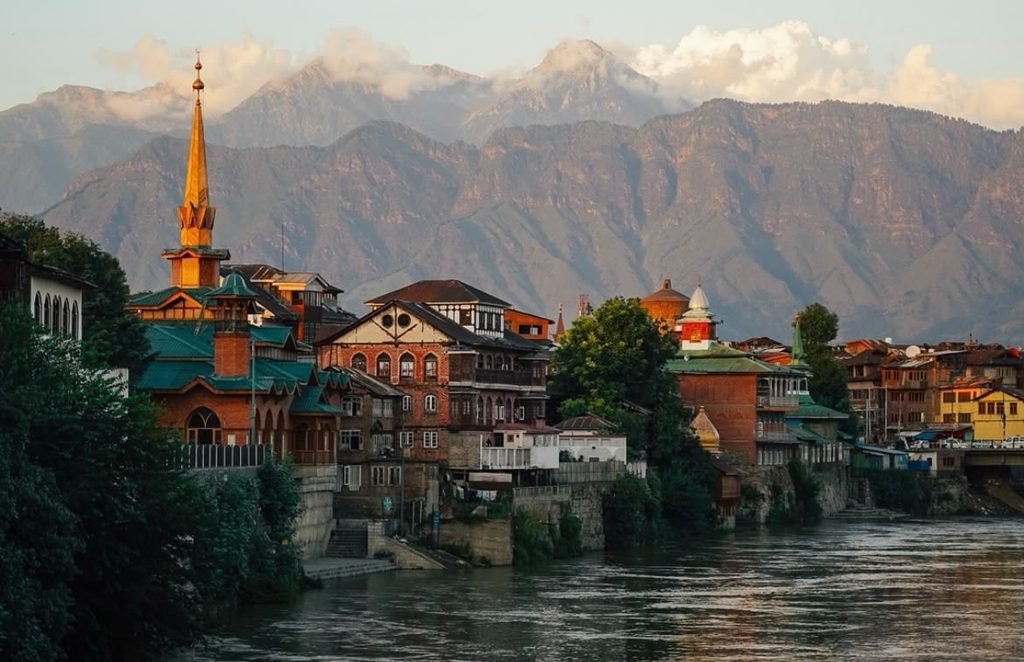
Historical Roots: From Ancient Pravarapura to Shehr-e-Khaas
To walk Old Srinagar is to walk across more than two millennia of layered urban history recorded in foundational texts like Kalhana’s Rajatarangini (12th century), Jonaraja’s Dvitiya Rajatarangini, Mirza Haidar Dughlat’s Tarikh-i-Rashidi, Abul Fazl’s Ain-i-Akbari, and Sir Walter Lawrence’s The Valley of Kashmir (1895).
Ancient Foundations (3rd Century BCE – 6th Century CE): Ashoka Maurya is credited in Kashmiri tradition with founding the earliest city of Srinagari near modern Pandrethan, while King Pravarasena II (6th century CE) established Pravarapura around the base of Hari Parbat (Sharika Parvata) and the Jhelum banks—forming the direct geographical footprint of today’s Old City.
The Shah Miri Sultanate & Persian Renaissance (1339–1561): Under rulers like Sultan Sikandar and Sultan Zain-ul-Abidin (“Budshah,” r. 1420–1470), Srinagar transformed into a major Central Asian and Persianate cultural hub. The arrival of Mir Sayyid Ali Hamadani (Shah-e-Hamdan) from Hamadan, Persia, accompanied by hundreds of skilled master craftsmen, introduced carpet weaving, papier-mâché, woodcarving, and shawl weaving that still anchor Old City neighborhoods (mohallas) today.
The Mughal Era (1586–1753): After Emperor Akbar annexed Kashmir in 1586, he ordered the construction of Nagar Nagor, a fortified stone-walled city around the base of Hari Parbat to house imperial administrators and artisans. Empress Nur Jahan and Emperor Shah Jahan added formal limestone mosques and gardens along the river.
Afghan, Sikh & Dogra Periods (1753–1947): Afghan Durrani governors built the hilltop citadel on Hari Parbat (1808), followed by Sikh rule under Maharaja Ranjit Singh’s governors and the Dogra dynasty, who expanded bridges, grain markets (gunjs), and river trade embankments.
Architectural Glossary: How to Read Old Srinagar’s Buildings?
Use this quick field decoder while walking Shehr-e-Khaas:
Taq System: Traditional load-bearing brick masonry laced horizontally with thick deodar cedar timber runners every few feet, allowing buildings to absorb seismic shock waves without collapsing.
Dhajji-Dewari: Timber-framed walls diagonally braced and infilled with brick or stone rubble—lightweight, flexible, and earthquake-resistant.
Dub: Projecting, enclosed carved wooden bay windows overhanging the Jhelum River and narrow streets, used by families to catch sunlight and river breezes.
Pinjrakari: Intricate, glue-less and nail-less wooden latticework screens fitted into shrine windows and balconies to filter harsh light while preserving privacy.
Khatamband: Interlocking geometric ceiling panels crafted from thin strips of walnut or fir wood without nails, visible inside shrines, heritage homes, and houseboats.
Burj-Posh (Birch-Bark Roof): Waterproof layers of Himalayan birch bark (bhojpatra) topped with earth, wooden shingles, or flowering irises—historically insulating Kashmiri roofs against heavy winter snow.
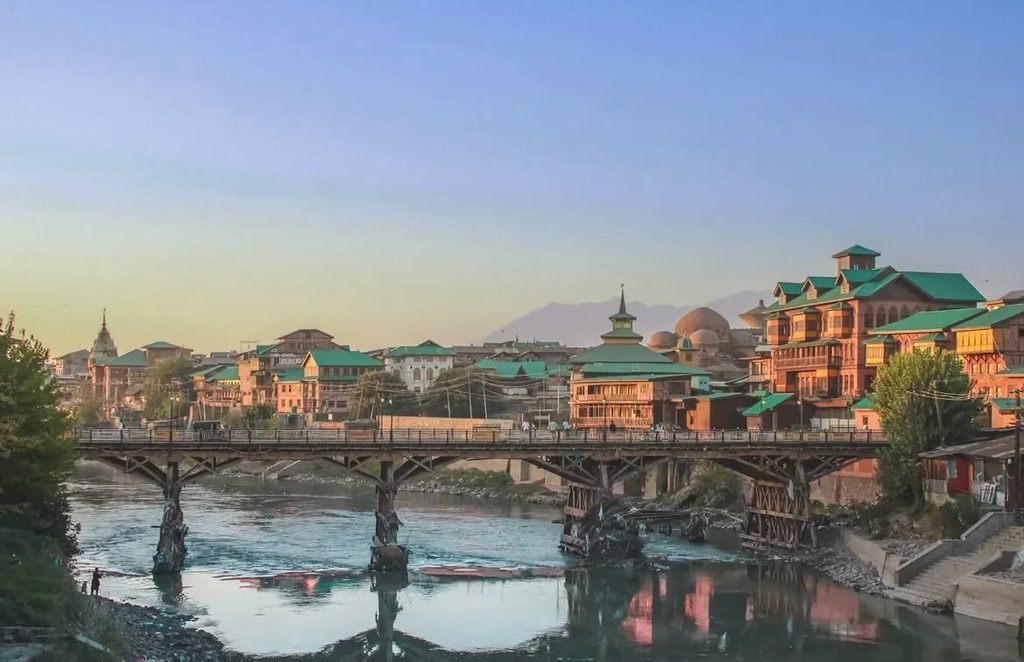
The Historic Seven Bridges (Sath Kadal) of the Jhelum?
Before modern motor bridges existed, Old Srinagar grew organically around seven historic timber-and-stone cantilever bridges (kadals), constructed using interlocking deodar cedar logs (deodar cribs) filled with stones—an engineering marvel resilient against Jhelum floods and Himalayan earthquakes. Ordered downstream from south to north:
Amira Kadal: Built in the 1770s by Afghan governor Amir Khan Sher Jawan; marks the gateway between modern Lal Chowk and the Old City.
Habba Kadal: Originally built in 1551 by Sultan Habib Shah; historically the heart of the Kashmiri Pandit neighborhood and traditional brass/copper trade.
Fateh Kadal: Built in 1499 by Sultan Fateh Shah; opens directly into dense spice, textile, and wholesale markets.
Zaina Kadal: Built in 1427 by Sultan Zain-ul-Abidin (Budshah); the iconic commercial artery linking the royal tombs, copper bazaars, and Shah-e-Hamdan shrine.
Aali Kadal: Built in 1415 by Sultan Ali Shah; surrounded by historic riverside timber mansions.
Nawa Kadal: Built in 1666 by Mughal governor Saif Khan; historically served grain and timber merchants.
Safa Kadal: Built in 1670 by Saif Khan; marks the northern downstream boundary of the classic Old City stretch.
In this video, you can watch the real and honest feedback of our guests who travelled with Panda Tours and Travels. Their experiences, kind words, and valuable reviews reflect the quality of services and hospitality we provide.
Cultural Etiquette, Photography & Safety Tips In Srinagar Old City?
Modest Attire: Wear full-length trousers or long skirts and sleeved tops. Women should carry a scarf or dupatta to cover their hair before entering Jamia Masjid, shrines, or gurdwaras.
Bullet Shoe Protocol: Always remove shoes before stepping onto carpeted prayer areas or marble shrine courtyards; small shoe-keeping stalls are available at major gates for a nominal tip (₹10–20).
Respectful Photography: Early morning and late afternoon provide dramatic sidelighting on carved wooden dub balconies and river ghats. Always ask permission before photographing shopkeepers, artisans, or worshippers, and never use flash or cameras inside active prayer halls.
Navigation & Local Guides: Old Srinagar’s mohallas form a dense web of alleys where GPS pins occasionally drift. Hiring a certified local heritage guide or architectural storyteller turns unmarked wooden doors into 500-year-old histories—and helps support preservation of endangered crafts.
Safety: Shehr-e-Khaas is warm, hospitable, and safe for solo travelers, couples, and families during daytime hours. Keep small denominations of cash handy for kandurs, chai stalls, auto-rickshaws, and direct purchases from artisan workshops.
Zaina Kadal, Budshah Tomb & Old Timber Houses (Srinagar Old City):
Location: Zaina Kadal & Maharaj Gunj Precinct
What to See: Walk along Zaina Kadal to inspect surviving 18th- and 19th-century merchant residences featuring taq (brick-and-timber masonry) and dhajji-dewari (braced timber-frame infill) construction, topped by overhanging dub (carved wooden bay windows).
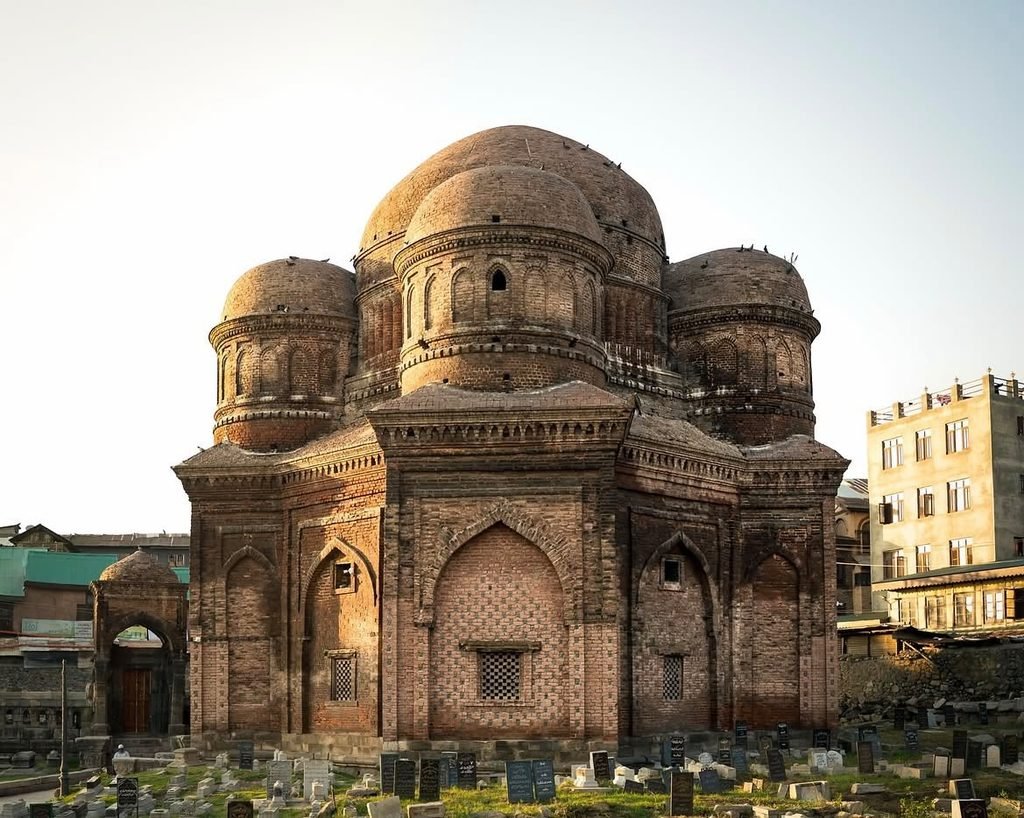
Budshah Tomb (Mazar-i-Salatin): Just off Zaina Kadal stands the brick mausoleum built circa 1430 by Sultan Zain-ul-Abidin for his mother (and later holding the graves of royal family members). Its Timurid-Central Asian five-domed design with glazed blue tile traces makes it unique in Kashmir. Continue through Maharaj Gunj (established in the Dogra era as a riverside trading hub) and Bohri Kadal spice and dry-fruit lanes.
Hari Parbat (Koh-e-Maran) Multi-Faith Circuit (12:30 PM – 2:00 PM)
Location: North of Nowhatta / Hawal
The 5 Landmarks on One Hill:
Akbar’s Fortification Wall & Kathi Darwaza (1590s): Massive grey-limestone perimeter ramparts built for Mughal Nagar Nagor, entered through the vaulted Kathi Darwaza inscribed with Persian verses.
Gurdwara Chatti Patshahi: Immediately outside Kathi Darwaza, commemorating the visit of the sixth Sikh Guru, Guru Hargobind Sahib.
Makhdoom Sahib Shrine: On the southern slope, the multi-tiered wooden shrine of 16th-century Kashmiri Sufi saint Sheikh Hamza Makhdoom (revered by both Muslims and Pandits).
Sharika Devi Temple: On the western slope, sacred to Goddess Sharika (an 18-armed form of Jagadamba), worshiped as the presiding deity (Ishta Devi) of Srinagar.
Hari Parbat Fort (Durrani Citadel, 1808): Built atop the summit by Afghan governor Ata Muhammad Khan / Shah Shuja Durrani, offering panoramic 360° views across Old Srinagar, Dal Lake, Nigeen Lake, and the Zabarwan Range. (Optional nearby add-on: Badamwari Garden at the northeastern foothill, famous for blooming almond orchards in March–April.)
Cultural Etiquette, Dress Code, Photography & Safety Rules
Dress Code: Wear full-length trousers or long skirts and tops covering shoulders and elbows. Women should carry a scarf/dupatta to cover their hair before entering Jamia Masjid, Khanqah-e-Moula, Dastgeer Sahib, or Gurdwara Chatti Patshahi.
Footwear Protocol: Remove shoes at designated entrance racks before stepping onto shrine courtyards or mosque carpets. Keep ₹10–₹20 coins handy for shoe-caretaker stalls.
Photography Ethics: Early morning (7:30–9:30 AM) and late afternoon (4:00–5:30 PM) yield the best light on carved dub balconies. Always ask verbal permission before photographing local residents, artisans, or worshippers, and never photograph inside active prayer halls.
Respecting Sacred Boundaries: Observe signage indicating inner sanctums reserved for worshippers; outer courtyards and architectural facades remain accessible and welcoming.
Safety & Cash: Downtown Srinagar is safe, hospitable, and pedestrian-friendly during daytime hours. Carry small-denomination Indian Rupee notes (₹10, ₹20, ₹50, ₹100) for kandurs, street snacks, auto-rickshaws, and direct craft purchases.
Frequently Asked Questions (FAQ):
What is Shehr-e-Khaas in Srinagar?
Shehr-e-Khaas (literally “The Special City,” also called Downtown Srinagar) is the 2,000-year-old historic core of Srinagar stretched along both banks of the Jhelum River, featuring 14th-century wooden shrines, Mughal mosques, seven historic bridges, artisan workshops, and traditional bazaars.
How much time is needed for a Srinagar Old City walking tour?
Allow 3.5 to 4 hours for the core 4.2 km Jhelum riverfront and Jamia Masjid loop, or 6.5 to 7 hours for a full-day walk including Khanyar artisan workshops, Hari Parbat Fort, and a traditional Wazwan lunch.
What is the best time of day to walk Old Srinagar?
Start between 7:30 AM and 8:30 AM. The lanes are uncrowded, soft morning light hits the carved wooden balconies along the Jhelum, shrine courtyards are peaceful, and neighborhood kandur bakeries are pulling fresh bread from clay ovens.
Which days or times should I avoid visiting Old Srinagar?
Avoid Fridays between 11:30 AM and 2:30 PM, when Jummah congregational prayers fill Jamia Masjid and Nowhatta roads to capacity, as well as major Eid and Urs festival days if you prefer quiet sightseeing.
What is the best season for a Srinagar Old City heritage walk?
Spring (late March to May) offers mild weather and blooming almond blossoms at Badamwari, while Autumn (September to November) turns the chinar trees inside Jamia Masjid crimson and gold. Winter (December to February) is ideal for foggy river photography and tasting dawn harissa.
How do I reach the starting point of the Old City walk?
Take an auto-rickshaw or taxi to Khanqah-e-Moula (Fateh Kadal side) or Nowhatta Chowk (around ₹100–₹180 by auto from Lal Chowk or Dal Gate). Alternatively, take a morning shikara from Dal Lake via the Nallah Mar/Jhelum link straight to the Khanqah Mohalla river ghat.
Is there an entry fee for Old Srinagar monuments?
Mosques, Sufi shrines, gurdwaras, temples, and bazaars are free to enter. Only Hari Parbat Fort charges a nominal Archaeological Survey of India (ASI) entry ticket (₹25 for Indian citizens and ₹300 for foreign nationals).
Landmarks, History & Architecture
Can non-Muslims enter Jamia Masjid and Khanqah-e-Moula in Srinagar?
Yes. Non-Muslim visitors are welcome inside the grand 378-pillar wooden courtyard of Jamia Masjid outside active prayer times, and may visit the riverfront ghats and outer courtyard of Khanqah-e-Moula.
What makes Jamia Masjid in Nowhatta architecturally unique?
Originally founded in 1400 AD by Sultan Sikandar and rebuilt in 1674 under Aurangzeb, Jamia Masjid features a serene 30,000-square-foot chahar-bagh courtyard surrounded by cloisters supported by 378 massive single-trunk deodar cedar pillars and crowned by four pyramidal spires.
Why are Khanqah-e-Moula and Pathar Masjid built in completely different styles?
Standing directly across the Jhelum River from each other, Khanqah-e-Moula (1395/1732) showcases indigenous Kashmiri timber-and-brick construction with a multi-tiered pyramidal birch-bark roof, whereas Pathar Masjid (1623, built by Mughal Empress Nur Jahan) is built entirely of dressed grey limestone with nine Mughal arches and a flat roof.
What are the Seven Bridges (Sath Kadal) of Old Srinagar?
The seven historic timber-and-stone cantilever bridges spanning the Jhelum from south to north are Amira Kadal, Habba Kadal, Fateh Kadal, Zaina Kadal, Aali Kadal, Nawa Kadal, and Safa Kadal.
What is Budshah Tomb (Mazar-i-Salatin) near Zaina Kadal?
Built circa 1430 by Sultan Zain-ul-Abidin (“Budshah”) for his mother, Budshah Tomb is a rare Timurid-influenced five-domed brick mausoleum featuring octagonal corner turrets and traces of turquoise glazed tilework.
What can you see at Hari Parbat (Koh-e-Maran)?
Hari Parbat unites Kashmir’s multi-faith history on a single hill: Emperor Akbar’s 1590s stone fortification wall and Kathi Darwaza, Gurdwara Chatti Patshahi, the Sufi shrine of Sheikh Hamza Makhdoom, the Sharika Devi Temple, and the 1808 Afghan Durrani summit fort overlooking Srinagar and Dal Lake.
What is the Rozabal Shrine in Khanyar?
Located in a quiet lane in Khanyar, Rozabal is a modest stone-and-timber shrine housing the tombs of medieval saint Yuz Asaf and Mir Sayyid Naseer-ud-Din, attracting both local devotees and international travelers interested in historical traditions.
What are Taq and Dhajji-Dewari in Old Srinagar houses?
Taq (brick masonry laced horizontally with deodar timber runners) and Dhajji-Dewari (diagonally braced timber frames filled with brick rubble) are traditional Kashmiri seismic-resistant building methods designed to flex during earthquakes without collapsing.
What are Dub, Pinjrakari, and Khatamband?
Dub are projecting carved wooden bay windows overhanging the Jhelum; Pinjrakari is nail-less wooden latticework on shrine windows; and Khatamband is interlocking geometric ceiling paneling made from walnut or fir wood without nails.
Crafts, Bazaars & Shopping
Which crafts can I see being made in Old Srinagar workshops?
In the karkhanas (workshops) of Khanyar, Zaina Kadal, Nalbandpora, and Alamgari Bazar, you can watch artisans hand-weaving Kani and Sozni Pashmina shawls, painting papier-mâché, chiseling kandkari copperware, and assembling khatamband ceilings.
Where are the oldest traditional markets in Shehr-e-Khaas?
Zaina Kadal, Maharaj Gunj, and Bohri Kadal are the historic commercial hubs where wholesale spice merchants, dry-fruit dealers, saffron traders, and copperware guilds have operated for centuries.
How can I verify authentic Kashmiri Pashmina and crafts in the Old City?
Visit family-run workshops or heritage centers like Bait-ul-Meeras where you can see hand-spun yarn and wooden looms firsthand, and look for official Craft Development Institute (CDI) GI-tag certification labels on genuine handwoven Pashmina.