
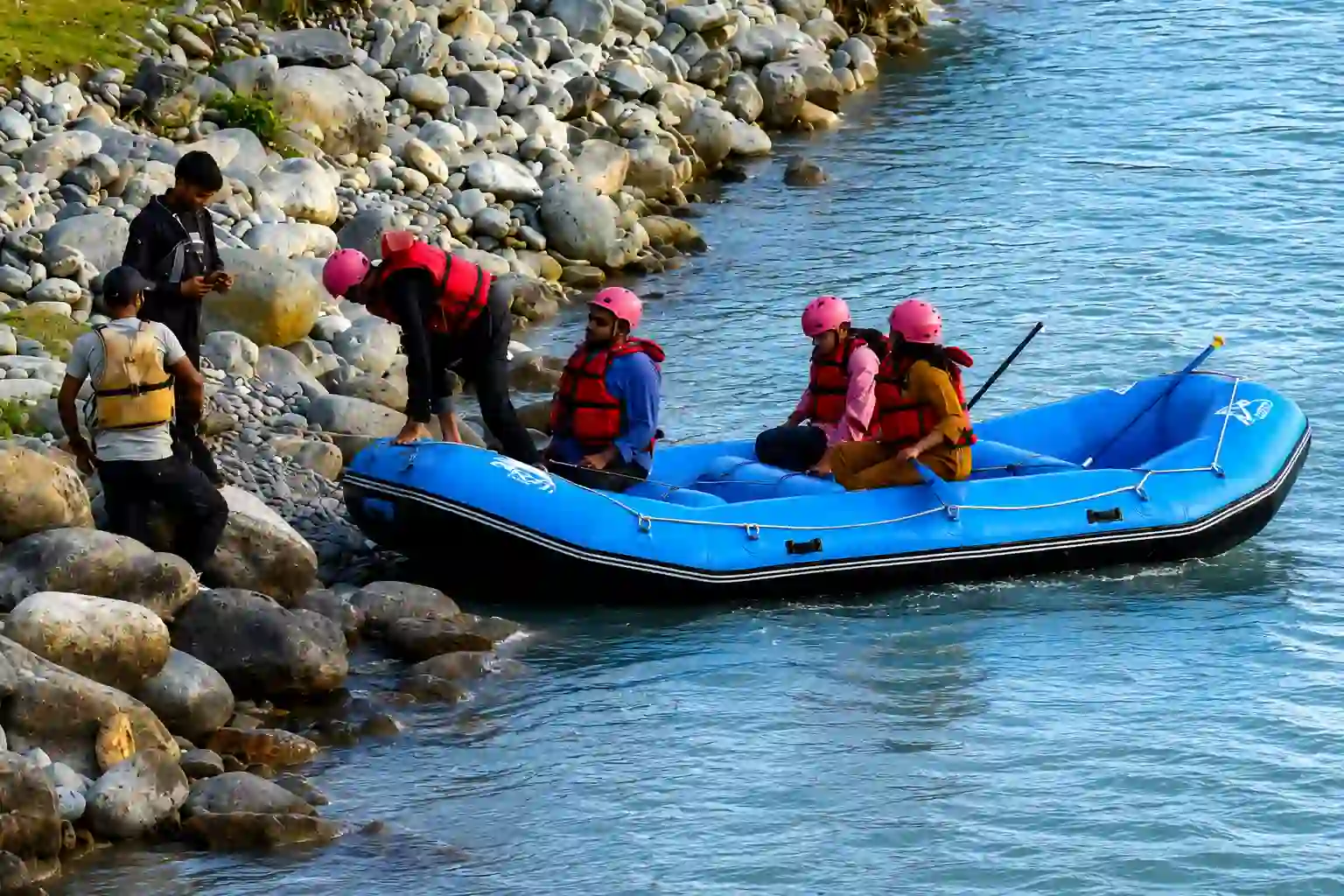
River rafting in Kashmir is centred on two rivers: the Lidder River in Pahalgam and the Sindh River in Sonamarg, both glacier-fed and rafted mainly between April and September. Pahalgam offers shorter, gentler stretches suited to first-timers, while Sonamarg’s Sindh River carries stronger, colder currents through a narrower gorge. Rafting here is charged per person for a specific point-to-point stretch rather than by kilometre — a current tourism trade rate list for Pahalgam puts a base stretch at ₹750 per person, while Sonamarg rafting is commonly quoted around ₹1,500 per person on longer or faster stretches. Exact pricing, distance and grade depend on the operator, season and river conditions, so confirming the specific stretch and current rate before paying is genuinely worth doing.
Panda Tours and Travels is a Srinagar-based local tour operator serving travellers across Jammu and Kashmir. Registration No.: JKEA00006046 GST No.: 01BDCPA2043R1ZY Call or WhatsApp +91 7006982655 for river rafting assistance and Kashmir travel support.
What Is River Rafting in Kashmir?
River rafting in Kashmir is a seasonal white-water activity run on two main glacier-fed rivers — the Lidder in Pahalgam and the Sindh in Sonamarg. Groups of rafters, fitted with a life jacket and helmet, paddle an inflatable raft down a defined stretch of river under the direction of a guide, covering anywhere from a short 2.5 km “joy ride” to longer stretches of 5–9 km depending on the location and operator. It’s a seasonal activity tied directly to snowmelt: the rivers carry enough volume for rafting roughly from April through September, and are effectively closed the rest of the year once water levels drop.
Where Can You Do River Rafting in Kashmir?
There are two established rafting destinations in the Kashmir Valley.
River Rafting in Pahalgam on the Lidder River
Pahalgam, around 90–95 km from Srinagar in Anantnag district, sits on the Lidder River — a river fed by the Kolahoi Glacier that runs through pine forest and open valley. Rafting here is generally the gentler, more accessible of the two options, with a short stretch suitable for first-timers and longer stretches for those who want more current.
River Rafting in Sonamarg on the Sindh River
Sonamarg, roughly 80–85 km from Srinagar in Ganderbal district, sits on the Sindh River, which is fed by glaciers near the Zoji La and Nichnai areas. The Sindh generally carries colder, faster water than the Lidder, and rafting sections here tend to run through a narrower gorge with a stronger current.
Which Is the Best Place for River Rafting in Kashmir?
There isn’t a single “better” answer — it depends on what a traveller wants.
Choose Pahalgam if this is a first rafting experience, if children or older family members are joining, if the trip is combined with a broader Pahalgam sightseeing day (Betaab Valley, Aru Valley), or if a shorter, calmer stretch is preferred.
Choose Sonamarg if a stronger current and colder, more dramatic glacial water is the priority, if the visit is already built around Sonamarg’s Thajiwas Glacier and Zoji La area, or if a more intense short adventure fits better into the itinerary than a long float.
Either way, the deciding factors that actually matter are the specific stretch offered on the day, current river conditions, and the price quoted for that stretch — not a blanket claim that one destination is universally superior.
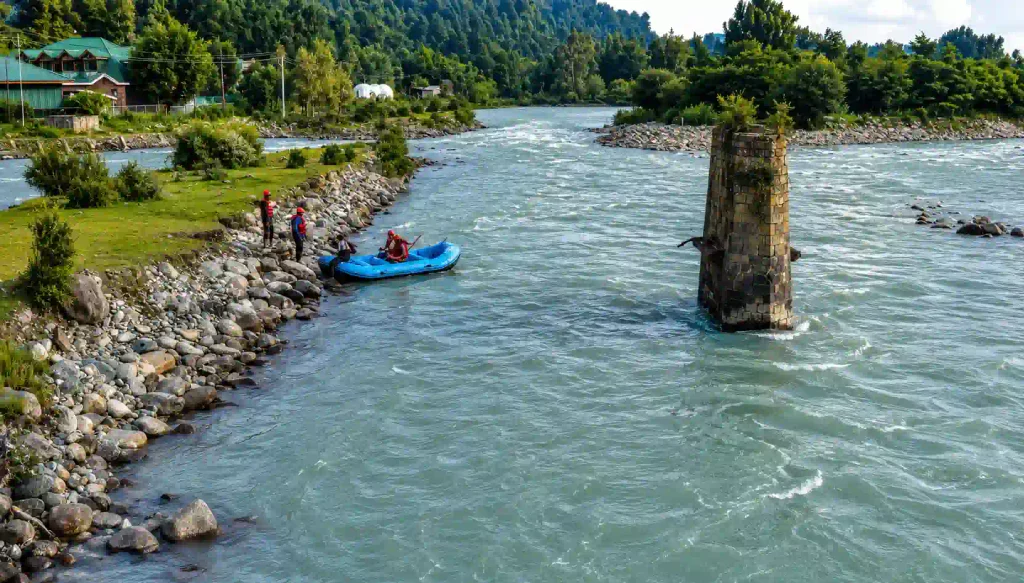
River Rafting in Pahalgam
Pahalgam Rafting Route and Start Point
Rafting on the Lidder River is typically launched from points along the road toward Aru Valley, with a well-known short stretch beginning near Lamganbal Bridge. Exact put-in and take-out points can differ slightly by operator and by which stretch (short, medium or long) is booked, so confirm the specific start and end point at the time of booking rather than assuming it matches every online description.
Pahalgam Rafting Distance
The most commonly cited option is a minimum 2.5 km stretch — this is the stretch that appears on Pahalgam’s current tourism trade rate list. Longer options exist too; various current sources describe medium stretches around 5 km and longer stretches of 8–9 km, offered by individual operators as separate, higher-priced trips rather than an extension of the same rate.
Pahalgam Rafting Grade
The Lidder’s rafting sections are generally rated in the Grade I–III range, making them accessible to beginners, though a small number of operators describe sections running up to Grade IV on the longer stretches. Grade can shift with the season, since higher water volume in June–July generally means livelier rapids than in late summer.
Pahalgam Rafting Duration
The short 2.5 km stretch typically takes roughly 20–30 minutes on the water, not counting the safety briefing and gearing-up time beforehand. Longer stretches take proportionally more time. Total time at the site, including briefing and transfer between raft points, usually runs closer to an hour or more.
Who Is Pahalgam Rafting Suitable For?
The short stretch is broadly considered suitable for beginners and families, subject to the operator’s age and health requirements. Longer, faster stretches are better suited to those who already have some comfort in moving water. This is a general pattern, not a guarantee — actual suitability depends on the operator’s own assessment on the day, water levels, and each participant’s health and comfort.
Pahalgam Rafting Price
A current tourism trade rate list for Pahalgam lists rafting at ₹750 per person per trip, for a minimum 2.5 km stretch, inclusive of lifesaving equipment (life jacket and related safety gear). This is a currently published trade rate rather than something Panda Tours and Travels sets — treat it as a strong reference point for the base stretch, and confirm the applicable rate for your exact stretch and date directly with the rafting point before paying. Longer stretches (5 km, 8–9 km) are priced separately and higher by individual operators, with online sources showing a broad range of roughly ₹500–₹2,500 per person depending on stretch, season and group size. This is exactly why it matters to ask which stretch a quoted price actually covers — more in the pricing section below.
River Rafting in Sonamarg
Sonamarg Rafting Route and Start Point
Sonamarg’s rafting is run on the Sindh River, with put-in points generally around the Baltal/Wussan area above Sonamarg and take-out points closer to Sonamarg town, near Shutkari Bridge. As with Pahalgam, the exact stretch offered can vary by operator and by current river conditions, so confirm the specific start and end point when booking.
Sonamarg Rafting Distance
Sources differ noticeably here — some describe two distinct stretches (a shorter one and a longer, more moderate one), others describe a single longer run. Because this figure genuinely varies by source and possibly by which specific stretch is being described, the safest approach is to confirm the exact distance for the stretch you’re booking rather than relying on a single quoted number.
Sonamarg Rafting Grade
Sindh River rafting is generally described as Grade I–II on the shorter stretch and Grade II or higher on the longer, faster stretch, with a few sources citing sections up to Grade IV. The Sindh tends to run colder and, on its faster sections, stronger than the Lidder, which is part of why Sonamarg is often positioned as the more intense of the two rafting locations.
Sonamarg Rafting Duration
Duration scales with the stretch chosen, similar to Pahalgam — shorter stretches run well under an hour on the water, longer ones take more. Add time for the safety briefing and travel between the launch and exit points.
Who Is Sonamarg Rafting Suitable For?
The shorter, calmer stretch is generally positioned as suitable for beginners, while the longer, faster stretch suits those wanting a stronger current. Because the Sindh’s water is notably cold even in peak summer, general fitness and comfort with cold water matter here more than on the Lidder.
Sonamarg Rafting Price
Rafting on the Sindh River is commonly quoted around ₹1,500 per person for the longer or faster stretch, sitting at the upper end of a wider current range (roughly ₹800–₹1,500 per person depending on stretch and operator) reported across current local sources. Unlike Pahalgam’s rate, this figure isn’t tied to a single published trade rate list that could be independently confirmed, so treat ₹1,500 as a current operator-published reference point rather than a fixed official tariff, and reconfirm the exact stretch and rate directly before booking.
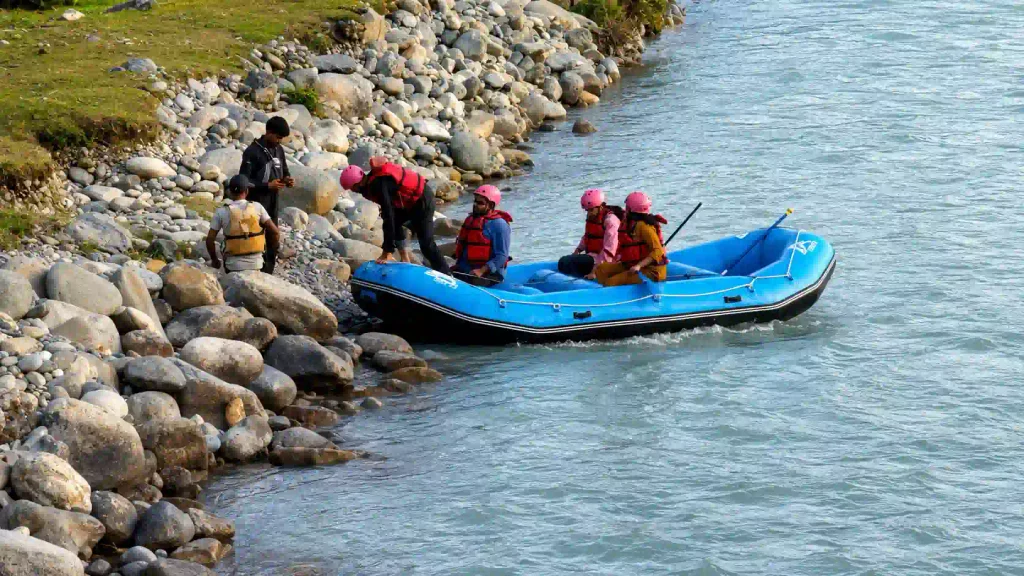
River Rafting in Kashmir Price 2026
Short answer: Pahalgam rafting starts from around ₹750 per person for a base 2.5 km stretch (a currently published trade rate), while Sonamarg rafting is commonly quoted around ₹1,500 per person for its longer stretch. Both figures apply to a specific stretch, not a blanket kilometre rate — see the table and explanation below.
River Rafting Price Table (2026 Reference)
| Location | River | Point-to-Point Stretch | Distance | Grade | Duration | Current Price | Verification |
|---|---|---|---|---|---|---|---|
| Pahalgam | Lidder River | Base/short stretch (near Lamganbal Bridge / Aru road) | Minimum 2.5 km | Grade I–III (higher on longer runs, per some operators) | ~20–30 min on water | ₹750 / person | Current tourism trade rate list |
| Pahalgam | Lidder River | Medium/long stretch | ~5–9 km (operator-dependent) | Grade I–III+ | Confirm current duration | Confirm current rate | Operator-published, not on the base trade list |
| Sonamarg | Sindh River | Shorter stretch | Confirm current stretch | Grade I–II | Confirm current duration | Confirm current rate | Secondary source range only |
| Sonamarg | Sindh River | Longer/faster stretch | Confirm current stretch | Grade II+ (up to IV per some sources) | Confirm current duration | ₹1,500 / person (reference) | Current operator-published reference |
Why Rafting Pricing Is not a Per-Kilometre Rate
This is the single most useful thing to understand before booking: Kashmir rafting is priced per stretch, not per kilometre. A quoted price covers a defined point-to-point run — a fixed start point and a fixed end point — decided in advance, not a distance you can extend by paying proportionally more per kilometre. Two operators quoting different prices are very often describing two different stretches, not the same stretch at two different rates. A 2.5 km stretch at ₹750 and a longer stretch at a higher price aren’t the same product scaled up; they’re separate bookings with separate start and end points, separate durations, and sometimes separate grades.
This also explains why online prices vary so much between sources: one blog’s “₹660” might describe a short, calm float, while another’s “₹1,500” describes a genuinely longer, faster run on a different part of the same river. Neither figure is necessarily wrong — they’re just describing different stretches.
Seasonal water levels, local operational decisions, and group size can also shift the quoted rate for the same stretch across the season, so treat every online price — including the ones in this guide — as a starting reference to confirm, not a locked-in number.
What Is the Best Time for River Rafting in Kashmir?
Short answer: River rafting in Kashmir generally runs from April through September, with the strongest water flow around June and July as glacial snowmelt peaks.
Both the Lidder and Sindh are glacier-fed rivers, so rafting availability tracks water volume rather than a fixed calendar. Early in the season (April–May), water can be very cold and, depending on the year, either high and fast from early snowmelt or still building up. By June–July, flow is typically at its strongest, giving the most energetic rapids. Late summer into September usually sees calmer, more manageable water as the melt tapers off, though this can vary year to year.
Weather and river conditions can trigger temporary closures at short notice — heavy rain, a sudden rise in water level, or safety concerns from local operators can pause rafting for a day or more even within the general season. If your travel dates fall right at the edges of the season (early April or late September/October), it’s worth checking current operational status close to your travel date rather than assuming rafting will definitely be running.
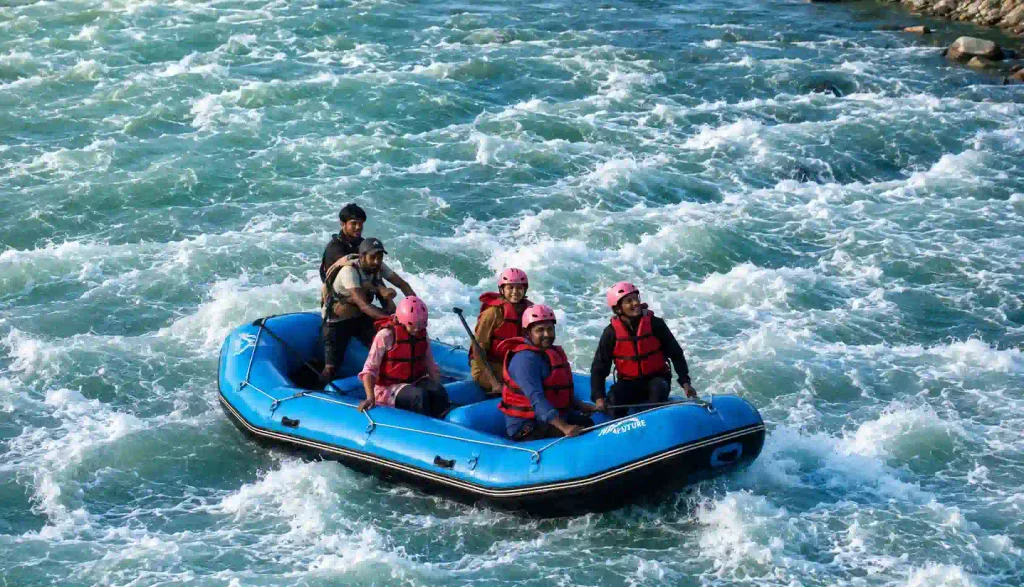
Is River Rafting in Kashmir Safe?
Short answer: River rafting in Kashmir, like white-water rafting anywhere, carries inherent risk, but registered operators run it under standard safety measures — life jackets, helmets on longer/faster stretches, a safety briefing, and a guide in the raft — that meaningfully reduce that risk when instructions are followed.
Before any trip, expect a briefing covering paddle commands, what to do if you fall out, and how to hold your paddle. A guide accompanies the raft throughout. Because both rivers are glacier-fed, the water is cold even in peak summer, which is its own factor to plan for (see the clothing section below). Weather and sudden changes in water level are the other major variable — operators may adjust or pause trips based on current conditions, and that call should always be respected rather than pushed against.
River rafting in Kashmir is not risk-free, and no responsible operator will claim otherwise. The realistic goal is managed risk: wear the life jacket the entire time, listen to the guide, and treat any on-the-spot safety call as final.
This is general safety information, not a substitute for the operator’s own briefing on the day.
Is River Rafting in Kashmir Safe for Beginners?
Short answer: Yes, generally — the shorter, calmer stretches on both rivers (particularly Pahalgam’s base 2.5 km stretch) are commonly positioned as beginner-appropriate, while longer or faster stretches are better suited to those with some prior comfort in moving water.
Not every stretch on either river is equally suitable for a first-timer. A beginner booking the longer Sindh River run expecting the same experience as the shorter Lidder stretch may find the current considerably stronger than anticipated. If this is a first rafting trip, say so when booking, and ask specifically which stretch is recommended for beginners that day.
Can Non-Swimmers Do River Rafting in Kashmir?
Short answer: It depends on the stretch, the operator, and the current local safety rules — swimming ability is not universally irrelevant, and it should be confirmed directly rather than assumed either way.
A life jacket keeps a person afloat regardless of swimming ability, which is why many operators do accept non-swimmers on calmer stretches. But some operators and some stretches — particularly longer or faster runs — may set their own requirements around swimming ability or comfort in water. Don’t assume either that swimming ability is required everywhere or that it’s irrelevant everywhere; ask directly for the specific stretch you’re booking.
What Is the Minimum Age for River Rafting in Kashmir?
Short answer: Age eligibility can vary by rafting stretch, operator and current local rules — commonly cited figures range from around 10 to 12 years, but this should be confirmed before booking rather than assumed.
Different current sources quote different minimum ages, and it’s plausible this varies by stretch (a calm 2.5 km float versus a longer, faster run) as much as by blanket policy. If travelling with children, confirm the specific age requirement for the stretch you intend to book, ideally when you call to reserve.
Can Children Go River Rafting in Kashmir?
Short answer: Children above the applicable minimum age can generally join the calmer, shorter stretches, subject to the operator’s own assessment on the day — there isn’t one universal minimum age that applies everywhere.
Families travelling with children are generally better placed on the shorter, calmer stretches (typically Pahalgam’s base stretch) than a longer or faster run. Confirm the age policy and any size/weight requirements for life jackets directly with the operator before booking.
What Should You Wear for River Rafting in Kashmir?
Because both rivers are glacier-fed, the water stays cold even during peak summer. Recommended clothing:
- Quick-drying synthetic clothing rather than cotton, which stays wet and cold once soaked
- Secure footwear — sports sandals or old trainers that can get wet; avoid open sandals that can slip off
- A change of dry clothes to put on immediately after the trip
- A light warm layer for after the raft, since Pahalgam and Sonamarg both sit at altitude and can feel cool even in summer once you’re wet
- Remove loose jewellery, watches and anything you don’t want to risk losing in the water
Wetsuits are not standard equipment at every operator; some may offer them for rent, others may not. Confirm this directly rather than assuming one is included.
What Equipment Is Provided for River Rafting in Kashmir?
Safety equipment: A life jacket is standard for every rafter, and many operators also provide a helmet, particularly on longer or faster stretches.
Rafting equipment: The raft itself and paddles are provided as part of the trip.
Guide/instructor: A guide accompanies the raft and leads the safety briefing before departure.
Optional items: Wetsuits, dry bags for valuables, and photography/videography services may be available for an additional charge at some operators — confirm what’s included in your quoted price versus what’s extra.
How Long Does River Rafting Take in Kashmir?
Short answer: Total time depends heavily on the stretch — a short 2.5 km run is typically 20–30 minutes on the water, while longer stretches take proportionally more, and the full visit (briefing, gearing up, transfer between points) usually adds another 20–40 minutes on top.
There isn’t one universal duration that applies to every stretch on both rivers, so if timing matters for your day’s schedule, ask for the expected total time — on the water plus briefing and transfer — for the specific stretch you’re booking.
River Rafting in Kashmir Timings
Rafting generally operates during daylight hours in the warmer months, roughly from mid-morning through late afternoon, though exact opening and closing times can shift based on:
- Current weather conditions
- River flow on the day
- Safety assessments by local operators
- Seasonal daylight and operational schedules
Because timings aren’t fixed year-round and can change with conditions, confirm the current day’s operating hours when you book rather than relying on a generic time range.
How to Reach the River Rafting Points in Pahalgam
Pahalgam sits roughly 90–95 km from Srinagar city by road, a drive of about 2.5–3.5 hours via NH44 through Anantnag. For a full breakdown of route options, travel time and taxi fares, see Panda Tours and Travels’ guide to the Srinagar to Pahalgam distance. Rafting points sit along the road toward Aru Valley, generally reached by local transport once you’re in Pahalgam itself.
How to Reach the River Rafting Points in Sonamarg
Sonamarg is roughly 80–85 km from Srinagar, with rafting points near the Baltal/Wussan stretch above the town. If you’re combining rafting with the area’s well-known glacier and pass views, Panda Tours and Travels’ guide to top Sonamarg sightseeing places is a useful reference for planning the rest of the day around your rafting slot.
Can You Book River Rafting in Kashmir in Advance?
Short answer: Yes, advance booking is generally possible and recommended in peak season, though same-day booking often works too depending on current availability and river conditions.
A few practical points on booking:
- Advance booking helps avoid waiting time, especially in the busier June–August window
- Confirm the current availability and river conditions for your travel date rather than assuming rafting will definitely run
- Confirm the exact stretch, price and what’s included when you book — not just a general destination
- Have a backup activity or day in mind in case weather or water levels force a last-minute change
Panda Tours and Travels can help confirm current rafting availability at the time of your Kashmir trip and coordinate the booking alongside the rest of your itinerary — call or WhatsApp +91 7006982655.
Pahalgam vs Sonamarg for River Rafting
| Factor | Pahalgam (Lidder River) | Sonamarg (Sindh River) |
|---|---|---|
| River | Lidder River | Sindh River |
| Typical rafting character | Generally calmer, more accessible | Generally colder, stronger current |
| Route/stretches | Base 2.5 km stretch, plus longer operator-run stretches | Shorter and longer stretches; confirm exact distance |
| Difficulty | Grade I–III typically | Grade I–II on shorter stretch, higher on longer stretch |
| Beginner suitability | Base stretch commonly positioned for beginners | Shorter stretch commonly positioned for beginners |
| Scenery | Pine forest, open Lidder Valley | Narrower gorge, glacier and high-peak views |
| Price consideration | From ₹750/person (base stretch, current trade rate) | Around ₹1,500/person (longer stretch, current reference) |
| Booking consideration | Easy to combine with Betaab/Aru Valley sightseeing | Easy to combine with Thajiwas Glacier/Zoji La visit |
Things to Check Before Booking River Rafting in Kashmir
- Is the operator’s current operating status confirmed for your travel date?
- What is the exact rafting stretch — named start point and end point?
- Is the quoted price per person, and does it cover that full stretch?
- Is the price current, or is it an older figure from a blog or comparison site?
- What grade is the stretch, and does that match your comfort level?
- What is the minimum age and any health requirement for this specific stretch?
- What safety equipment is included — life jacket, helmet?
- Is a guide included in the raft?
- What is the meeting point, and how do you get there?
- What are current weather and river conditions?
- What is the cancellation or rescheduling policy if conditions change?
Booking River Rafting Assistance with Panda Tours and Travels
Panda Tours and Travels is a Srinagar-based local tour operator that can help travellers plan Kashmir trips that include river rafting in Pahalgam or Sonamarg, alongside sightseeing, transport and accommodation. We don’t set rafting tariffs — those rates come from the tourism trade and individual rafting operators — but we can help confirm current availability, coordinate transport to the rafting point, and fit a rafting stop into a broader Kashmir itinerary.
For rafting-related planning or any part of your Kashmir trip, call or WhatsApp +91 7006982655.




Frequently Asked Questions About River rafting in Kashmir
What is river rafting in Kashmir?
It’s a seasonal white-water rafting activity run on the glacier-fed Lidder River in Pahalgam and the Sindh River in Sonamarg, generally available from April through September depending on water levels.
Where can I do river rafting in Kashmir?
The two established locations are Pahalgam, on the Lidder River, and Sonamarg, on the Sindh River — both reachable by road from Srinagar in a few hours.
Which is the best place for river rafting in Kashmir, Pahalgam or Sonamarg?
It depends on your priorities: Pahalgam suits beginners, families and calmer water, while Sonamarg suits travellers wanting a colder, stronger current on the Sindh River.
What river is used for rafting in Pahalgam?
The Lidder River, a glacier-fed river originating near the Kolahoi Glacier.
What river is used for rafting in Sonamarg?
The Sindh River, fed by glaciers near the Zoji La and Nichnai areas.
What is the price of river rafting in Kashmir?
Pahalgam’s base stretch is currently listed at ₹750 per person on a tourism trade rate list; Sonamarg’s longer stretch is commonly quoted around ₹1,500 per person. Both should be reconfirmed for your specific stretch and date.
Is rafting charged by kilometre in Kashmir?
No. Rafting is priced per defined point-to-point stretch, not by a per-kilometre formula — a quoted price covers a specific start and end point, not a distance you can extend proportionally.
What does point-to-point rafting mean?
It means the price you’re quoted applies to a fixed stretch of river with a set start point and end point, decided in advance — not an open distance charged per kilometre travelled.
What is the best time for river rafting in Kashmir?
Generally April through September, with the strongest water flow around June and July as glacial snowmelt peaks.
Is river rafting safe in Kashmir?
Yes, river rafting in Kashmir can be a safe activity when conducted through a properly equipped operator and when participants follow the required safety instructions.
Can non-swimmers do river rafting in Kashmir?
It depends on the stretch and operator; life jackets support non-swimmers on many trips, but requirements can vary, so confirm directly before booking.
What is the age limit for river rafting in Kashmir?
Commonly cited figures range from around 10 to 12 years, but this can vary by stretch and operator, so confirm before booking, especially for children.
Can children go rafting in Kashmir?
Generally yes on calmer, shorter stretches once they meet the applicable minimum age, subject to the operator’s own assessment on the day.
How long does river rafting take in Kashmir?
A short 2.5 km stretch typically runs 20–30 minutes on the water; longer stretches take more, plus time for briefing and transfer.
What should I wear for river rafting in Kashmir?
Quick-drying synthetic clothing, secure footwear that can get wet, and a warm layer and dry change of clothes for afterward — the water stays cold even in summer.
What equipment is provided for river rafting in Kashmir?
A life jacket is standard; many operators also provide a helmet, along with the raft, paddles and a guide. Wetsuits and extras like photography may cost more.
Is river rafting in Kashmir available in April?
Rafting can begin around April depending on that year’s snowmelt and water levels, but early-season conditions vary, so confirm current availability close to your travel date.
Is river rafting in Kashmir available in June and July?
Yes, June–July is generally the peak window with the strongest water flow, though temporary pauses can still occur due to weather or sudden water-level changes.
Is river rafting in Kashmir available in September?
Rafting typically continues into September, though water levels are usually calmer by then compared to peak summer.
Is river rafting available in Kashmir in winter?
No — river rafting is a seasonal activity tied to snowmelt-driven water levels, and it does not operate through the winter months.
Can I book river rafting in Kashmir in advance?
Yes, advance booking is possible and recommended in peak season; same-day booking may also work depending on current availability and river conditions.
Does the price include equipment and a guide?
Standard safety equipment (life jacket, often a helmet) and a guide are generally part of the quoted price, but always confirm what’s included versus what’s charged separately, such as wetsuits or photography.
How do I get from Srinagar to the rafting points?
Pahalgam is around 90–95 km from Srinagar (about 2.5–3.5 hours by road), and Sonamarg is around 80–85 km — both reachable by private taxi, shared taxi or as part of an organised day trip.
Can Panda Tours and Travels arrange river rafting in Kashmir?
Panda Tours and Travels, based in Srinagar, can help coordinate transport and itinerary planning around a rafting visit in Pahalgam or Sonamarg — call or WhatsApp +91 7006982655 for current availability.