
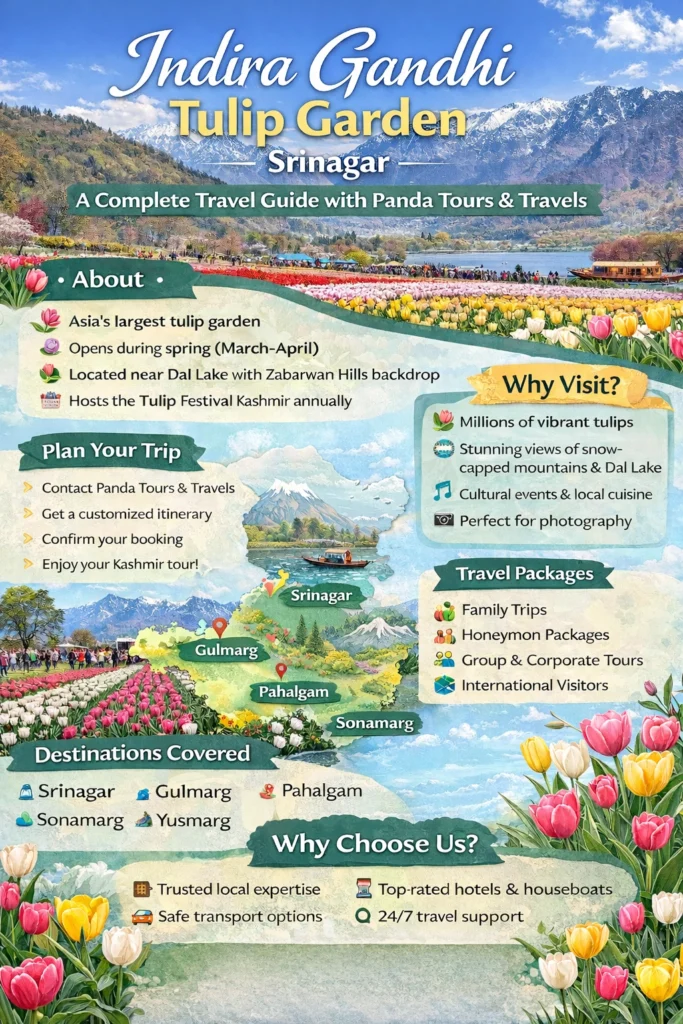
Indra Gandhi Tulip Garden is a terraced garden in Srinagar, built on the foothills of the Zabarwan Range and overlooking Dal Lake. Widely referred to as Asia’s largest tulip garden, it is spread across seven sloping terraces and blooms only for a few weeks each spring, when it opens to the public along with the annual Kashmir Tulip Festival.
Panda Tours and Travels is a Srinagar-based local tour operator that helps travelers plan Kashmir sightseeing, including visits to Indira Gandhi Tulip Garden and nearby attractions around Dal Lake. The team arranges local transportation, day-wise itineraries and practical on-ground assistance for families, couples and groups visiting Srinagar. For route planning, taxi bookings or a customized Srinagar sightseeing day, you can reach Panda Tours and Travels at +91 7006982655. Registration No.: JKEA00006046 . GST No.: 01BDCPA2043R1ZY
Indra Gandhi Tulip Garden Srinagar at a Glance
| Detail | Information |
|---|---|
| Official name | Indira Gandhi Memorial Tulip Garden |
| Former name | Model Floriculture Center (the site sits in the area known locally as Siraj Bagh) |
| Location | Foothills of the Zabarwan Range, Srinagar, Jammu & Kashmir |
| Approximate area | About 30 hectares (roughly 74 acres) |
| Terraces | Seven sloping terraces |
| Setting | Zabarwan hillside, overlooking Dal Lake |
| Famous for | Widely described as Asia’s largest tulip garden |
| Best season | A short spring window, generally mid-to-late March through mid-April, depending on weather |
| Nearby attractions | Chashme Shahi, Pari Mahal, Nishat Bagh, Shalimar Bagh, Dal Lake |
| Recommended visit duration | Roughly 1 to 2.5 hours, depending on pace and crowd |
A note on precision here: tulip counts, variety numbers, exact opening dates and ticket prices are revised almost every season by the Department of Floriculture, so treat any single number you see online including in this article as indicative rather than fixed. For the current-season opening status, see our dedicated Tulip Garden opening date page, which we update as fresh information comes in.
Why Is Indira Gandhi Tulip Garden Famous?
The short answer: it’s the scale and setting together, not the flowers alone.
Most gardens in Srinagar are compact, walled, and shaded by chinar trees. Tulip Garden is the opposite an open, sloping hillside where thousands of tulip beds run down toward Dal Lake in wide colour blocks, with the Zabarwan Range rising directly behind. That combination of open sky, terraced landscape, lake view and mountain backdrop in a single frame is what makes it stand out from a typical city park, and it’s the reason the garden photographs so differently from Srinagar’s other gardens.
It’s also tied closely to the Kashmir Tulip Festival, held during the bloom window each spring, which adds cultural programs, local food and handicraft stalls on top of the floral display turning a garden visit into more of a seasonal event than a simple sightseeing stop.
And because the bloom only lasts a few weeks a year, there’s a built-in sense of timing that most other Srinagar attractions don’t have. You either catch it in season, or you don’t which is part of why it draws such concentrated tourist interest every spring.
Where Is Indira Gandhi Tulip Garden in Srinagar?
The garden sits on the lower slopes of the Zabarwan Range, in the Siraj Bagh area, with Dal Lake directly below it. In terms of the city’s layout:
- From Lal Chowk (city centre): it’s a short drive, generally cited in the range of 7–9 km, depending on the exact route taken.
- From Dal Lake / Boulevard Road: it’s one of the closest major attractions, only a few kilometres from the lakefront.
- From Srinagar Airport (Sheikh ul-Alam International Airport): figures vary by source, generally somewhere in the mid-to-high teens of kilometres — plan for a taxi ride of roughly 30–45 minutes depending on traffic and time of day.
- From Srinagar Railway Station: similarly in the high-teens-of-kilometres range by road.
Because it’s so close to Dal Lake, it’s usually treated as part of the same sightseeing loop as the Boulevard Road gardens, rather than a separate day trip.
History of Indira Gandhi Memorial Tulip Garden
What Was the Garden Called Before?
Before it became a tulip garden, the site operated as the Model Floriculture Center, in the Siraj Bagh area of Srinagar — a nursery and floriculture research space rather than a public tourist attraction.
When Was It Established?
The garden opened to the public in 2007, after the Model Floriculture Center was redeveloped and expanded specifically for tulip cultivation.
Why Was the Garden Developed?
The redevelopment was driven by the Jammu and Kashmir government’s push to expand floriculture and build a spring tourism season around it giving Srinagar a marquee attraction for the shoulder months between winter snow and peak summer tourism. Since then, it has become one of the most visited spring attractions in the Kashmir Valley, and the Department of Floriculture continues to expand terraces, varieties and visitor facilities most seasons.

What Makes Indira Gandhi Tulip Garden Different From Srinagar’s Mughal Gardens?
Srinagar’s other well-known gardens Nishat Bagh, Shalimar Bagh and Chashme Shahi are Mughal-era gardens: formal, walled, built around water channels, fountains and chinar trees, and open more or less year-round. Tulip Garden is a different kind of place altogether.
- Seasonal vs year-round: the Mughal gardens are pleasant across most of the year; Tulip Garden is essentially a spring-only attraction tied to the bloom window.
- Design philosophy: the Mughal gardens follow a structured Persian garden layout with symmetry and shade. Tulip Garden is built for mass floral display across open terraces, with far less shade and a more panoramic, hillside feel.
- Terracing: both use terraces, but Tulip Garden’s terraces are laid out specifically for tulip beds in colour blocks, rather than lawns and pavilions.
- Backdrop: the Mughal gardens look out toward the lake from ground level; Tulip Garden sits higher on the Zabarwan slope, so the Dal Lake and mountain views are more elevated and open.
- Photography: the Mughal gardens photograph well for architecture and chinar-tree colour (especially in autumn); Tulip Garden photographs best for colour-block floral shots against a lake-and-mountain backdrop.
If your Srinagar itinerary includes both, they genuinely complement each other rather than repeating the same experience twice.
What Can You See Inside Indira Gandhi Tulip Garden?
Seven Terraced Levels
The garden descends across seven terraces down the Zabarwan slope. Walking from the topmost terrace to the lowest gives you a changing view at each level tighter, closer views of the tulip beds near the top, opening into wider lake-and-mountain views as you descend.
Tulip Beds and Colour Patterns
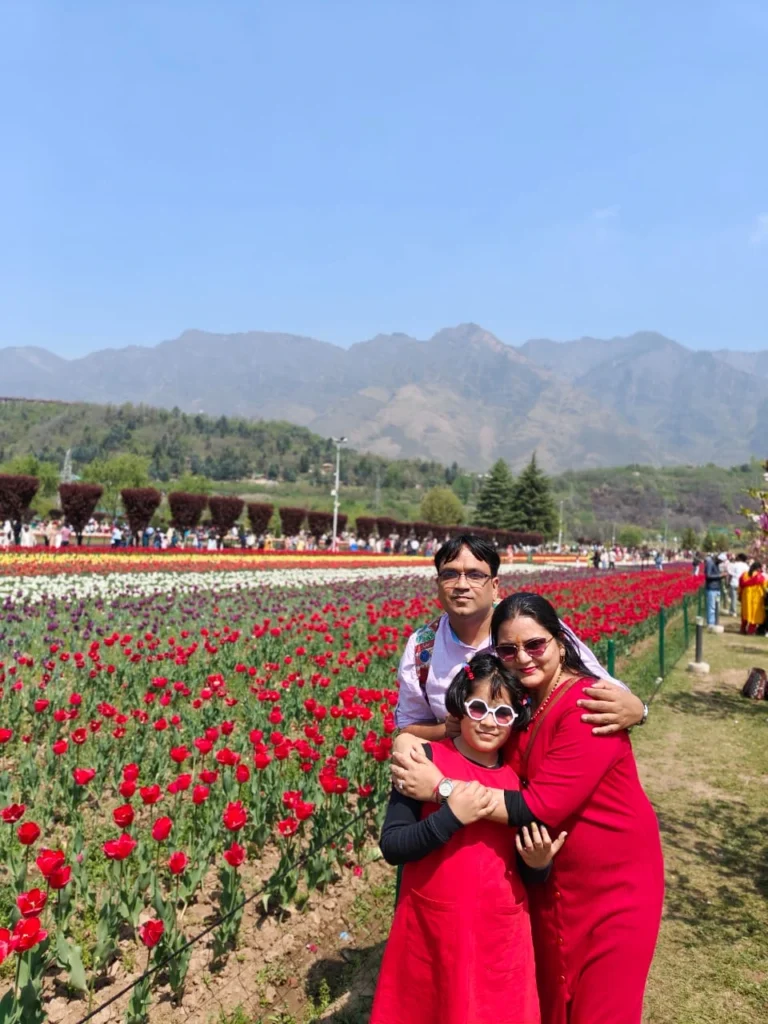
Beds are arranged in blocks and bands of colour reds, yellows, pinks, purples and whites rather than mixed randomly, which is what creates the striped, patterned look that shows up in most photographs of the garden. The exact variety count and bulb count is revised by the Floriculture Department most seasons, so we’re deliberately not quoting a fixed number here check current details closer to your travel dates.
Other Spring Flowers
Alongside tulips, the garden typically includes other spring flowering plants such as daffodils, hyacinths and ranunculus, planted mainly as border and accent beds around the main tulip terraces.
Zabarwan Mountain Views
Because the garden sits on the lower Zabarwan slope, the upper terraces give you a direct, close view of the range rising behind the garden a backdrop that’s hard to get from Srinagar’s other gardens.
Dal Lake Views
From the mid and upper terraces, you get open views down toward Dal Lake, particularly striking in clear morning light before the day’s haze builds up.
Water Channels and Landscaping
Small water channels run through parts of the garden, echoing the water-channel design of Srinagar’s Mughal gardens, though on a smaller scale here more of a landscaping detail than a central design feature.
How to Reach Indira Gandhi Tulip Garden
Tulip Garden From Lal Chowk
A short taxi or auto-rickshaw ride, generally in the range of 7–9 km depending on the route taken through the city.
Tulip Garden From Dal Lake
One of the shortest connections on this list a few kilometres along the lakeside road, making it easy to combine with a shikara ride or a Boulevard Road stop on the same outing.
Tulip Garden From Boulevard Road
Similar to the Dal Lake connection a quick drive along the lakefront and up toward the Zabarwan foothills.
Tulip Garden From Srinagar Airport
Figures vary by source, but plan on a taxi ride of roughly 30–45 minutes depending on traffic, time of day, and whether it’s peak Tulip Festival season (when approach roads get busier).
Tulip Garden From Srinagar Railway Station
A longer drive than from the city centre budget similar timing to the airport route, and more during peak festival traffic.
Can You Reach Tulip Garden by Taxi?
Yes, taxi is the most practical way to reach the garden, since it isn’t well served by regular public transport. Most visitors either hire a cab for the sightseeing day or use it as one stop within a pre-arranged local tour.
Is Parking Available?
Parking is available near the garden entrance, though space fills up quickly during peak bloom weekends and festival days. If you’re visiting during that window, arriving earlier in the day makes both parking and the visit itself considerably smoother.
Best Time to Visit Indira Gandhi Tulip Garden
Best Month for Tulip Bloom
Late March through mid-April is the general window most years, though the exact start shifts with winter and early-spring temperatures. A warmer late winter tends to bring the bloom forward; a cooler one pushes it back.
When Does Peak Bloom Usually Happen?
Peak bloom when the largest share of beds are flowering at once usually falls somewhere in the first two to three weeks after opening, though this is precisely the kind of detail that shifts year to year. Our Tulip Garden opening date page tracks this for the current season.
Morning vs Afternoon
Morning generally wins for light, temperature and lower footfall. Afternoon works fine too, just expect more visitors and flatter light for photography.
Weekday vs Weekend
Weekdays are noticeably calmer than weekends, particularly during the festival period, when weekend crowds can make the narrow terrace pathways feel congested.
How Weather Can Affect Blooming
Tulips are sensitive to temperature swings an unseasonal warm spell can shorten the bloom, while a cold snap can delay it. Because the flowering window itself only runs a few weeks, weather has an outsized effect on whether you catch the garden near peak or past it.
How Long Do You Need at Indira Gandhi Tulip Garden?
- Quick visit (45 minutes–1 hour): enough to walk the main terraces, take photos, and get a general sense of the garden without lingering.
- Normal visit (1–1.5 hours): covers all seven terraces at a comfortable walking pace with time to stop for photos.
- Relaxed family visit (1.5–2 hours): accounts for kids, rest breaks, and slower movement across the sloped paths.
- Photography visit (2–2.5 hours or more): allows time to work different terraces in changing light, particularly useful if you’re visiting near sunrise.
Best Photography Spots at Indira Gandhi Tulip Garden
Upper Terrace Views
The uppermost terraces give you the widest compositional options tulip rows in the foreground with the lower terraces and lake beyond.
Tulip Beds With Dal Lake
Mid-level terraces are where the tulip-bed-plus-lake framing works best, since you’re high enough for the lake to be visible but still close to the flower beds themselves.
Zabarwan Mountain Backdrop
Shots facing uphill, with the Zabarwan slope behind the tulip rows, work well for a mountain-forward composition rather than a lake-forward one.
Best Light for Photography
Early morning gives soft, directional light that brings out colour contrast between beds. Late afternoon works too, though the light flattens out faster as the sun drops behind the range.
Photography Tips During Peak Bloom
Expect other visitors in most frames during peak weekends arriving close to opening time is the most reliable way around this. Wide shots of colour blocks tend to work better than trying to isolate single flowers, given how densely the beds are planted.
What Is the Kashmir Tulip Festival?
The Kashmir Tulip Festival is the seasonal event held during the garden’s bloom window, organised as part of the J&K government’s spring tourism push. Alongside the floral display, it typically includes cultural performances, local handicraft stalls and Kashmiri food, which extend the experience beyond simply walking through the garden.
Festival days particularly weekends within the bloom window draw the largest crowds of the season, so if you’re specifically after a quieter garden walk rather than the cultural programming, a weekday visit outside the festival’s opening days tends to work better. If the cultural side is what interests you, plan for a busier but more event-like visit instead.
We won’t quote a specific festival date here, since it shifts with the bloom each year the Tulip Garden opening date page is the place to check for current-season dates.
Best Srinagar Sightseeing Route Including Tulip Garden
A practical sequence that keeps travel time reasonable and follows the natural geography of the Zabarwan foothills:
Tulip Garden → Chashme Shahi → Pari Mahal → Nishat Bagh → Shalimar Bagh → Dal Lake
The logic: Tulip Garden, Chashme Shahi and Pari Mahal sit close together on the Zabarwan slope, so covering them back-to-back cuts down on backtracking. Nishat Bagh and Shalimar Bagh sit along the lake’s edge slightly further on, and finishing at Dal Lake — ideally for a late-afternoon or sunset shikara ride — gives the day a natural close. We won’t promise exact journey times between stops, since road conditions and seasonal traffic (especially during the Tulip Festival) can add real variation.
For help sequencing this with your specific hotel location and timings, Panda Tours and Travels can arrange the day’s transport — see our Srinagar sightseeing page or call +91 7006982655.
Places to Visit Near Indira Gandhi Tulip Garden
Chashme Shahi
A small terraced Mughal garden built around a natural spring, a short drive from Tulip Garden on the same Zabarwan hillside.
Pari Mahal
A historic terraced structure further up the slope, known more for its architecture and panoramic Srinagar views than for floral displays.
Nishat Bagh
One of Srinagar’s larger Mughal gardens, laid out on terraces along Dal Lake’s eastern bank, with the Zabarwan Range as a backdrop.
Shalimar Bagh
Another major Mughal garden near Dal Lake, generally visited alongside Nishat Bagh given how close the two sit to each other.
Dal Lake
Srinagar’s centrepiece and a natural way to close out a Tulip Garden sightseeing day, whether via a shikara ride or simply a walk along Boulevard Road.
Nehru Memorial Botanical Garden
A quieter botanical garden also situated on the Zabarwan slope, worth considering if you want a calmer, less crowded green space to pair with the Tulip Garden visit.
For a fuller list of Srinagar attractions and how to sequence them, see our places to visit in Kashmir guide.
Tulip Garden Visit Tips From a Local Srinagar Tour Operator
- Arrive early. Both light and crowd levels are noticeably better in the first couple of hours after opening.
- Wear comfortable, flat footwear. The terrace paths involve a fair amount of walking on sloped, sometimes uneven ground.
- Check the weather before you go. Kashmir’s spring weather can shift quickly; a jacket is worth carrying even on a sunny morning.
- Expect crowds during peak bloom weekends. If you’d prefer a quieter walk, a weekday visit is the more reliable option.
- Plan around children carefully. The sloped terraces and narrow pathways can be tiring for young kids over a long visit — a shorter, focused visit tends to work better with families.
- Go easy on senior travelers. The terrace walk down and back up is more physically demanding than it looks in photos; pacing and rest breaks help.
- Bring your camera, but don’t over-plan the shot list. Wide colour-block compositions generally photograph better than trying to isolate individual flowers in a crowd.
- Stick to the marked pathways. Walking into the flower beds for photos damages them and is discouraged.
- Carry water, and check food policies at the gate. Rules on carrying outside food and drink can vary by season.
- Verify your ticket details before arriving, especially if rates or booking methods have changed since you last checked.
- Combine it sensibly with nearby gardens rather than trying to fit in too many stops on the same day — the Zabarwan-hillside route above works well without feeling rushed.
- Don’t treat the whole day as one continuous walk. Build in a tea or lunch break between Tulip Garden and the next stop, particularly if you’re also visiting Chashme Shahi or Pari Mahal the same day.

Common Mistakes Tourists Make at Tulip Garden
- Visiting outside the bloom period. The garden is essentially a spring-only attraction — visiting in summer, autumn or winter usually means no tulips at all.
- Assuming every day within the season has peak bloom. The window opens gradually and fades gradually; the middle of the season looks very different from the first or last few days.
- Arriving too late in the day. Crowds build steadily through the late morning and midday.
- Ignoring the weather forecast. A cold snap or unseasonal warm spell can shift bloom timing and visitor experience significantly.
- Rushing through all seven terraces in one pass. Slowing down at two or three terraces usually gives better photos and a better experience than speed-walking the whole garden.
- Overloading the sightseeing day. Trying to fit Tulip Garden, all three Mughal gardens and Dal Lake into a single rushed day often means enjoying none of them properly.
- Relying on last year’s ticket price or timing. These are revised almost every season — always check current details close to your travel date.
- Confusing the garden’s opening date with peak bloom. The garden can be open to the public while still building toward its fullest bloom — they’re not the same thing, and treating them as identical leads to mistimed visits.
Is Indira Gandhi Tulip Garden Worth Visiting?
For most travelers visiting Srinagar during the spring bloom window, yes it’s a genuinely different visual experience from the rest of the city’s gardens, and the combination of terraced tulip beds, Dal Lake and the Zabarwan Range is hard to replicate elsewhere in the Valley.
That said, it’s worth setting realistic expectations. It’s a seasonal attraction, not a year-round one, so if your Kashmir trip falls outside the bloom window, the garden simply won’t be the highlight it is in spring you’d be better off prioritising the Mughal gardens or Dal Lake instead. It can also get genuinely crowded during peak bloom weekends and festival days, which changes the pace of the visit compared to photos you might have seen online. If you’re travelling specifically to see tulips, the honest advice is to build some flexibility into your dates rather than fixing a single day months in advance, since the exact bloom window shifts with the weather.
Who Should Visit Indira Gandhi Tulip Garden?
- Families — manageable if paced sensibly, with breaks between terraces.
- Couples — the elevated lake-and-mountain views make it a popular spot for a relaxed walk.
- Photographers — one of the more distinctive photo locations in Srinagar during bloom season.
- Nature lovers — the sheer scale of colour across seven terraces is hard to find elsewhere in the Valley.
- First-time Kashmir visitors — a strong addition to a spring itinerary, alongside the Mughal gardens and Dal Lake.
- Senior citizens — doable, but the sloped terrace walk needs pacing; a shorter visit works better than trying to cover all seven terraces.
- Children — generally enjoyable, though a long visit can tire younger kids on the uneven terrace paths.
Planning a Srinagar sightseeing day that includes Indira Gandhi Tulip Garden? Panda Tours and Travels can arrange local transport and a realistic route based on your dates — call +91 7006982655.
Check official website of Floriculture tourism Department : floriculture.jk.gov.in





Frequently Asked Questions About Indira Gandhi Tulip Garden
What is Indira Gandhi Tulip Garden?
Indira Gandhi Memorial Tulip Garden is a terraced flower garden in Srinagar, created for large-scale tulip cultivation and seasonal tourism. It is widely promoted as Asia’s largest tulip garden.
Where is Indira Gandhi Tulip Garden located?
The garden is located on the lower slopes of the Zabarwan Range in Srinagar, overlooking Dal Lake in the Siraj Bagh area.
Why is Tulip Garden famous?
It is famous for its large-scale tulip display, combined with panoramic views of Dal Lake and the Zabarwan mountains.
Is Tulip Garden the same as Siraj Bagh?
The garden is located in the Siraj Bagh area, and the names are sometimes used interchangeably when referring to the same location.
What was Tulip Garden called previously?
The site was previously associated with the Model Floriculture Center before its redevelopment and transformation into the present tulip garden.
When was Tulip Garden established?
The garden opened to the public in 2007.
How large is Tulip Garden?
The garden covers roughly 30 hectares, although its landscaped areas and plantations have changed over time.
How many terraces does Tulip Garden have?
The garden is arranged across seven terraces along the Zabarwan hillside.
What flowers can visitors see at Tulip Garden?
Tulips are the main attraction, along with other spring flowers such as daffodils, hyacinths and ranunculus.
What is Tulip Garden famous for besides tulips?
Apart from its flowers, the garden is known for its Dal Lake views, Zabarwan mountain backdrop and the seasonal Kashmir Tulip Festival.
What is the best time to visit Tulip Garden Srinagar?
Late March through mid-April is generally the best period, although the actual blooming window changes with weather and temperature each year.
When is the peak tulip bloom?
Peak bloom usually occurs during the first two or three weeks after the garden opens, but the exact timing varies from season to season.
Is Tulip Garden open throughout the year?
No. Tulip Garden is a seasonal attraction and generally opens for a few weeks during the spring flowering season.
What are the Tulip Garden timings?
The garden generally operates during daytime hours, from the morning into the evening during the season. Exact timings can be adjusted, so visitors should confirm them before travelling.
What is the Tulip Garden entry fee?
The entry fee can vary by season and visitor category. Adult, child and foreign visitor rates may differ, so checking the latest fee before your visit is recommended.
Does the Tulip Garden ticket price change?
Yes. Entry fees can be revised from one season to another and may also vary according to visitor category.
Is online ticket booking available for Tulip Garden?
Online booking has been available in some recent seasons, but the booking process and availability can change. Check the current arrangements before travelling.
How far is Tulip Garden from Lal Chowk?
The garden is roughly 7–9 km from Lal Chowk, depending on the route and starting point.
How far is Tulip Garden from Dal Lake?
Tulip Garden is only a few kilometres from the main Dal Lake area, making it convenient to combine with other Srinagar sightseeing attractions.
How far is Tulip Garden from Srinagar Airport?
The road distance is generally in the mid-to-high teens of kilometres, depending on the route. Travel time is usually around 30–45 minutes by taxi, subject to traffic.
How far is Tulip Garden from Srinagar Railway Station?
The road distance is also generally in the high-teens-of-kilometres range, depending on the route and traffic conditions.
How do I reach Tulip Garden from Boulevard Road?
From Boulevard Road, take the route along Dal Lake toward the Zabarwan foothills. A taxi or private car is usually the most convenient option.
Can I take a taxi to Tulip Garden?
Yes. A local taxi is one of the most practical ways to reach Tulip Garden, particularly for tourists combining it with several nearby attractions.
Is parking available at Tulip Garden?
Parking facilities are available near the entrance, although spaces can become limited during peak bloom weekends and busy festival days.
How much time should I spend at Tulip Garden?
Most visitors should allow around 1 to 2.5 hours, depending on their walking pace, group size and interest in photography.
Is morning better than afternoon for visiting Tulip Garden?
Morning is generally preferable for cooler temperatures, softer natural light and potentially smaller crowds.
Is Tulip Garden crowded during peak bloom?
Yes. The garden can become particularly busy during peak flowering, weekends and the busiest days of the Tulip Festival.
Is it better to visit Tulip Garden on weekdays?
Yes. Weekdays are generally quieter than weekends, making them a better choice for visitors who prefer a more relaxed experience.
What should I wear to Tulip Garden?
Wear comfortable, flat footwear suitable for sloped and sometimes uneven terrace paths. A light jacket is also useful because spring weather in Kashmir can change quickly.
Is Tulip Garden suitable for children?
Yes. Children can enjoy the garden, although a shorter and well-paced visit is usually more comfortable, especially on sloped or uneven sections.
Is Tulip Garden suitable for senior citizens?
Yes, but visitors should walk at a comfortable pace. Some terrace sections can require more effort than they appear to in photographs.
Is Tulip Garden good for couples?
Yes. The colourful flower terraces, mountain scenery and views toward Dal Lake make it a popular place for couples.
Is Tulip Garden good for photographers?
Yes. Tulip Garden offers many opportunities for landscape, flower and travel photography, especially when the flowers are at peak bloom.
Where are the best photography viewpoints in Tulip Garden?
Upper terraces are useful for wider views, while middle terraces can provide attractive tulip-and-lake compositions. Higher viewpoints also work well for Zabarwan mountain shots.
Can I see Dal Lake from Tulip Garden?
Yes. Dal Lake is visible from several points, particularly from the middle and upper terraces.
Can I see the Zabarwan Range from Tulip Garden?
Yes. Since the garden is situated on the lower slopes of the Zabarwan Range, the surrounding mountains are visible from much of the garden.
What is the Kashmir Tulip Festival?
The Kashmir Tulip Festival is a seasonal event associated with the spring tulip bloom. Alongside the flowers, it can feature cultural activities, handicrafts and local food.
What happens during the Tulip Festival?
Depending on the season’s programme, visitors may find cultural performances, handicraft stalls, local food and other activities in addition to the garden’s normal flower display.
Is the Tulip Festival crowded?
Yes. Visitor numbers usually increase during festival periods, particularly on weekends and other peak days.
Can I visit Chashme Shahi after Tulip Garden?
Yes. Chashme Shahi is nearby and can be easily included in the same Srinagar sightseeing route.
Can I combine Tulip Garden with Pari Mahal?
Yes. Pari Mahal is located higher on the Zabarwan hillside and pairs naturally with Tulip Garden and Chashme Shahi.
Can I visit Nishat Bagh on the same day?
Yes. Nishat Bagh is a natural addition to a sightseeing route covering the eastern side of Dal Lake and the Zabarwan-area attractions.
Can I visit Shalimar Bagh after Tulip Garden?
Yes. Shalimar Bagh can be included along with Nishat Bagh, particularly when planning a full-day Srinagar sightseeing itinerary.
What other places are near Tulip Garden?
Nearby attractions include Chashme Shahi, Pari Mahal, Nishat Bagh, Shalimar Bagh, Dal Lake and the Nehru Memorial Botanical Garden.
Is Tulip Garden worth visiting?
Yes, especially during the flowering period. It offers a different experience from Srinagar’s other attractions because of its large tulip display and mountain-and-lake setting.
What should I carry to Tulip Garden?
Carry comfortable footwear, drinking water, a light jacket, sun protection and a camera or smartphone for photography.
Are there visitor rules at Tulip Garden?
Yes. Visitors should stay on designated pathways, avoid entering flower beds and follow any current instructions regarding food, bags and other items at the entrance.
What happens if the tulips have not reached peak bloom?
Early in the season, some areas may still be developing and not all terraces may have reached full colour. The garden can still be enjoyable, but it may look different from peak-bloom photographs.
Can I visit Tulip Garden during cloudy weather?
Yes. The garden can be visited during cloudy weather as long as it is officially open. Cloud cover simply changes the lighting and photography conditions.
Can Panda Tours and Travels arrange a Tulip Garden sightseeing trip?
Yes. Panda Tours and Travels can arrange local transportation and a practical Srinagar sightseeing route that includes Tulip Garden and nearby attractions. For route planning or bookings, call +91 7006982655.