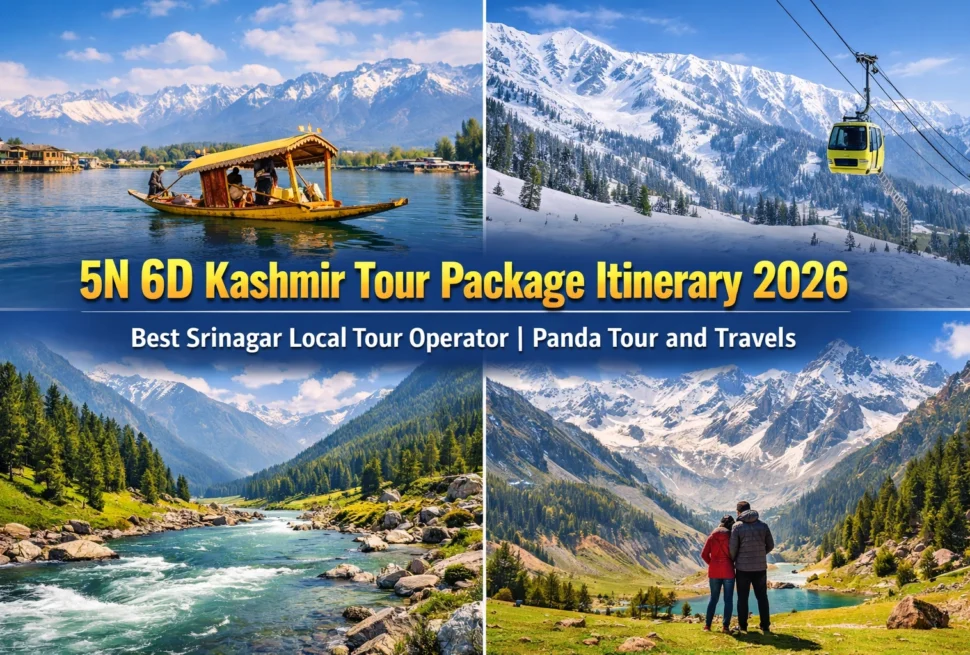
There is a place in this world where saffron fields meet snow-dusted mountains, where a quiet shikhara ride at dawn feels like a scene from a dream you never wanted to wake from. That place is Kashmir — and more Malaysian travellers than ever are discovering it.
At Panda Tours and Travels, we’ve been curating Kashmir tour packages from Malaysia for years, and we can tell you honestly: no destination we offer generates more wonder, more emotion, and more “I need to go back” messages from past clients. This guide is written for you — the Malaysian traveller curious about whether Kashmir is worth the trip, what it actually involves, and how to do it right.
Read every section. By the end, you’ll either be ready to book, or you’ll know exactly what you need to know before you do.
Why Malaysian Travellers Are Falling in Love with Kashmir
It started quietly — a few adventurous Malaysians posting photos of snow-laden chinar trees and mirror-still Dal Lake. Then came the tulip season images. Then the autumn foliage. Today, Kashmir is one of the fastest-growing destinations among Southeast Asian travellers, and Malaysians in particular.
Why? Because Kashmir offers something rare: extreme natural beauty, rich Muslim culture, genuinely warm hospitality, affordable luxury, and a food scene that feels almost familiar. Halal food is not a checkbox here — it’s the norm. The call to prayer echoes through Srinagar’s old city. The culture is deeply Islamic and genuinely welcoming.
Malaysia to Kashmir is also far more manageable than people assume. With the right Kashmir travel package from Malaysia, the journey is smooth, the logistics are handled, and what you experience is pure — no stress, no guesswork, just the Valley.
How to Reach Kashmir from Malaysia
Before we dive into the beauty of the destination, let’s be practical. Getting to Kashmir from Malaysia involves a few options, each with its own trade-offs.
By Flight (Recommended)
Route: Kuala Lumpur International Airport (KUL) → Srinagar Sheikh ul-Alam International Airport (SXR)
There are no direct flights from Kuala Lumpur to Srinagar. All connections go through major Indian hubs.
Common transit hubs:
- Delhi (DEL) — Most popular. Flights via IndiGo, Air India, SpiceJet from Delhi to Srinagar take approximately 1.5 hours.
- Mumbai (BOM) — Another option. Flight time Delhi–Srinagar ~1.5 hrs.
- Bengaluru (BLR) — Less common but available.
KUL to SXR approximate travel time: 8–12 hours (including transit), depending on connection.
Airlines operating KUL–Delhi: AirAsia, Malaysia Airlines, Air India, IndiGo
Airlines operating Delhi–Srinagar: IndiGo, Air India, SpiceJet, GoAir
Tip from our team: Book your Delhi–Srinagar connection with at least a 3–4 hour layover to avoid any transit stress.
By Train (For the Adventurous Traveller)
If you’re already in India and want to experience the scenic route:
- Route: Delhi → Jammu Tawi (by train), then road/bus to Srinagar
- Delhi to Jammu: Approx. 10–12 hours by express train (Jammu Mail, Rajdhani Express)
- Jammu to Srinagar: Approx. 4–5 hours by road via the Jammu–Srinagar National Highway
Total travel time from Jammu to Srinagar by road: ~270 km, roughly 4–6 hours depending on traffic and road conditions.
Note: The Udhampur–Srinagar–Baramulla Rail Link (USBRL) project is ongoing; once complete, it will allow direct rail connectivity much closer to Srinagar.
By Road from Jammu
If you’re coming by road from Jammu, the journey takes you through some extraordinary mountain scenery — the Banihal Pass, the Jawahar Tunnel (2.5 km long), and the Qazigund region before descending into the Kashmir Valley. It’s an experience in itself.
Distance from Jammu to Srinagar: ~270 km
Approximate driving time: 4–6 hours
Road condition note: Check for weather-related closures, especially in winter (November–March) when landslides or snowfall can occasionally affect travel.
Visa & Travel Information for Malaysian Citizens
Indian e-visa (eTV — e-Tourist Visa) is available for Malaysian passport holders.
How to apply:
- Visit the official Indian e-Visa portal: indianvisaonline.gov.in
- Apply at least 4–7 business days before travel
- Upload passport photo and passport copy
- Pay the visa fee online
- Receive your visa via email — print it and carry it with you
Visa type: e-Tourist Visa (30-day double entry or 1-year multiple entry)
Visa fee: Approximately USD 25–80 depending on type
Processing time: Usually 3–5 business days
Important: Foreign nationals no longer need a special Protected Area Permit (PAP) to visit most areas of Kashmir, including Srinagar, Gulmarg, Pahalgam, and Sonamarg. Restrictions may apply to certain remote border areas like Gurez Valley — our team will advise based on your specific itinerary.
At Panda Tours and Travels, we assist all our Malaysian clients with visa guidance as part of our Kashmir holiday packages from Malaysia.
Srinagar International Airport — What to Expect on Arrival
Sheikh ul-Alam International Airport (formerly Srinagar Airport) is a modern, well-managed facility. Here’s what Malaysian travellers should know:
- Immigration: Relatively quick for tourists with valid e-visas. Keep your printed e-visa, passport, and return ticket ready.
- Luggage: Standard international protocols apply.
- SIM Cards: Buy a local SIM (Jio, Airtel, or BSNL) inside or just outside the airport. Your Malaysian SIM will work on roaming, but local SIMs offer far better data rates.
- Currency: Exchange some Indian Rupees (INR) before you land, or use ATMs at the airport. USD cash can be exchanged at major hotels and exchange counters in Srinagar city.
- Transport: Your Panda Tours driver will be waiting with a name board. If you’re arranging your own transfer, registered taxis are available outside the terminal.
Pro tip: Carry a small amount of INR cash for the first day — not all small vendors in Kashmir accept digital payments or cards.
Best Time to Visit Kashmir from Malaysia
This is one of the most common questions we get from Malaysian travellers, and the honest answer is: Kashmir is stunning in every season — but each season offers a completely different experience.
Spring (March–May) — Tulips, Blooms & Perfect Weather
March to May is arguably the most photogenic time to visit Kashmir. The famous Indira Gandhi Memorial Tulip Garden (Asia’s largest tulip garden) blooms between late March and mid-April, painting the foothills of Zabarwan Mountain in brilliant pinks, reds, purples, and yellows. Temperatures range from 10°C to 22°C — cool but comfortable, perfect for sightseeing.
This is peak season for Kashmir tour packages from Malaysia, so book early.
Summer (June–August) — Escape the Heat, Green Valleys
While Malaysia bakes, Kashmir offers cool relief. June through August sees temperatures of 20°C–30°C in the valley, while higher altitudes like Sonamarg and Gulmarg remain refreshingly cool. The meadows are green, the rivers full, and the skies clear. Ideal for families and those seeking outdoor adventures.
Autumn (September–November) — The Golden Season
If you’ve ever seen those images of Kashmir with trees blazing in amber, rust, and gold — that’s autumn. Late September through October is when the chinar trees turn, and Srinagar’s parks and gardens look like a painting. Less crowded than spring, and with perfect weather. Our personal favourite season.
Winter (December–February) — Snow, Silence & Skiing
Kashmir in winter is transformative. Gulmarg becomes one of Asia’s premier ski destinations, Dal Lake occasionally freezes, and the entire valley is blanketed in white. Temperatures can drop to -5°C or lower in January. For snowfall lovers, this is the time to go — and for Malaysian travellers who’ve never experienced real snow, it’s unforgettable.
Kashmir Weather Guide at a Glance
| Month | Average Temp (°C) | Highlights |
|---|---|---|
| January | -4 to 4 | Heavy snowfall, skiing in Gulmarg |
| February | -2 to 8 | Snow, quieter travel |
| March | 4 to 15 | Early tulips, warming up |
| April | 10 to 20 | Peak tulip season |
| May | 14 to 24 | Green valleys, pleasant weather |
| June | 18 to 28 | Lush meadows, long days |
| July | 20 to 30 | Warmest month, outdoor activities |
| August | 18 to 28 | Festivals, trekking |
| September | 12 to 24 | Autumn begins, beautiful light |
| October | 8 to 18 | Peak foliage, chinar gold |
| November | 2 to 12 | Late autumn, quieter |
| December | -2 to 8 | Early snowfall, winter mood |
Panda Tours & Travels — 6 Nights / 7 Days Kashmir Itinerary
This is our signature Kashmir itinerary for Malaysian travellers — thoughtfully designed to cover all major destinations, with the right pace, without rushing.
Day 1: Arrival in Srinagar — First Impressions of the Valley
Pickup: Srinagar International Airport / Srinagar Railway Station
Your Kashmir journey begins the moment you land. After a warm welcome by your Panda Tours representative, you’ll be transferred to your houseboat or hotel on Dal Lake.
Srinagar Sightseeing — Full Day:
After freshening up and breakfast, the day unfolds across the most iconic parts of Srinagar:
Shankaracharya Temple (Takht-e-Suleiman):
Perched 1,000 feet above the valley on a hill, this ancient temple offers panoramic views of Srinagar, Dal Lake, and the surrounding mountains. Even as a Muslim traveller, the view from the top is worth every step — this is where photographers come for the golden hour.
Mughal Gardens Trilogy:
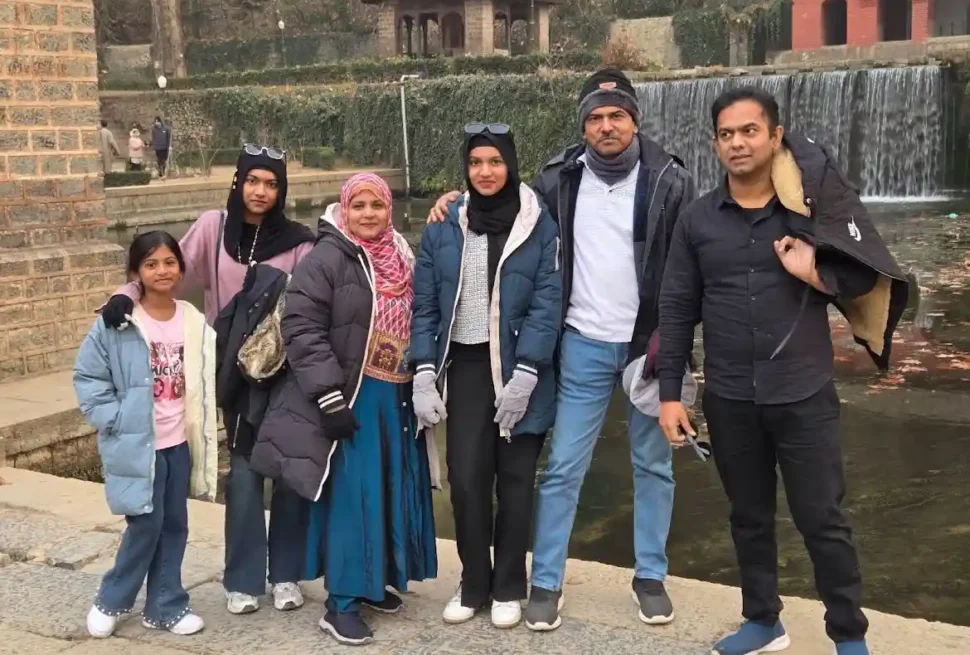
- Shalimar Bagh — Built by Emperor Jehangir for Empress Nur Jahan, this 17th-century terraced garden features fountains, chinar trees, and geometric Islamic garden design at its finest. Breathtaking in any season.
- Nishat Bagh (Garden of Bliss) — The largest Mughal garden in Kashmir, built in 1633. Twelve terraces rising from Dal Lake’s edge, each representing a sign of the zodiac.
- Chashme Shahi (Royal Spring) — The smallest of the Mughal gardens, but home to a natural spring believed to have medicinal properties. Elegant, serene, and often overlooked by casual tourists.
Hazratbal Shrine:
One of Kashmir’s most sacred Muslim shrines, sitting on the northern shore of Dal Lake. The white marble domed mosque is said to house a strand of the Prophet Muhammad’s (PBUH) hair. Deeply moving for Malaysian Muslim travellers — allow time for reflection and prayer here.
Jama Masjid, Srinagar:
Built in 1394, this grand mosque in the old city is supported by 378 wooden pillars, each made from a single deodar tree. Friday prayers here are a powerful experience. The surrounding old city bazaar is Kashmir at its most authentic.
Pari Mahal (Palace of Fairies):
A ruined 17th-century garden with six terraced arched terraces, built by Prince Dara Shikoh. The views of Dal Lake from here at sunset are extraordinary.
Dal Lake Shikhara Ride (Evening):
No arrival in Srinagar is complete without an evening Shikhara ride on Dal Lake. Watch the light change on the water as floating vendors pass by with flowers, tea, and handicrafts. This quiet hour on the lake is often what Malaysian travellers remember most.
Overnight: Houseboat on Dal Lake (Deluxe / Luxury category based on package)
Day 2: Srinagar to Sonamarg — The Meadow of Gold
Distance: ~87 km | Drive Time: ~2.5 hours
The drive to Sonamarg follows the Sindh River valley, winding through pine forests and mountain villages. “Sonamarg” literally means “Meadow of Gold” — named for the golden wildflowers that cover its meadows in summer.
Places to Explore in Sonamarg:
Thajiwas Glacier:
This is Sonamarg’s crown jewel. A short pony/horse ride (or a 30–40 minute trek) brings you to this active glacier, where you can walk on snow even in summer. For Malaysians who’ve never touched a glacier in their lives, this is extraordinary — white, silent, vast. Snowboarding and sledding are available here.
Sindh River:
The river runs right through Sonamarg, and its banks are ideal for a quiet walk, trout fishing, or simply sitting and watching the clear glacial water rush past. It’s calming in a way that’s hard to describe.
Zero Point (Baltal):
For those who want to go further, the road continues from Sonamarg to Zero Point — the last motorable point on the Srinagar–Leh highway before it closes in winter. The landscape here becomes stark, rocky, and cinematic.
Alpine Meadows:
The open meadows around Sonamarg are perfect for picnics, photography, and simply being in nature. In July and August, they’re carpeted with wildflowers.
Sonamarg Waterfalls:
Several small but beautiful waterfalls cascade down the mountainsides near the town — worth a short walk.
Evening return to Srinagar.
Overnight: Houseboat / Hotel in Srinagar
Day 3: Srinagar to Doodhpathri — The Hidden Valley
Distance: ~42 km | Drive Time: ~1.5 hours
Most tourists never make it to Doodhpathri. That’s exactly why we include it in our Kashmir itinerary for Malaysian travellers — this hidden valley is extraordinary, and almost entirely yours to enjoy.
The name “Doodhpathri” means “Valley of Milk” — the local legend says the waters here ran white as milk, blessed by a Sufi saint. Whether or not you believe the legend, the valley is undeniably magical.
Places to Explore in Doodhpathri:
Doodhpathri Main Meadow:
A vast, open plateau at 2,730 metres above sea level, ringed by pine forests and snow-capped peaks. In summer, it’s intensely green; in early spring, still partially snow-covered. The silence here is profound.
Shaliganga Stream:
A crystal-clear stream runs through the meadow, cold and fast, fed by snowmelt from the surrounding peaks. The sound of it is therapeutic.
Tosa Maidan (nearby):
Another lesser-visited meadow, reachable with a short drive or trek from Doodhpathri. Even more remote, even more dramatic.
Horse Rides through the Meadow:
Local ponies and horses are available for hire — a wonderful way to explore the wider meadows and forest edges.
Photography:
Doodhpathri is one of Kashmir’s most photogenic spots, yet rarely photographed by international travellers. Bring a good camera — the light here, especially in the morning and late afternoon, is extraordinary.
Evening return to Srinagar.
Overnight: Houseboat / Hotel in Srinagar
Day 4: Srinagar to Gulmarg — The Meadow of Flowers
Distance: ~56 km | Drive Time: ~2 hours
Gulmarg is one of the most famous hill stations in all of Asia, and for good reason. Sitting at 2,650 metres above sea level, it combines dramatic mountain scenery with world-class skiing infrastructure and some of the most breathtaking views you’ll find anywhere in the subcontinent.
Places to Explore in Gulmarg:
Gulmarg Gondola (Phase 1 & Phase 2):
This is the centrepiece of Gulmarg — and one of the world’s highest cable cars. Phase 1 takes you from Gulmarg town up to Kongdori (approximately 3,080 metres). Phase 2 continues to Apharwat Peak (approximately 3,980 metres) — a place where, in winter, you’re surrounded entirely by snow, and in summer, you look out over the Himalayan ranges towards Pakistan.
For Malaysian travellers, this ride is often a revelation. The views from Apharwat Peak are among the most dramatic you’ll ever see. On a clear day, you can see Nanga Parbat (8,126m) — the world’s ninth-highest mountain — on the horizon.
Note: Book Gondola tickets in advance during peak season (April–August, December–January). Our team handles this for all Panda Tours clients.
Skiing and Snow Activities:
In winter, Gulmarg is one of Asia’s finest ski destinations, with slopes ranging from beginner to expert. Ski equipment rental, instructors, and snowboarding gear are all available. For those who’ve never skied — Gulmarg is a wonderful place to learn.
In summer: ATV rides, horse rides, golf (on the world’s highest golf course at 2,650m), and trekking.
Alpather Lake:
A trek from Phase 2 of the Gondola leads to Alpather Lake — a high-altitude lake that remains partially frozen until late June. The walk is demanding but spectacularly rewarding.
St. Mary’s Church and Maharani Temple:
Historic structures from the colonial era, both offering fascinating architectural contrasts against the mountain backdrop.
Gulmarg Biosphere Reserve:
The forests surrounding Gulmarg are home to Kashmir deer (hangul), black and brown bears, and rare bird species. A guided nature walk here is both educational and peaceful.
Evening return to Srinagar or overnight stay in Gulmarg.
Overnight: Hotel in Gulmarg / Srinagar
Day 5: Gulmarg to Pahalgam — Full Sightseeing
Distance: ~140 km | Drive Time: ~3.5 hours
The drive from Gulmarg to Pahalgam is itself an experience — you pass through Srinagar, then follow the Lidder River valley towards Pahalgam, one of Kashmir’s most celebrated hill stations.
“Pahalgam” means “Village of Shepherds.” Today it’s famous for its meadows, rivers, trekking routes, and as the base camp for the annual Amarnath Yatra pilgrimage.
Places to Explore in Pahalgam:
Betab Valley:
Named after the 1983 Bollywood film Betaab, which was shot here, this valley is strikingly beautiful — a wide, flat meadow surrounded by pine-covered hills and snow peaks. The Lidder River runs through it. Peaceful, photogenic, and popular for picnics.
Aru Valley:
~12 km from Pahalgam, Aru is a quieter, more pristine meadow — a favourite starting point for treks to Kolahoi Glacier and Tarsar Lake. Even if you don’t trek, the valley itself is worth visiting for its views and tranquillity.
Chandanwari:
The start point for the Amarnath Yatra trek, Chandanwari (2,895m) sits at the head of the Lidder Valley. A snow bridge here remains throughout the year, and visitors can play in the snow even in summer. About 16 km from Pahalgam town.
Baisaran (Mini Switzerland):
Accessible only by horse or foot (no vehicles), Baisaran is a pine-ringed meadow above Pahalgam town offering views that have earned it the nickname “Mini Switzerland.” It’s a 30–40 minute horse ride — worth every minute.
Lidder River:
The river running through Pahalgam is ideal for trout fishing (with a permit), riverside walks, and white-water rafting (in appropriate sections).
Pahalgam Market:
The small market town has shops selling local handicrafts, pashmina shawls, dry fruits, and saffron. A good place to pick up small gifts.
Overnight stay in Pahalgam.
Day 6: Pahalgam to Achabal, Kokernag & Verinag — Back to Srinagar
Distance to Srinagar (via stops): ~120 km | Drive Time: ~4–5 hours including stops
This day takes you through southern Kashmir, visiting three of the valley’s lesser-known but historically significant Mughal gardens and natural springs before returning to Srinagar.
Achabal Garden:
Built by Empress Nur Jahan in 1620, Achabal is a Mughal garden fed by natural springs — the water flows in terraced channels through the garden, and the chinar trees here are some of the oldest in Kashmir. Less visited than the Srinagar gardens, it retains an authentic, unhurried quality.
Kokernag:
One of Kashmir’s most beautiful spring gardens. The natural spring at Kokernag produces water so pure it’s bottled commercially. The garden around it is well-maintained, with trout ponds, rose gardens, and a pleasant café. Perfect for a long lunch stop.
Verinag:
The source of the Jhelum River, Verinag is a natural spring enclosed in an octagonal pool surrounded by arcaded cloisters — a Mughal structure commissioned by Emperor Jehangir in 1620. It’s historically significant and architecturally elegant, yet barely visited by foreign tourists. The surrounding area is beautiful for a short walk.
Return to Srinagar for final night.
Overnight: Houseboat / Hotel in Srinagar
Day 7: Srinagar — Drop to Airport / Railway Station
Last Morning in Kashmir:
Before your departure, there’s usually time for a final Shikhara ride on Dal Lake at dawn — the most peaceful experience in all of Kashmir, with mist rising from the water and the mountains turning pink in the early light.
Those staying near the old city can visit the Floating Vegetable Market (best before 8 AM) — an ancient tradition where farmers row their produce to market on the lake.
Lal Chowk and Residency Road offer last-minute shopping for saffron, dry fruits, Kashmiri kahwa (tea), and handicrafts.
Airport / Railway Transfer: Our driver will ensure you reach the airport or railway station on time for your onward journey back to Malaysia.
What’s Included in the Panda Tours Kashmir Package
A well-structured Kashmir trip from Malaysia should include the following essentials — and at Panda Tours and Travels, all of these are covered in our packages:
- ✅ Airport/Railway arrival and departure transfers
- ✅ All intercity road transfers in comfortable, air-conditioned vehicles
- ✅ Accommodation (6 nights) — options from standard hotels to luxury houseboats
- ✅ Daily breakfast and dinner (halal)
- ✅ English-speaking local tour guide throughout
- ✅ Gulmarg Gondola Phase 1 & 2 tickets
- ✅ Shikhara ride on Dal Lake (1 hour)
- ✅ All sightseeing as per itinerary
- ✅ Toll charges, parking fees, and driver allowances
- ✅ 24/7 customer support from Panda Tours team (Malaysia and Kashmir)
Optional Add-ons:
- Pony/horse rides at Baisaran, Thajiwas Glacier, etc.
- Snow activities at Gulmarg (sledging, skiing, snowboarding)
- Trout fishing in Pahalgam (permit included)
- Cooking class featuring Wazwan cuisine
- Professional photography session at Dal Lake
The Houseboat Experience — Dal Lake
No Kashmir holiday package from Malaysia is complete without a night (or several) on a traditional wooden houseboat on Dal Lake.
Kashmiri houseboats are unlike anything you’ve experienced. Built from Himalayan cedar (deodar) wood, decorated with hand-carved walnut panels and Kashmiri papier-mâché, and fitted with surprisingly comfortable beds and modern bathrooms — they’re floating luxury.
Categories range from Standard to Deluxe to Heritage, with prices varying accordingly. A deluxe houseboat includes an attached bathroom, hot water, a sitting room with carved wooden furniture, and a small deck where you can have breakfast while watching the morning mist lift off the lake.
From your houseboat, you have direct shikhara access — your personal small wooden boat that serves as a taxi, garden, and transport on the lake. Floating shops will come to your boat selling flowers, shawls, jewellery, and local snacks.
For Malaysian Muslim travellers, our partner houseboats are operated by Muslim families and serve halal meals. Morning kahwa (Kashmiri saffron tea) is served with fresh bread — the ideal way to start a Kashmir morning.
Kashmiri Cuisine — A Halal Food Paradise
Here’s news that every Malaysian Muslim traveller needs to hear: Kashmir is one of the most naturally halal food destinations in all of Asia. The valley is almost entirely Muslim-populated, and pork is simply not part of the cuisine. Beef, lamb, chicken, and fish dominate the menu.
Must-Try Kashmiri Dishes:
Wazwan:
The grand banquet of Kashmiri cuisine. A traditional Wazwan feast consists of 30–36 dishes, traditionally served on a large copper platter (trami) shared by four people. The centrepiece is Rogan Josh (aromatic lamb), Gushtaba (minced meat balls in yoghurt gravy), Tabak Maaz (fried lamb ribs), Methi Maaz (lamb with fenugreek), and Rista (meatballs in red gravy). If you’re visiting Kashmir and don’t experience a Wazwan, you’ve missed something fundamental.
Rogan Josh:
The internationally famous slow-cooked lamb curry is best eaten in Kashmir itself, where it tastes completely different from any version served elsewhere. The deep red colour comes from Kashmiri chilies and ratan jot (cockscomb flower), not the aggressive heat you’d expect — it’s aromatic, complex, and deeply satisfying.
Dum Aloo:
Whole potatoes, slow-cooked in a spiced yoghurt gravy. One of the most beloved vegetarian dishes in Kashmiri cuisine, and one that even the most dedicated meat-eater will finish the plate of.
Haak (Kashmiri Saag):
Local leafy greens cooked simply with dried red chilies and mustard oil. Simple, earthy, and deeply Kashmiri.
Kahwa:
Kashmiri green tea infused with saffron, cinnamon, cardamom, and almonds. It’s more than a beverage — it’s a ritual. Served on houseboats, in hotels, and in every Kashmiri home.
Sheer Chai (Noon Chai):
A striking pink tea made with special tea leaves, milk, salt, and bicarbonate of soda. The pink colour comes from a chemical reaction during preparation. Rich, slightly salty, warming — an acquired taste that most visitors end up loving.
For Malaysian Travellers: Kashmiri food is, in many ways, deeply familiar — aromatic, meat-centred, rice-based, and slow-cooked. You will not struggle here. Most restaurants in Srinagar, Gulmarg, and Pahalgam serve halal food as standard.
Prayer Facilities for Malaysian Muslim Travellers
Kashmir is a Muslim-majority region, and prayer is woven into the rhythm of daily life. You will never struggle to find a mosque here.
- Srinagar has hundreds of mosques, including the historic Jama Masjid and Hazratbal Shrine. The Friday prayer at Jama Masjid is a profound experience.
- Gulmarg, Pahalgam, and Sonamarg all have mosques within easy reach.
- In our houseboat accommodations, prayer rugs and qibla direction are standard.
- Panda Tours can arrange prayer time adjustments in daily schedules on request.
Shopping in Kashmir — Handicrafts & Local Goods
Kashmir is one of India’s most celebrated craft traditions, and shopping here is both pleasurable and meaningful — most items are handmade by artisans whose families have practiced these crafts for generations.
What to Buy:
Pashmina Shawls:
Genuine Pashmina (from Changthangi goats in Ladakh) is the world’s finest wool — softer, lighter, and warmer than cashmere. A certified genuine Pashmina shawl costs between ₹3,000–₹30,000 (RM170–RM1,700) depending on quality and weave. The ring test (genuine Pashmina passes through a ring) and the burn test are old-school methods — buy from certified shops to be safe. Panda Tours partners only with government-certified emporiums.
Kashmiri Carpets:
Hand-knotted silk-on-silk carpets with densities of 600–1,200 knots per square inch. A true work of art that takes months or years to produce. These are investments, not souvenirs.
Walnut Wood Carving:
Intricately carved bowls, boxes, trays, and furniture from Kashmiri walnut wood — deep-grained, beautifully dark, and unique to the valley.
Papier-Mâché:
Bowls, boxes, vases, and ornaments painted with intricate floral and paisley patterns. Lightweight and gorgeous — ideal for bringing home as gifts.
Saffron:
Kashmir produces some of the world’s finest saffron, grown in the Pampore region. Genuine Kashmiri saffron is deep red with a powerful fragrance. Buy from reputable shops — much of the cheap “saffron” sold at tourist spots is adulterated. Our guides know where to go.
Dry Fruits:
Kashmiri walnuts, almonds, apricots, and mulberries are exceptional. Bring a large suitcase.
Where to Shop in Srinagar:
- Lal Chowk — The main commercial district
- Residency Road — For organised shops and government emporiums
- Bohri Kadal area — For authentic local market feel
- Dal Lake floating market — Unique shopping on the water
Adventure Activities in Kashmir
For Malaysian travellers who want more than sightseeing, Kashmir delivers:
- Skiing & Snowboarding — Gulmarg, December to March
- White-water Rafting — Lidder River in Pahalgam, Sindh River near Sonamarg
- Trekking — Routes from Sonamarg, Pahalgam (Aru Valley), and Gulmarg
- Mountain Biking — Gulmarg and Srinagar outskirts
- Paragliding — Gulmarg (seasonal)
- Trout Fishing — Pahalgam and Sonamarg rivers (permit required)
- ATV Rides — Gulmarg
- Sledging & Snow Play — Gulmarg, Sonamarg, Chandanwari
Photography Guide — Kashmir’s Most Instagrammable Spots
Kashmir is relentlessly photogenic. Here are the locations that every photography-minded Malaysian traveller should prioritise:
- Dal Lake at Sunrise — From your houseboat deck or a Shikhara, pre-dawn
- Gulmarg Gondola Summit (Apharwat Peak) — Snow-covered peaks in every direction
- Chinar Trees in Autumn — October, around Nishat Bagh and Mughal gardens
- Tulip Garden in Bloom — Late March to mid-April
- Thajiwas Glacier, Sonamarg — Ice, scale, silence
- Betab Valley, Pahalgam — Classic Bollywood mountain scenery
- Hazratbal Shrine at Golden Hour — White marble reflecting warm light
- Old City Lanes, Srinagar — Wooden balconies, carved doors, old mosques
- Doodhpathri Meadow — Wide open sky, green/snow contrast
- Floating Vegetable Market — Best before 8 AM, authentic and colourful
Things Malaysian Tourists Should Know Before Visiting Kashmir
- Currency: Indian Rupee (INR). 1 MYR ≈ 18–19 INR (check current rate before travel). Carry some cash — not all vendors accept UPI or cards.
- Time Zone: IST (Indian Standard Time) = MYT + 2.5 hours. Plan accordingly for prayers.
- Language: Kashmiri, Urdu, and Hindi are dominant. English is spoken widely in tourism.
- Mobile Data: Jio and Airtel offer the best coverage in Kashmir. Buy a SIM at the airport. Connectivity can be limited in remote areas like Gurez Valley.
- Electricity: 230V, 50Hz. Indian plug types (Type C/D). Bring an adapter.
- Altitude: Srinagar is at ~1,600m, Gulmarg at ~2,650m, Sonamarg at ~2,740m. Take it easy the first day — mild altitude effects (headache, tiredness) can occur. Stay hydrated.
- Dress Code: Kashmir is a conservative Muslim culture. Dress modestly, especially at mosques and shrines. Covering hair at shrines like Hazratbal is appreciated for women.
- Safety: Kashmir is safe for tourists, and the hospitality here is legendary. Our guides are local, experienced, and completely trustworthy. All Panda Tours vehicles are registered and insured.
Packing Tips for Kashmir from Malaysia
For any season:
- Light layers + a medium warm jacket (even in summer, evenings are cool)
- Comfortable walking shoes and sandals
- Sunscreen (the UV at altitude is stronger than Malaysia)
- Personal medication and a basic first aid kit
- Power bank (useful in remote areas)
- Prayer items (prayer mat, travel qibla compass)
- Reusable water bottle
For winter (November–March):
- Thermal underlayers (mandatory)
- Heavy winter jacket (down/puffer)
- Waterproof snow boots
- Gloves, beanie, and scarf
- Ski goggles (for Gulmarg)
For spring (March–May):
- Medium layers
- Light rain jacket
- Good walking shoes
Why Choose Panda Tours and Travels for Your Kashmir Package
We’re not the largest travel agency — but we might be the most dedicated one when it comes to Kashmir tour packages from Malaysia.
What makes Panda Tours different:
- Local Srinagar partners with more than a decade of on-ground experience
- 100% halal accommodations, meals, and experiences — we understand what Malaysian Muslim travellers need
- Personalised itineraries — every group is different, and we treat it that way
- Transparent pricing — no hidden fees, no surprise surcharges
- 24/7 support — our team is reachable from Malaysia and from Srinagar throughout your trip
- Flexible booking — we understand things change; we work with you when they do
- Government-licensed partners — all our Kashmir ground partners hold valid tourism licences
We’ve helped hundreds of Malaysian families, couples, honeymooners, and group travellers experience Kashmir — and we treat every booking like it’s our own family going.
Honeymoon in Kashmir — A Dream Come True
Kashmir is called “Paradise on Earth” — and nowhere does that feel more true than on a honeymoon. A shikhara ride at sunset on Dal Lake, a candlelit dinner on a houseboat deck with the mountains glowing in the last light, a morning walk through a tulip garden in bloom, the silence of a snow-covered Gulmarg meadow — Kashmir creates memories that last a lifetime.
Our suggested Kashmir Honeymoon Package from Malaysia includes:
- Luxury houseboat stay on Dal Lake
- Candlelight dinner by the lake
- Rose petal bed decoration on arrival
- Private Shikhara ride (2 hours)
- Couples sightseeing in Srinagar, Gulmarg, and Pahalgam
- Optional: Photography session at Dal Lake or Tulip Garden
Suggested Kashmir Honeymoon Itinerary (6 Nights / 7 Days)
- Day 1: Srinagar arrival → Houseboat check-in → Mughal Gardens → Candlelit dinner on the lake
- Day 2: Dal Lake Shikhara sunrise → Hazratbal Shrine → Nishat Bagh → Evening at leisure
- Day 3: Gulmarg → Gondola ride → Snow activities → Return to Srinagar
- Day 4: Sonamarg → Thajiwas Glacier → Sindh River picnic → Return
- Day 5: Pahalgam → Betab Valley → Aru Valley → Baisaran horseback ride
- Day 6: Achabal Gardens → Kokernag Springs → Srinagar evening shopping
- Day 7: Final Dal Lake sunrise → Airport transfer
Kashmir for Families — Tips and Recommendations
Kashmir is genuinely wonderful for families. Children are adored here — Kashmiris will fuss over your children in the most delightful way.
- Best season for families: May–June or September–October (moderate weather, all attractions accessible)
- Gulmarg is perfect for children — Gondola ride, snow play, horse rides
- Pahalgam for river play, Betab Valley picnics
- Sonamarg for glacier walks
- Houseboats with children work well — spacious, safe, and endlessly entertaining for kids on the lake
- Halal food is universal — no dietary stress
- Medical: Carry standard children’s medication. Good hospitals are available in Srinagar.
Budget Kashmir Tips for Malaysian Travellers
Kashmir doesn’t have to be expensive. Here’s how to experience the valley without overspending:
- Travel in shoulder season (June, September, November) for lower accommodation rates
- Guesthouses in Srinagar’s Old City offer authentic experiences at much lower prices than lakeside hotels
- Fixed-rate auto-rickshaws in Srinagar are cheap and fun
- Local dhabas (roadside eateries) serve excellent Kashmiri food at a fraction of hotel prices
- Bargain at local markets (not government emporiums — prices there are fixed and fair)
- Book a group Kashmir tour packages from Malaysia with Panda Tours — group pricing significantly reduces per-person costs





FAQs — Kashmir Tour Packages from Malaysia
Is Kashmir safe for Malaysian tourists?
Yes. Kashmir — particularly the main tourist areas (Srinagar, Gulmarg, Pahalgam, Sonamarg) — is safe for tourists. The tourism infrastructure is well-developed and hospitality is exceptional. Panda Tours monitors ground conditions continuously and will advise clients on any area-specific concerns.
Do Malaysians need a visa to visit Kashmir?
Yes. You need an Indian e-Tourist Visa (eTV), which is applied for online through the Indian government’s official portal. Panda Tours assists all clients with visa guidance.
Is halal food available in Kashmir?
Absolutely. Kashmir is a Muslim-majority region, and halal food is the norm, not the exception. Virtually all restaurants, hotels, and households serve halal meat. Pork is not part of Kashmiri cuisine.
What is the best time to visit Kashmir from Malaysia?
Spring (late March–May) for tulips and pleasant weather; Summer (June–August) for lush green valleys; Autumn (September–October) for spectacular foliage; Winter (December–February) for snowfall and skiing. All seasons are wonderful — the “best” depends on your preferences.
How do I get from Kuala Lumpur to Srinagar?
There are no direct flights. You’ll connect through Delhi, Mumbai, or another Indian hub. Flight time from KUL to Delhi is approximately 5–6 hours; Delhi to Srinagar is approximately 1.5 hours. Total travel time is typically 9–12 hours.
Which airline flies from Kuala Lumpur to Delhi?
AirAsia, Malaysia Airlines, Air India, and IndiGo operate KUL–DEL routes. From Delhi, IndiGo and Air India have the most frequent Srinagar connections.
How many days do I need for a Kashmir tour from Malaysia?
A minimum of 6 nights / 7 days is recommended to cover the major destinations comfortably. Our signature itinerary covers Srinagar, Sonamarg, Doodhpathri, Gulmarg, Pahalgam, Achabal, Kokernag, and Verinag.
What should I pack for Kashmir in winter?
Thermal layers, a heavy down jacket, waterproof snow boots, gloves, a beanie, and a scarf are essential. Sunscreen is also important — UV levels are higher at altitude.
Is Gulmarg Gondola included in Kashmir packages from Panda Tours?
Yes. Our Kashmir tour packages from Malaysia include Gulmarg Gondola Phase 1 and Phase 2 tickets. We handle the booking in advance, especially during peak season.
Can I use Malaysian ringgit in Kashmir?
No. The local currency is Indian Rupee (INR). Exchange MYR to INR before travel or use INR-dispensing ATMs in Srinagar. Many upscale hotels and shops accept credit/debit cards.
What is the Gulmarg Gondola experience like?
The Gulmarg Gondola is one of the world’s highest cable cars, rising to approximately 3,980 metres at Apharwat Peak. Phase 1 offers valley views; Phase 2 reaches the snow line year-round and offers panoramic Himalayan views. It typically takes 30–40 minutes to ascend.
What is a Dal Lake houseboat?
A traditional Kashmiri houseboat is a fully furnished wooden boat moored on Dal Lake, used as accommodation. They range from budget to luxury and are central to the Kashmir experience. Panda Tours books halal-certified, Muslim-family-operated houseboats.
Is Doodhpathri worth visiting?
Very much so. Doodhpathri is one of Kashmir’s most beautiful and least-visited destinations — a high-altitude meadow with crystal streams, pine forests, and mountain views. We include it in our itinerary precisely because most competitors ignore it.
Are there mosques and prayer facilities in Kashmir?
Yes — extensively. Kashmir is a Muslim-majority region with mosques in every town and village. Prayer rugs and qibla direction are standard in our partner accommodations.
How much does a Kashmir tour packages from Malaysia cost?
Package costs vary based on group size, season, accommodation category, and duration. Contact Panda Tours and Travels for a customised quote. Group packages offer the best value.
Can Panda Tours customise a Kashmir itinerary for specific needs?
Absolutely. All our Kashmir holiday packages from Malaysia are fully customisable — for honeymoon couples, families with children, senior travellers, large groups, or those with specific dietary, accessibility, or scheduling needs.
What is Wazwan and should I try it?
Wazwan is Kashmir’s grand feast — a multi-course lamb-centric meal that represents the pinnacle of Kashmiri culinary tradition. Yes, you absolutely should try it. We can arrange a traditional Wazwan dinner for groups — it’s one of the highlights of the trip.
Is internet and mobile connectivity good in Kashmir?
In Srinagar and major tourist areas, 4G connectivity is generally good, with Jio and Airtel offering the strongest coverage. In remote areas (Doodhpathri, some parts of Sonamarg), connectivity is limited. Download offline maps before departure.
What is the Achabal, Kokernag, and Verinag route?
This southern Kashmir route visits three Mughal gardens and natural spring sites that are rarely covered in standard itineraries. Achabal was built by Empress Nur Jahan; Kokernag features a famous natural spring; Verinag is the source of the Jhelum River. All are beautiful, historically significant, and largely tourist-free.
How do I book a Kashmir tour packages from Malaysia with Panda Tours?
Contact Panda Tours and Travels through our website or WhatsApp. Tell us your travel dates, group size, preferences, and budget, and we’ll build a customised Kashmir itinerary for you. We handle everything from visa guidance to airport transfers to houseboat bookings.