Yes, with qualification: the established Kashmir tourist circuit Srinagar, Gulmarg, Pahalgam town, and Sonamarg is operating normally in 2026, with heavy tourist-police presence and steady domestic footfall. That is different from saying Kashmir is risk-free. The region remains security-sensitive, the April 2025 Pahalgam attack still shapes both planning and perception, and several Western governments including the UK and the United States currently advise their citizens against travel to Jammu & Kashmir (excluding Ladakh).
Indian domestic travellers face no such advisory and continue to visit in large numbers. Conditions, routes and attraction access can change with weather or security reviews, so the honest answer is: check current status close to your travel date, stick to the established circuit if it’s your first visit, and build flexibility into your itinerary.
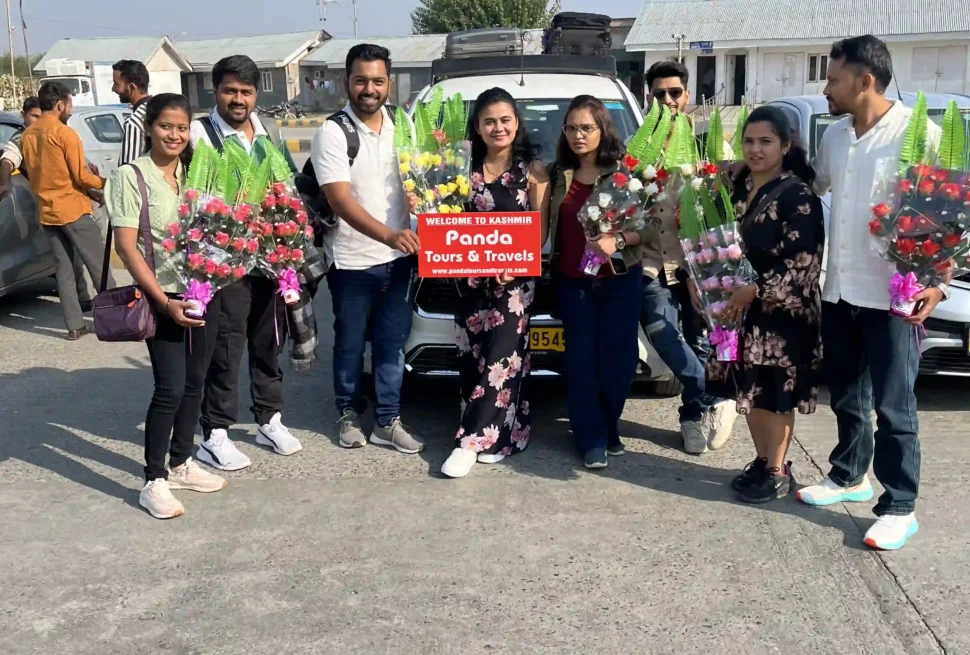
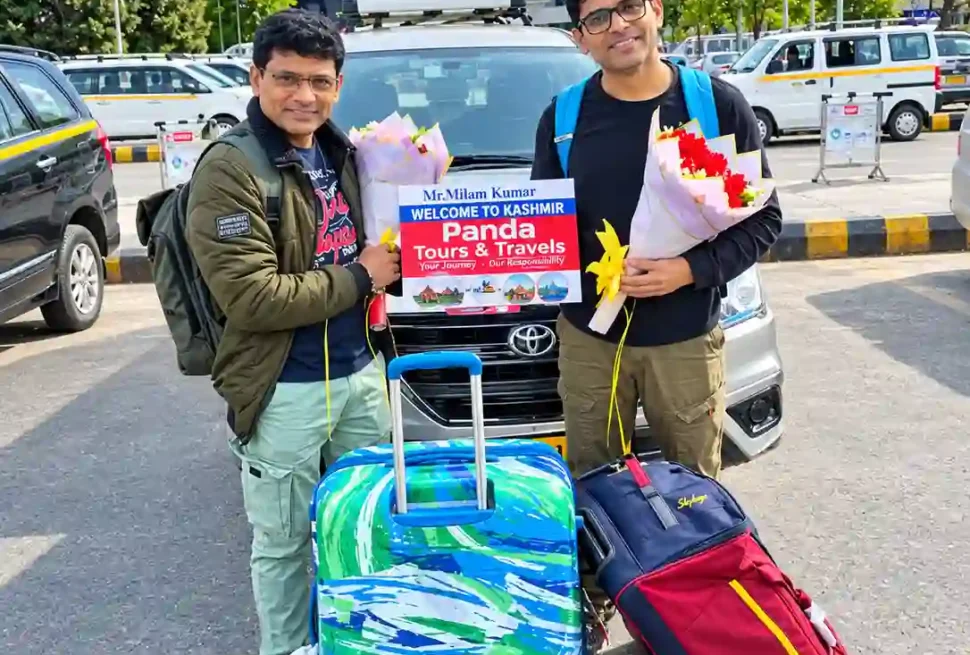
Panda Tours and Travels: Local Kashmir Travel Support
Panda Tours and Travels is a local Kashmir tour operator based in Srinagar, working across the main circuit — Srinagar, Gulmarg, Pahalgam, Sonamarg and Doodhpathri every season of the year. Because our drivers, guides and hotel contacts are on the ground daily, we’re usually among the first to know when a route, attraction or weather pattern changes.
e handle transport, sightseeing and accommodation coordination as one connected itinerary, not separate bookings, so a change in one piece doesn’t strand the rest of your trip.For route checks, current conditions, or a flexible Kashmir itinerary, call or WhatsApp us on +91 7006982655. Registration No.: JKEA00006046.
Is Kashmir Safe for Tourists Right Now in 2026? The Honest Answer
Tourism in Kashmir’s main circuit is functioning — hotels, houseboats, transport and sightseeing operate on a daily basis, and domestic visitor numbers have been recovering through 2026. That is not the same claim as “Kashmir is completely risk-free.” The region sits in a genuinely sensitive geopolitical location, and both the security situation and access to specific sites can shift with little notice.
The practical distinction to hold onto is this: tourism operating normally means hotels are open, drivers are working, and thousands of families are visiting without incident. Risk-free travel is a different and stronger claim that no destination, anywhere, can honestly make. Kashmir’s tourist economy genuinely needs and welcomes visitors, and the established circuit sees the heaviest security deployment and the steadiest footfall in the region — which is exactly why it’s the sensible base for a first Kashmir trip. But “safe to visit” should always come with “check current conditions before you finalise dates,” because that’s the one habit that actually protects a trip here.
What Is the Current Safety Situation in Kashmir?
As of August 2026, the main tourist areas are open and functioning with a visible security presence, dedicated Tourist Police, and helpline support. Domestic tourist arrivals have been recovering through the year, though hotel occupancy in parts of the Valley is still reported below pre-2025 levels. Temporary restrictions on specific routes or high-altitude sites do occur and are usually localised and short-term.
Security deployment on the main circuit is heavier than most Indian hill destinations, and that’s largely why the classic route feels calm day to day — checkpoints, patrols and CCTV coverage are part of the normal landscape, not a sign of an active crisis. Some remote or high-altitude trekking areas away from the main circuit have carried temporary trekking or camping restrictions pending safety reviews; these are announced by local administration and change over time, so they’re worth verifying separately from questions about Srinagar, Gulmarg, Pahalgam town or Sonamarg. Weather-driven disruption landslides, snowfall, road closures on mountain stretches is, in most seasons, a more immediate practical risk to a Kashmir itinerary than security incidents.
What Happened in Pahalgam and Why Does It Still Affect Travel Decisions?
On 22 April 2025, armed terrorists attacked tourists in Baisaran, a meadow accessible mainly on foot or by pony a few kilometres from Pahalgam town, killing 26 civilians. It was the deadliest attack on civilians in the region in over two decades and triggered a sharp, if temporary, drop in tourist arrivals, heightened security reviews across the Valley, and renewed Western government advisories against travel to Jammu & Kashmir.
It’s important to separate three things that often get blurred together. First, the historical event: a specific, targeted attack at a specific meadow, not an attack on Pahalgam town, on Srinagar, or on the tourist circuit generally. Second, the current situation: the authorities have since reviewed security protocols for tourist areas, including how and when meadows like Baisaran are opened to visitors, and tourism has continued in the region’s main towns.
Third, traveller perception: understandably, the attack shapes how many people and several foreign governments assess risk in Kashmir today, even in areas the attack did not directly touch. All three are legitimate to hold at once: the event was real and serious, the main circuit has continued operating since, and caution is a reasonable response rather than an overreaction.
Is Srinagar Safe for Tourists in 2026?
Yes, Srinagar is the most consistently policed and visited part of the Kashmir circuit. Tourist areas around Dal Lake, the houseboats, Mughal Gardens and central markets see steady domestic footfall, visible security presence, and normal daily commercial activity.
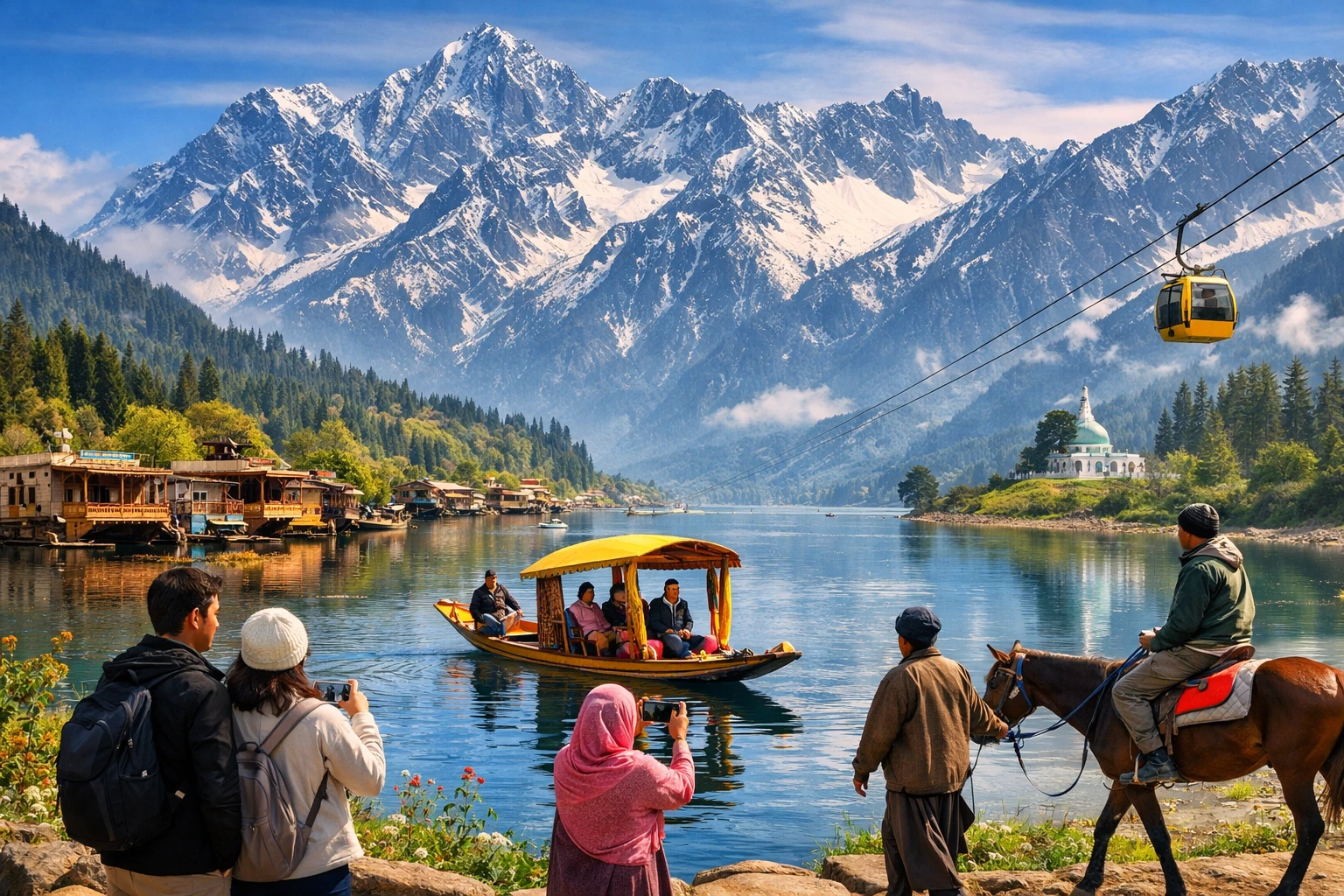
Most visitors experience Srinagar as any other Indian tourist city with an added layer of visible security: checkpoints on approach roads, ID checks at some hotels and near sensitive installations, and armed personnel stationed at key junctions. This is standard, not a signal that something is wrong. Around Dal Lake, shikara rides, houseboat stays and the floating market operate daily; in the markets and old city lanes, ordinary shopping and sightseeing are unremarkable.
The one habit worth building in: don’t photograph security installations, checkpoints or personnel without asking, and expect to show ID (a physical copy, not just a photo on your phone) when checking into hotels or houseboats. Night movement within the main tourist zones of Srinagar is common among domestic travellers, though as in any unfamiliar city, sticking to known, lit areas and using your hotel’s recommended transport after dark is the sensible default.
Is Gulmarg Safe for Tourists Right Now?
Yes, Gulmarg’s main tourist circuit — the meadow, the ski slopes in winter, and the Gondola cable car — is a well-established, heavily visited destination. The one thing to verify before you travel is attraction status: the Gondola has had operational disruptions in 2026 and, like any mechanical attraction, its status can change.
Gulmarg sits about an hour to ninety minutes from Srinagar by road and is one of the most reliably visited stops on the circuit, drawing families, honeymoon couples and winter-sports travellers alike. A technical malfunction on the Gondola in late May 2026 briefly stranded passengers and led to a roughly month-long closure while the operator ran safety audits; services resumed after inspections and clearances.
We are not independently verifying its exact operational status for your specific travel date that’s exactly the kind of detail to confirm close to departure, either through the operator, official J&K Tourism updates, or your local travel coordinator. Winter road conditions between Tangmarg and Gulmarg can require chain-fitted 4WD vehicles; this is routine seasonal caution, not a safety alarm.
Is Pahalgam Safe for Tourists After the 2025 Attack?
Pahalgam town and its established tourist routes have continued to operate since the attack, with increased security measures including provider verification systems introduced in 2026. Baisaran meadow and other remote side-valleys carry a different risk profile than the town itself and warrant separate, current verification before visiting.
It’s worth being specific rather than treating “Pahalgam” as a single block. The town, its main markets, hotels and the drive along the established route from Srinagar are part of the standard tourist circuit and see regular domestic visitors.
Attractions reached mainly on foot or by pony Baisaran among them involve less continuous security coverage by their nature, which is part of why access and monitoring arrangements for these specific spots have been reviewed and tightened since 2025, including reported QR-based verification of registered pony and guide operators in the area. Side valleys further from the main road (Aru, Betaab, Chandanwari) are generally part of normal sightseeing itineraries but, like any semi-remote mountain area, benefit from checking same-week local status rather than assuming last month’s access still applies.
Is Sonamarg Safe for Tourists in 2026?
Yes, for standard sightseeing along the main road and around Thajiwas Glacier. The bigger practical risk in Sonamarg isn’t security — it’s mountain weather and road conditions, which can close routes with little warning, especially outside the peak summer window.
Sonamarg sits at higher altitude than Srinagar or Gulmarg and is more exposed to snowfall, landslides and sudden weather shifts, which is the main reason itineraries here need more flexibility than a city day trip. In winter, much of the route can be snowbound; see our Is Sonamarg Open in Winter guide for season-specific detail. For the glacier trip itself, route and access logistics are covered in our Thajiwas Glacier Sonamarg guide. The practical takeaway for safety purposes: build a buffer day into any itinerary that includes Sonamarg, especially outside June–September, and confirm road status the morning of travel rather than the week before.
Which Places in Kashmir Should Tourists Avoid?
Areas within roughly 10–16 km of the Line of Control and India–Pakistan border, restricted zones requiring special permits, and any location under an active local closure notice. This is a much smaller list than the whole region the established tourist circuit is not on it.
Responsible advice here means being specific rather than vague. Border-adjacent districts and any area explicitly marked restricted by local administration are not part of standard tourism and require permits that ordinary travellers won’t have reason to pursue. If you encounter an unexpected gathering, demonstration, or a sudden closure notice on a route, the sensible response is the same one that applies anywhere: don’t approach, let your driver or hotel reroute you, and check local news before continuing. What this section deliberately does not do is label ordinary, regularly visited destinations “unsafe” without evidence Srinagar, Gulmarg, Pahalgam town and Sonamarg are not in the same category as border zones, and treating them as equivalent misinforms more than it protects.
Is Kashmir Safe for Families With Children?
Yes, families are among the most common visitor groups on the Kashmir circuit. The main planning consideration isn’t security — it’s pacing: long mountain drives and altitude changes are more tiring for children and elderly relatives than the map distances suggest.
A Srinagar–Gulmarg–Pahalgam–Sonamarg loop covers real mountain roads, not highway distances, so a “90 km” drive can easily take three hours. Private transport rather than shared or app-based cabs gives families more control over rest stops, timing and last-minute changes, which matters more with young children or older relatives in the group. Building in one buffer day for every five to six days of travel absorbs weather delays without forcing a rushed itinerary, and confirming hotel family-room or connecting-room availability in advance avoids last-minute scrambling in smaller towns like Pahalgam or Sonamarg where options are more limited than in Srinagar.
Is Kashmir Safe for Honeymoon Couples?
Yes, Kashmir is one of India’s most established honeymoon destinations, with houseboat stays, Gulmarg and Pahalgam consistently booked by couples. Choosing well-reviewed, centrally located hotels and private transport makes the experience smoother rather than materially changing the safety picture.
Houseboats on Dal or Nigeen Lake, private shikara rides at sunset, and Gulmarg’s meadows are the classic couple-focused stops, and hotel areas around these spots are well used to honeymoon travellers. Private transport for the full circuit, rather than piecing together local transport day by day, tends to reduce friction for couples who want flexibility in timing without navigating logistics themselves. If a houseboat stay is part of the plan, our Dal Lake Vs Nigeen Lake comparison covers which suits a quieter, more private stay versus a livelier, more central one.
Is Kashmir Safe for Solo Travellers?
Yes, solo travel in Kashmir is common, particularly among domestic backpackers and photographers. The main adjustments versus group travel are logistical: sharing your itinerary with someone, choosing accommodation with good reviews, and being more deliberate about after-dark movement in unfamiliar areas.
Solo travellers benefit from the same infrastructure everyone else uses registered taxis, Tourist Police helplines, and hotels used to independent guests but have less built-in redundancy if something goes wrong with transport or accommodation at short notice. Sharing your day’s plan with your hotel or driver, keeping a charged phone with offline maps downloaded, and avoiding remote trekking routes without a local guide are the practical basics that matter more when travelling alone than in a group.
Is Kashmir Safe for Solo Female Travellers?
Solo female travellers do visit Kashmir, including on the main circuit, without major incident being the norm. As with solo travel generally, the sensible approach is standard precaution not alarm and not complacency: choose well-reviewed accommodation, arrange transport through your hotel or a known operator, and avoid isolated areas after dark.
There is no reliable, verifiable crime data specific to solo female travellers in Kashmir that would support either a confident “completely safe” claim or a fear-based warning, so this guide won’t manufacture either. What’s practically useful: booking accommodation with strong recent reviews from other women travellers, arranging airport pickup and daily transport through your hotel rather than hailing unknown transport, dressing modestly in line with local norms (which also tends to reduce unwanted attention), and keeping your hotel and a trusted contact aware of your day’s plan. These are the same habits that serve solo female travellers well in most parts of India.
Is It Safe to Travel Around Kashmir at Night?
Within Srinagar’s main tourist zones and other town centres, evening movement is common and generally unremarkable. Mountain roads and isolated areas after dark are a different matter — not because of security specifically, but because of road conditions, limited lighting, and reduced help availability if something goes wrong.
The distinction that matters here is between “possible” and “advisable.” It’s entirely possible to drive Srinagar to Pahalgam after dark, but mountain roads with hairpin bends, limited streetlighting and occasional livestock or landslide debris make daytime travel the sensible default for any route outside city limits. Within town centres Srinagar markets, the Boulevard around Dal Lake, Pahalgam’s main street — evening activity is normal and well used by tourists. Genuinely isolated stretches, whether roads or trekking areas, are best avoided after dark regardless of destination, which is standard travel practice anywhere, not a Kashmir-specific warning.
Are Kashmir Roads Safe for Tourists?
Main tourist routes are regularly used, paved, and covered by professional local drivers, but they’re genuine mountain roads — narrow, winding, and weather-sensitive. Road conditions, not security incidents, are the more common cause of Kashmir itinerary disruption.
The Jammu–Srinagar highway (NH-44) and the roads to Gulmarg, Pahalgam and Sonamarg all cross mountainous terrain and can be affected by landslides, snowfall or traffic incidents, particularly outside peak summer. Registered local drivers who know current road status, seasonal quirks and alternate routes are a meaningful safety factor here — this is one of the more concrete, practical reasons experienced travellers choose a J&K-registered operator over self-drive or unfamiliar transport. For route-specific planning, our Srinagar to Pahalgam Distance guide breaks down travel time and road conditions on that stretch specifically. Night driving on these roads is best avoided; most local operators plan arrivals before dusk as standard practice, not as an exceptional precaution.
How Safe Is Kashmir During Snow, Rain and Landslides?
Weather is the single most common reason a Kashmir itinerary changes. Heavy snowfall, monsoon rain, and landslides can close specific routes temporarily, which is why itinerary flexibility matters more here than in most Indian hill destinations.
This isn’t a reason to avoid Kashmir it’s a reason to plan around it. Winter (December–February) brings heavy snow that can close higher routes like parts of the Sonamarg road or Gulmarg’s Phase 2 gondola section; summer (June–August) brings monsoon rain that can trigger localised landslides on mountain stretches; shoulder seasons (March–May, September–November) are generally more stable but not immune. A one- or two-day buffer in any itinerary longer than five days absorbs most weather delays without turning a trip into a scramble, and checking road and weather status the morning of travel — not just at the time of booking — is the single most useful habit for a smooth Kashmir trip.
Are Security Checkpoints Safe for Tourists?
Yes. Checkpoints are a routine, frequent part of travel in Kashmir, and tourists pass through them daily without incident. Cooperative, unhurried behaviour and having ID ready are all that’s typically required.
Expect to be asked for identification at some checkpoints, hotel check-ins, and occasionally on entry to specific tourist sites; carrying a physical photo ID (not just a phone photo) for every adult in the group is the most practical single preparation. Vehicle checks are also routine on some stretches. The calmest approach is the correct one: keep windows down if asked, hand over documents without delay, and avoid photographing checkpoints or personnel, which is a reasonable and widely observed courtesy rather than a strict rule most travellers ever need to think twice about.
What Should Tourists Never Do in Kashmir?
Avoid photographing security installations or personnel without permission, don’t venture into unmarked or restricted areas out of curiosity, don’t rely solely on unregistered transport for remote routes, and don’t discuss local politics with strangers as a conversation topic not because it’s dangerous, but because it’s simply not the purpose of your visit and can create friction.
Beyond that, the practical don’ts are the same as any mountain destination: don’t skip travel insurance, don’t ignore local guidance about closed trekking routes, and don’t assume last season’s information about attraction access or road status still holds. Respecting religious sites’ dress codes and photography rules, and being mindful that Kashmir is home to communities still processing real events, go a long way toward a smoother, more welcome visit.
Is Kashmir Safe for Foreign Tourists in 2026?
This needs a direct answer, not a soft one: several Western governments, including the United States and the United Kingdom, currently advise against travel to Jammu & Kashmir (with limited exceptions for Ladakh and, for the UK, Jammu city). Foreign nationals do still visit the region, but should weigh their own government’s advisory, insurance implications, and personal risk tolerance before booking — this is materially different from the situation for Indian domestic travellers.
As of mid-2026, the UK’s Foreign, Commonwealth & Development Office (FCDO) advises against all travel to the Union Territory of Jammu and Kashmir, including Pahalgam, Gulmarg, Sonamarg, Srinagar city and the Jammu–Srinagar highway, with narrow exceptions for air travel to and from Jammu city and travel within Jammu city itself; travel within the separate Union Territory of Ladakh is treated differently.
The U.S. Department of State places Jammu & Kashmir at Level 4, “Do Not Travel,” citing terrorism and civil unrest, again with an exception for eastern Ladakh and Leh even though India overall sits at the more moderate Level 2, “Exercise Increased Caution.” In August 2026, the U.S. Ambassador to India visited Srinagar and publicly signalled that Washington could review and potentially downgrade this advisory given improved security conditions, but as of this writing no formal change has been made. We’re reporting that development honestly rather than treating it as a change that has already happened if you’re a foreign national planning a trip, check your government’s advisory directly and recently, not a summary from any travel blog, including this one.
What Do UK, U.S. and Other Government Advisories Say About Kashmir?
The UK and US advisories are the most restrictive among major Western governments, both currently recommending against travel to Jammu & Kashmir (excluding Ladakh, and for the UK, Jammu city). Other governments vary; Canada, for example, recommends a high degree of caution for India generally without as specific a regional carve-out. These positions can and do change, so date-checking the source directly matters more than any single summary.
We are not going to reinterpret these advisories to sound less serious than they are, and we’re not going to tell any reader to ignore their government’s guidance — that decision, and its consequences (including possible insurance implications), belongs to the traveller and their own government, not to a tour operator’s blog post.
What we can responsibly say is: these advisories are updated regularly, sometimes citing specific events and sometimes citing general regional risk assessment, and the gap between “Do Not Travel” and on-the-ground tourist activity in Srinagar or Gulmarg on any given week is a real and often-discussed tension in how Kashmir tourism is covered. If you’re a foreign national, check gov.uk/foreign-travel-advice/india or travel.state.gov directly before booking, and again shortly before departure.
Is Travel Insurance Important for Kashmir?
Yes, for every traveller, and especially important reading for foreign nationals whose government currently advises against travel to the region because travelling against an official advisory can affect whether a claim is honoured.
For Indian domestic travellers, standard travel insurance covering trip cancellation, medical evacuation and baggage is sensible for any mountain destination, Kashmir included, given the realistic chance of weather-related itinerary changes. For foreign travellers, the more consequential point is this: many insurance policies exclude claims arising in regions where your home government has issued a “do not travel” advisory, which currently applies to most of Jammu & Kashmir under both UK and US guidance. That means reading your policy’s exclusions carefully, specifically around government-advisory clauses, before assuming a claim would be covered.
We are not qualified to give legal or insurance guarantees here, and no responsible operator should this is a “read your policy and ask your insurer directly” situation, not a “trust a blog post” one.
What Should You Carry for a Safer Kashmir Trip?
Physical photo ID for every adult, printed copies of hotel bookings, warm layers regardless of season, a partially charged power bank, and offline maps downloaded before you lose signal in mountain areas.
- Physical government ID (Aadhaar, passport, or equivalent) — hotels and some checkpoints require a physical copy, not just a photo on your phone.
- Printed or downloaded copies of hotel and transport bookings, since signal is unreliable in parts of Sonamarg, Gulmarg’s upper reaches, and some Pahalgam side valleys.
- Layered clothing even in summer — temperatures at Sonamarg and Gulmarg’s upper station can be 15–20°C cooler than Srinagar.
- A basic first-aid kit and any personal medication, since pharmacy access thins out beyond Srinagar.
- Travel insurance documents, with policy exclusions checked in advance (see above).
- Offline maps (downloaded via Google Maps or similar) for stretches with patchy mobile coverage.
What Should You Do If a Tourist Place or Route Suddenly Closes?
Don’t push forward past an official closure notice. Contact your hotel or local operator immediately, ask for an alternate route or destination for that day, and check the J&K Tourism Department’s official channels or recent local news for the reason and expected timeline.
- Stop at the notice. Closures are issued for a reason — weather, security review, or maintenance — and pushing past one puts you outside any official safety net.
- Contact your local coordinator or hotel. They typically have same-day visibility into alternate routes or a comparable substitute destination.
- Check the source, not just the rumour. Local news outlets and J&K Tourism Department updates are more reliable than social media posts in the moment.
- Rebuild the day, don’t cancel the trip. A single closed attraction or route rarely justifies ending a trip early; it usually means swapping one day’s plan.
- Reassess only if the pattern widens. If closures affect multiple planned stops or persist beyond a day or two, that’s the point to seriously discuss postponing the remaining itinerary with your operator.
Should You Cancel Your Kashmir Trip or Still Go?
For most Indian domestic travellers planning a trip within the established circuit, current conditions don’t call for cancellation they call for booking with flexibility and checking status close to departure. For foreign nationals whose government currently advises against travel, the decision is more personal and should weigh the advisory, insurance implications, and individual risk tolerance directly.
| Circumstance | Reasonable response |
|---|---|
| Indian traveller, standard circuit, no active local closures | Continue as planned; verify conditions the week before departure. |
| Indian traveller, trip includes remote/high-altitude sites | Continue, but confirm current access for those specific sites separately from the main circuit. |
| Foreign national, home government advises against travel | Weigh the advisory and insurance exclusions directly; this is a personal decision, not one this guide will make for you. |
| Active, widening local closures or a fast-developing security situation | Postpone or modify remaining plans; discuss with your operator and monitor official updates. |
| Severe weather forecast for planned travel days | Modify the itinerary order or add buffer days rather than cancelling outright. |
This isn’t a push to travel and it isn’t a push to cancel — it’s a framework for matching your specific circumstances to a reasonable response, because “should I go” genuinely depends on who’s asking, not on a single universal answer.
How Can a Local Kashmir Tour Operator Help With Travel Safety?
Local operators offer same-day awareness of route and attraction status, coordinated transport that can adapt quickly to changes, and a single point of contact instead of juggling independent bookings if something needs to shift.
The practical value isn’t a safety guarantee — no operator can honestly offer one — it’s reduced friction when something changes, which in Kashmir is more often a road or a weather event than anything else. A local operator’s drivers know current road conditions because they drove them yesterday; hotel contacts can rebook a night on short notice because of an existing working relationship; and a single coordinated itinerary means a delay in one place doesn’t cascade into missed connections elsewhere.
This is where Panda Tours and Travels fits in: as a Srinagar-based operator, our role on the safety side of a trip is less about claims and more about groundwork current route awareness, driver coordination, and being reachable if your plans need to change. Call or WhatsApp +91 7006982655 if you’d like help checking routes, hotels, or building flexibility into a Kashmir itinerary.
Safer Kashmir Itinerary Ideas for First-Time Visitors
A 5–7 day Srinagar – Gulmarg – Pahalgam – Sonamarg loop on the established circuit, with one buffer day built in, is more straightforward for first-time visitors than adding remote or high-altitude extensions on a first trip.
This isn’t a claim that other itineraries are unsafe it’s a practical observation that the classic circuit keeps you within the best-covered infrastructure, the most current local knowledge, and the shortest distances between alternates if something needs to change. A typical structure: two nights in Srinagar (including a houseboat night), a day trip or overnight in Gulmarg, two nights around Pahalgam covering the town and established side valleys, and a day trip to Sonamarg before returning to Srinagar for departure. First-time visitors wanting to add Doodhpathri, Yusmarg or a Great Lakes trek are usually better served doing so on a return trip once they have a feel for the region, rather than packing everything into one first visit.
Final Verdict: Is Kashmir Safe for Tourists in 2026?
For the large majority of Indian domestic travellers visiting the established circuit Srinagar, Gulmarg, Pahalgam and Sonamarg .Kashmir in 2026 is a functioning, well-visited, actively welcoming destination, and treating it as categorically unsafe would misrepresent what’s actually happening on the ground most weeks of the year. At the same time, this is a region with real, current geopolitical sensitivity, a serious 2025 attack that still shapes both security posture and traveller perception, and standing Western government advisories against travel that foreign nationals shouldn’t skip past.
The honest 2026 answer isn’t a flat yes or no: it’s that tourism is operating, caution is warranted rather than optional, remote and border-adjacent areas need separate and current verification, and the trip that goes smoothly is usually the one planned with flexibility, current information, and a local team who can adapt when conditions change.
Frequently Asked Questions About Is Kashmir safe for tourists
Is Kashmir safe for tourists in 2026?
Kashmir should not be described as completely risk-free. Tourism continues in established destinations, but travellers should check current security conditions, road status, weather, attraction access and official advisories before travelling. The appropriate decision can also differ between Indian and foreign travellers.
Is Kashmir safe to visit right now?
The answer depends on the current situation, your destination and your nationality. Conditions can change, so check current official information shortly before departure rather than relying on an old article or social-media post.
Is Kashmir safe after the Pahalgam attack?
The 2025 Pahalgam attack remains relevant when assessing travel perceptions, but travellers should not treat every part of the Pahalgam area as having identical conditions. Check the current status of Pahalgam town, individual attractions and specific routes before travelling.
Is Srinagar safe for tourists?
Srinagar is an established tourist destination, but visitors should follow current security instructions, carry appropriate identification, avoid restricted areas and use reliable accommodation and transport. Conditions can change, so current local information remains important.
Is Gulmarg safe for tourists in 2026?
Gulmarg is a major tourist destination, but travellers should consider both security and mountain-related risks. Weather, snowfall, road conditions and attraction availability can affect plans, particularly during winter.
Is Pahalgam safe for tourists in 2026?
Pahalgam requires destination-specific planning. Travellers should distinguish Pahalgam town and established tourist routes from individual side valleys and remote areas, and verify access to specific attractions before travelling.
Is Sonamarg safe for tourists?
Sonamarg is an established tourist destination, but mountain weather and road conditions are important considerations. Snowfall, rain and landslides can affect access, so travellers should check conditions before setting out.
Is Kashmir safe for families with children?
Families can plan Kashmir trips around established tourist destinations, reliable transport and flexible schedules. Shorter driving days, adequate rest and weather-appropriate clothing can make the trip more comfortable for children.
Is Kashmir safe for honeymoon couples?
Couples can plan a Kashmir honeymoon around established tourist destinations and reputable accommodation. Avoid unnecessary late-night mountain travel and keep some flexibility in case weather or attraction conditions change.
Is Kashmir safe for solo travellers?
Solo travellers should use reputable accommodation and transport, share their itinerary with someone they trust, keep important documents accessible and avoid unnecessary travel into isolated or restricted areas.
Is Kashmir safe for solo female travellers?
Solo female travellers should use reputable hotels and transport, avoid isolated areas at night and keep someone informed about their general itinerary. These are sensible precautions rather than a reason to assume Kashmir is automatically unsafe for women.
Is Kashmir safe for senior citizens?
Kashmir can be planned more comfortably for senior travellers by reducing long driving days, choosing convenient accommodation, allowing sufficient rest and avoiding unnecessarily demanding mountain excursions.
Is Kashmir safe for children?
Families travelling with children should choose established tourist routes, carry necessary medicines and essentials, check weather conditions and avoid forcing sightseeing plans when road or weather conditions are unsuitable.
Is it safe to travel around Kashmir at night?
Night travel depends on the location. City travel and mountain-road travel should not be treated the same way. Travellers should avoid unnecessary late-night journeys through isolated mountain areas, particularly when visibility or weather is poor.
Are Kashmir roads safe for tourists?
Kashmir’s main tourist roads are used regularly, but mountain travel can involve snowfall, rain, landslides, traffic, narrow sections and temporary closures. Travellers should avoid extremely tight itineraries and check route conditions before departure.
Is Kashmir safe in winter?
Winter travel is possible but requires additional planning. Snow and ice can affect mountain roads, visibility, flights and sightseeing access. Travellers should check weather and road conditions before travelling to destinations such as Gulmarg and Sonamarg.
Which places should tourists avoid in Kashmir?
Tourists should avoid restricted areas, border-sensitive locations, closed attractions, sudden demonstrations and remote locations without reliable local information. Do not enter an area simply because it is promoted online as an “offbeat” destination.
Are tourists safe at security checkpoints in Kashmir?
Tourists should cooperate calmly with security procedures, carry appropriate identification and follow instructions. Avoid photographing security installations or restricted facilities. The Indian tourism authorities also maintain dedicated tourist-police support.
What documents should tourists carry in Kashmir?
Carry appropriate government-issued identification and keep digital copies of important travel documents. Hotels and guesthouses may require identification during check-in. The Srinagar district administration advises visitors to carry valid ID proof.
Is Kashmir safe for foreign tourists in 2026?
Foreign travellers need to consider their own government’s current travel advisory in addition to local conditions. This is particularly important because current UK guidance advises against all travel to Jammu & Kashmir, including Srinagar, Gulmarg, Pahalgam and Sonamarg.
What does the UK government say about travelling to Kashmir?
The UK Foreign, Commonwealth & Development Office currently advises against all travel to the Union Territory of Jammu and Kashmir, including Pahalgam, Gulmarg, Sonamarg and Srinagar. It also warns that travel insurance can be affected when travelling against FCDO advice.
What does the U.S. government say about Kashmir travel?
The U.S. Department of State currently treats Jammu & Kashmir as a high-risk area under its India travel advisory. Foreign travellers should read the current U.S. advisory directly and consider its implications before making travel arrangements.
Should I cancel my Kashmir trip in 2026?
There is no universal answer. Consider your nationality, current official advisories, destination, route, weather, booking flexibility and personal risk tolerance. If conditions make your planned itinerary unsuitable, postponing or modifying the trip may be more sensible than forcing it.
What should I do if a Kashmir tourist place suddenly closes?
Do not try to bypass the closure. Confirm the reason, remove the destination from your day’s plan and ask your hotel, driver or local operator about an appropriate alternative. Protect important commitments such as flights and hotel check-ins.
Is it safe to visit Kashmir without a tour operator?
Independent travel is possible for some travellers, but visitors should still arrange reliable accommodation and transport and understand current restrictions. A local operator can help with logistics and itinerary changes but cannot guarantee safety.
Is a local driver better for travelling around Kashmir?
A reliable local driver can be useful because Kashmir involves mountain roads, changing weather and destination-specific transport logistics. Local knowledge can help with route planning, but it does not replace official road closures or government instructions.
Is travel insurance important for a Kashmir trip?
Yes, travellers should carefully review their insurance policy before travelling. Pay particular attention to exclusions relating to government travel advisories, cancellation, medical treatment, evacuation, weather disruption and adventure activities. Current UK guidance specifically warns about insurance implications when travelling against FCDO advice.
What should tourists avoid doing in Kashmir?
Avoid restricted areas, protests, sudden gatherings, closed routes and unofficial access to restricted attractions. Do not photograph sensitive security installations, ignore official instructions or rely entirely on unverified social-media reports.
What emergency help is available for tourists in Kashmir?
The Ministry of Tourism operates a 24-hour multilingual tourist helpline at 1800-11-1363, also accessible through 1363, for domestic and foreign tourists. The Srinagar district administration also lists Tourist Police support at 1363.
What is the most important safety tip for visiting Kashmir in 2026?
Check current conditions before travelling and remain flexible after you arrive. Security information, road conditions, weather and attraction access can change. A flexible itinerary is generally more useful than trying to force a fixed sightseeing plan.